

Trinidad and Tobago Arrival Cards Go Digital
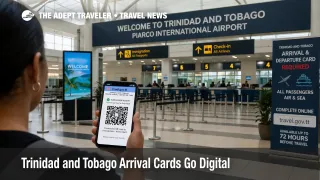
Trinidad and Tobago arrival card processing is now a live digital compliance step for every inbound and outbound air or sea traveler. The government's online platform replaced the paper system on March 17, 2026, and travelers now need to complete the form online before travel, then keep the QR coded receipt ready for presentation to officials. The practical risk is not a theoretical policy change months away. It is same day airport or port friction for travelers who arrive expecting paper forms, weak mobile service, or last minute staff help to rescue the process.
Trinidad and Tobago Arrival Card: What Changed
The rule change is already in force. The Immigration Division said the Online Arrival and Departure Card Platform officially went live on March 17, 2026, replacing the traditional paper forms previously completed by travelers. Official guidance says all persons entering or leaving Trinidad and Tobago must complete the card online before travel, and the form can be completed up to 72 hours before arrival or departure.
The process now depends on digital readiness. The portal says every passenger must save the receipt containing the QR code and either print it or download it to a mobile device. The portal also says each passenger needs a valid email address, flight information, a valid passport, and a JPEG or PNG copy of the passport biodata page. That makes this more than a paperwork cleanup. It shifts a border processing step forward into the pre travel window, where mistakes show up before check in, at check in, or in the immigration hall.
Who Needs To Act Before Travel
This is a broad rule, not a niche requirement for tourists from one market. Official tourism guidance says submission is required for all passengers arriving in or departing from Trinidad and Tobago by air or sea. That means visitors, returning nationals, business travelers, cruise or ferry passengers where relevant, and travelers leaving the country all need to handle the form before they reach the processing point.
The most exposed travelers are the ones who rely on a smooth airport day. Families managing several passports, older travelers who are less comfortable with account creation and uploads, and passengers on tight onward plans face the highest operational risk. Official guidance says support will be available at Piarco International Airport (POS), at A.N.R. Robinson International Airport (TAB), and through airlines, but that support should be treated as a fallback. In real travel operations, airport help usually means slower queues and more variable timing, not a friction free substitute for arriving prepared.
What Travelers Should Do Before Departure
The best move is to complete the form as soon as the 72 hour window opens, not on the way to the airport. Save the QR receipt to the phone, take a screenshot, and carry a printed copy if there is any chance of poor roaming, weak battery, or unreliable connectivity. The portal and tourism guidance both explicitly tell travelers to retain the QR receipt for presentation, and that single detail is likely to determine whether this feels efficient or messy on travel day.
The decision threshold is straightforward. A solo traveler with time to spare and good mobile service might get away with a late submission. A family, a group, or anyone with a short connection, hotel pickup, or timed arrival should not take that gamble. Advisors should treat the digital card as a mandatory pre departure checkpoint and confirm that each traveler has the QR receipt before check in opens. That is especially important for less tech confident clients, because the new process adds account setup, document upload, and receipt storage to what used to be a quick paper step.
Why The New System Changes Airport Timing
The mechanism is simple. Trinidad and Tobago is moving a manual border form into an online pre travel workflow. In the best case, that should speed movement through ports because travelers arrive with the data already submitted and the QR receipt ready. The portal itself says using the online card helps expedite movement through ports. In the worst case, the bottleneck shifts upstream, where unprepared travelers are trying to create accounts, upload passport images, and retrieve receipts at the exact moment airport bandwidth, airline staff time, and traveler patience are most limited.
What happens next is likely a transition phase rather than another policy reversal. The system is already live, paper cards are already discontinued, and official agencies are already pushing travelers to the travel.gov.tt portal. The likely near term pattern is uneven compliance, especially among first time visitors and infrequent travelers, followed by smoother processing once airlines, advisors, and hotels start treating the digital form as a standard pre travel task. Until then, the main traveler consequence is not outright closure risk. It is preventable airport friction that can spread into check in timing, arrival hall queues, and missed handoffs on tightly planned itineraries.