

Trinidad and Tobago Entry, Exit Cards Go Digital
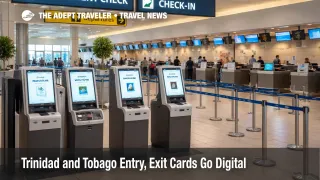
Travelers heading to or leaving Trinidad and Tobago now have a mandatory digital step to complete before travel. The government says that as of March 17, 2026, the country's Online Arrival and Departure Card platform replaced the old paper cards, and all travelers entering or leaving must now file online before the trip. The main operational risk is no longer a form handed out on board or at the airport, but whether passengers complete the process in the 72 hour window and keep the QR code receipt ready for officials. Travelers should treat this as a pre departure document check, not an airport formality.
Trinidad and Tobago Entry Card: What Changed
The change is broad, not limited to one airport, airline, or visitor group. The official government announcement says all persons entering or leaving Trinidad and Tobago must complete the Arrival or Departure Card online, the platform is free, and paper forms are discontinued. The official portal says travelers can access the system only within 72 hours before arrival or departure, and once the form is submitted they must save the receipt with the QR code for presentation to officials.
That shifts the friction point earlier in the trip. First order, travelers who wait until they are already at the airport, or who assume a paper card will still be available, can lose time at check in or before immigration processing. Second order, the problem can spread through the rest of the itinerary, especially for families, groups, older travelers, or anyone depending on weak airport Wi-Fi, roaming data, or a rushed connection. A digital rule like this usually fails travelers at the exact moment they have the fewest spare minutes.
Who Needs To Act Before Travel
The official Tobago tourism notice says the requirement applies to passengers arriving in or departing from Trinidad and Tobago by air or sea, and it adds two details travelers should not miss. Users must create an online account to complete the card, and they must upload the biodata page of their passport. The portal itself also lists the basic items each passenger needs, including a valid email address, flight information, a valid passport, and a passport biodata image in JPEG or PNG format.
For most travelers, that means the new compliance burden falls before the airport, not at the airport. Solo passengers with stable internet access can usually handle that without much trouble. The higher exposure sits with group bookings, parents managing several records, cruise or regional island passengers moving by sea, and outbound travelers who may focus heavily on check in and baggage but forget that the departure leg now has its own required digital card as well. Anyone using a travel agent, family organizer, or corporate arranger should confirm who is actually filing each traveler's record rather than assuming somebody else did it.
What Travelers Should Do Before Departure
The safest play is simple. Use only the official portal at travel.gov.tt, complete the form as soon as the 72 hour window opens, and save the QR code receipt in at least two places, on the phone and as a screenshot, PDF, or printout. Because the government says the platform is free, any site charging for access, promising faster approval, or mimicking the official process should be treated as suspect.
Travelers should also build a basic decision threshold into their plan. If the form is not completed by the night before departure, the risk starts rising quickly, especially on early morning flights, ferry departures, or trips where mobile connectivity may be patchy on the way to the airport or port. For families and groups, finish every traveler's card together and confirm that each person has the correct QR code, because one missing receipt can slow the whole party.
The next monitoring point is practical rather than political. Watch airline messages, airport notices, and the official portal itself for any changes to process, language support, or technical guidance. Tobago's tourism agency says assistance is available at A.N.R. Robinson International Airport (TAB), at Piarco International Airport (POS), and through airlines for travelers who have trouble using the platform, but relying on airport help should be the backup plan, not the primary one.
How the New Process Works, and What Happens Next
In operational terms, Trinidad and Tobago has moved a routine immigration and customs step from the terminal to the traveler's device. The portal is designed to shift data collection upstream, before arrival or departure, and the QR code receipt becomes the proof that the traveler completed that step. That should reduce manual paperwork over time, but the short term reality is that compliance depends on travelers understanding the timing window and carrying the receipt in a usable form.
What happens next is likely a transition period where some travelers still show up expecting paper forms, especially on inbound leisure routes and among infrequent travelers. The government and tourism sources are signaling a smoother, faster process once people adapt, but the immediate traveler takeaway is more basic: this is now part of the document stack. Passport, ticket, and QR code receipt should be treated as one workflow. Travelers who handle it early will probably move through the trip with less friction than those trying to complete the form at the last minute.