

Carnival Fun-ternship Expands at Six U.S. Homeports
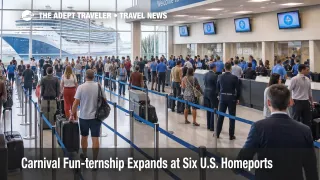
Carnival's second summer Fun-ternship program is now open across six U.S. homeports, giving more than 100 students age 17 and older paid, hands on exposure to cruise terminal work between June and August 2026. The program is not a direct booking change for cruise guests, but it does give travelers and industry watchers a useful signal about where Carnival sees value in building local terminal staffing and hospitality pipelines ahead of peak summer operations. Applications run through June 8, 2026, and the company says exact program dates will vary by city.
Carnival Fun-ternship Program: What Changed
What changed is scale and footprint. Carnival said on April 6, 2026 that it is bringing back the Fun-ternship after its 2025 debut and spreading the 2026 program across Baltimore, Maryland, Tampa, Florida, Jacksonville, Florida, Norfolk, Virginia, New York City, New York, and Long Beach, California. The company framed the program as a paid, eight week summer opportunity tied to cruise terminal operations, while its recruitment page describes practical embarkation day roles such as directional agent, zone supervisor, and EZ Board agent.
For travelers, that is not the same thing as a new terminal, shorter check in guarantees, or a major operational upgrade. The significance is smaller and more structural. Carnival is putting paid seasonal labor and training attention into the terminal side of the cruise experience, which is where homeport sailings can either feel smooth or start to break down under heavy passenger flow. In plain terms, this is a workforce and operations story first, and only a light traveler facing change second.
Who Benefits Most At These Carnival Homeports
The clearest direct beneficiaries are students in the six participating port communities. Carnival's job page says applicants must be rising high school juniors or seniors, at least 17 years old, with a minimum 2.0 GPA, and must submit an application, school standing letter, resume, and cover letter before an interview. Those requirements make this a localized summer work and career exposure program, not a broad national internship push.
Carnival also benefits. Cruise homeports are high pressure turnover environments, especially on embarkation days when wayfinding, document checks, queue management, and terminal flow matter more than most passengers notice. A program that feeds students into guest port services roles gives the line a way to support summer operations, test future talent, and deepen ties in cities where cruise activity matters to the local visitor economy. That does not mean passengers should expect a visibly different terminal experience this summer, but it does suggest Carnival sees front end port operations as important enough to keep investing in after the first year.
What Travelers And Applicants Should Do Now
Cruise passengers do not need to change bookings because of this announcement alone. There is no evidence yet that the 2026 Fun-ternship will materially alter check in times, boarding speed, or terminal service levels in any of the six ports. Travelers sailing from these homeports should treat this as background context on how Carnival is staffing and training around the embarkation process, not as a reason to expect a smoother or faster departure day.
For students and families in the participating cities, the action window is more immediate. Applications are open now through June 8, 2026, and Carnival says positions are limited. Because the company's recruitment page lists city specific application links and describes the program as running for six to eight weeks from late June into early August, eligible applicants should move early rather than assume roles will stay open close to the deadline.
The next useful signal for travelers would be evidence that Carnival expands the model further, keeps it beyond summer, or ties it to measurable terminal performance improvements. Without that, this remains a modest but credible indicator of where the line believes operational polish begins, at the homeport, before guests ever reach the ship.
Why Carnival Is Doing This, And What Happens Next
The mechanism is straightforward. Cruise lines sell the ship, but the trip starts on land, at check in, bag drop, queue control, document handling, and boarding. Carnival's own language around mentorship, hands on training, and local economic importance, combined with the job page's focus on guest port services roles, points to a program built around the terminal side of the customer journey rather than onboard staffing. That makes the move more useful as an operating signal than as a consumer promotion.
What happens next is limited but clear. Carnival will keep applications open until June 8, 2026, then run the program during the summer in the six homeport cities, with exact dates varying by location. If the company later adds more ports, publishes stronger outcomes, or turns the program into a recurring recruitment funnel for port and shore operations, the story could become more meaningful for travelers and local cruise economies alike. Right now, the real takeaway is narrower, Carnival is treating homeport execution as a place worth investing in, even through small scale labor and training programs.