

American Venezuela Flights Reopen, Approval Still Pending
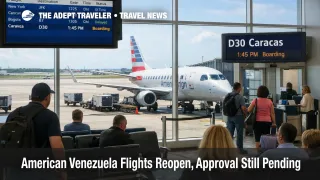
American Venezuela flights moved closer to resuming on April 9, with American Airlines saying it plans to restart daily Miami to Caracas service as soon as April 30, but only after final government approvals and security checks are complete. That gives travelers, especially those booking family, business, or humanitarian trips, a possible new nonstop option between the United States and Venezuela. It does not yet create a reliable departure date. Anyone treating April 30 as fixed is moving too early.
American Venezuela Flights: What Changed
American said on April 9 that it expects to launch daily nonstop service between Miami International Airport (MIA) and Caracas, Venezuela, using Envoy operated Embraer 175 aircraft with both first class and economy cabins. The airline described April 30 as the earliest possible start date, not a firm opening day, and said the route remains subject to government approval and ongoing preparations.
That distinction is the main traveler issue. The service is now close enough to shape planning, but not final enough to anchor a complex itinerary. For travelers who have been routing through third countries or relying on limited indirect options, a daily Miami nonstop would materially reduce travel time and connection risk once it is actually live. Until then, the route is still in a regulatory and security clearance phase.
Who Benefits Most From the New Miami Caracas Route
The clearest beneficiaries are travelers moving between South Florida and Caracas for family visits, business, and humanitarian reasons. American itself framed the market that way, and Miami remains the airline's main U.S. gateway to Latin America. The route also matters for travelers who value schedule simplicity over the lower headline fare that can sometimes come with indirect routings. A same plane itinerary usually lowers misconnect risk, baggage transfer risk, and overnight exposure compared with a multi stop trip.
But the fit is narrower than a normal route launch. The U.S. Department of State still lists Venezuela at Level 3, Reconsider Travel, citing crime, kidnapping, terrorism, and poor health infrastructure, while also warning that routine consular services remain suspended inside Venezuela and that most consular support is still handled through the U.S. Embassy in Bogotá, Colombia. The advisory also flags security risks around ground transportation from Maiquetía Simón Bolívar International Airport (CCS), especially unregulated taxis and nighttime travel between the airport and Caracas.
That means the route can improve access without making the destination low friction. The flight may become easier. The on the ground risk picture does not disappear with it.
What Travelers Should Do Before Booking
Travelers should treat the next few weeks as a watch window, not a lock it in window. If the trip is optional, waiting for the final approvals and security clearance is the cleaner move. If the trip is essential, focus on booking terms, not just timing. Refundability, no fee changes, and backup routing matter more here than squeezing out the lowest fare.
The threshold for booking now is whether the traveler can absorb a schedule slip or delayed launch without breaking a larger plan. That matters most for onward domestic flights within Venezuela, timed business meetings, medical appointments, or same day ground transfers from Caracas. Travelers who need certainty should wait until the route is fully loaded and operating, not merely announced.
Anyone who does travel should also plan the ground segment conservatively. Avoid assuming a late arrival can still support a same night intercity move. Prearranged transportation, daylight arrivals where possible, and extra buffer for airport exit and city transfer are the safer operating assumptions under the current advisory environment.
Why the Service Is Closer, and What Happens Next
The route is possible now because the U.S. regulatory structure shifted earlier this year. Reuters reported on March 4 that the U.S. Department of Transportation approved American's request to operate flights from Miami to Caracas and Maracaibo through Envoy after the department rescinded the 2019 suspension on U.S. Venezuela air service in January. Reuters also reported that TSA security assessments in Caracas were part of the process toward restarting flights.
What happens next is straightforward, even if the timing is not. American still needs all government approvals and security checks completed before it can start service. The likely near term path is more regulatory clearance, final operational setup, then a firm launch date if nothing slips. The bigger travel consequence is that nonstop U.S. access to Venezuela is re emerging, but in a market where advisory, consular, and local security conditions still require far more caution than a standard Latin America route launch.