

Grand Canyon South Rim Water Limits Threaten Stays
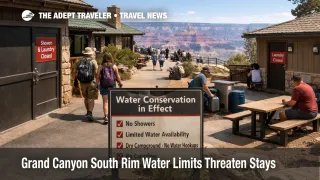
Grand Canyon South Rim water restrictions tightened again on Saturday, April 11, after repeated breaks in the Transcanyon Waterline left no water being pumped to the South Rim. The park remains open, but overnight lodging is now running at reduced occupancy, dry camping rules are in place, and some services that normally support overnight stays are already closed or limited. For travelers with South Rim hotel, RV, or campground plans over the next several days, the main decision is whether to keep an in park stay or shift lodging to Tusayan or another gateway before conditions worsen.
South Rim Water Restrictions: What Changed
The National Park Service said on April 8 that additional conservation measures would begin on Saturday, April 11, because the 12.5 mile Transcanyon Waterline has suffered a series of major breaks and no water is currently being pumped to the South Rim. The South Rim is still open for day use, and core services including food and beverage outlets, the Grand Canyon Clinic, Canyon Village Market, and the Post Office remain open. The change is that the park is no longer operating on normal overnight assumptions. Lodging inside the park remains available, but with reduced occupancy, and guests with affected reservations are supposed to be contacted directly by Xanterra or Delaware North.
Camping is also more limited than the usual spring setup. Mather Campground and Desert View Campground remain open, but only as dry camping, with water spigots turned off in both campgrounds while restroom faucets remain available. The Camper Services building, including showers and laundry, has been closed since April 1 because of Stage 3 restrictions, though the dump station water access remains available. Fire rules have tightened too. The park first prohibited campfires under Stage 3, and as of April 11 Stage 2 fire restrictions are now in effect park wide because depleted water reserves are affecting fire suppression capacity.
Which Grand Canyon Travelers Face the Most Risk
The travelers most exposed are those with overnight bookings inside Grand Canyon National Park, especially hotel guests expecting normal room turnover, RV travelers planning to rely on shower and laundry facilities, and campers assuming easy access to potable water spigots. Hikers and rim to canyon visitors also face a more serious planning burden because the park has specifically told backcountry users to carry all their water or have methods to treat it, rather than relying on routine availability.
This is a meaningful itinerary risk rather than a minor inconvenience. Stage 3 restrictions are already active, and the park has said that if water conditions do not improve it may move to Stage 4. Under Stage 4, lodging for overnight guests could close, Trailer Village would become unavailable, and fire restrictions would tighten further. That means travelers with short one night stays, sunrise plans, hiking permits, or packaged tours tied to an in park overnight are the least protected if the situation deteriorates again.
Day trippers are in a better position, but they are not insulated. If more overnight visitors move outside the park, gateway lodging demand in Tusayan and surrounding areas can rise, morning entry timing can become less forgiving, and the pressure shifts to earlier departures, longer drives, and tighter parking and tour coordination. Tusayan lodging remains unaffected for now, which makes it the clearest fallback option if an in park reservation looks shaky.
What Travelers Should Do Now
Travelers holding South Rim lodging reservations should treat those stays as conditional, not guaranteed in the usual sense. Check directly with your hotel or RV operator now, not only with the park, because the park has said Xanterra and Delaware North will contact impacted guests with updated stay information. If your trip depends on showers, laundry, RV support services, or easy campground water access, assume those constraints are real today, not hypothetical.
Move your booking outside the park now if your itinerary cannot absorb a same day lodging change, if you are traveling with children or older adults who need normal water access and facilities, or if you are building the trip around one overnight window for hiking or sightseeing. Waiting may preserve a better in park location, but it also raises the risk that you get pushed into a last minute scramble if Stage 4 is triggered. Travelers with flexible cars and low dependency on in park facilities can afford to wait longer than those arriving by tour, train connection, or fixed package.
Over the next 24 to 72 hours, watch for three signals, whether water pumping to the South Rim resumes, whether the park holds at Stage 3 or escalates toward Stage 4, and whether concessionaires begin wider reservation adjustments. For hikers, the practical threshold is even lower. Carry more water than you would under normal South Rim assumptions, confirm current hiking messages before departure, and do not plan around campfires or normal campground utility access under these South Rim water restrictions.
Why the Waterline Failure Changes Trip Planning
The Transcanyon Waterline is the system that moves water from the inner canyon for use on the rims, so repeated breaks do not just affect one hotel or one campground. They affect the entire South Rim operating model, from room turnover and guest services to fire response posture and campground rules. That is why the park can remain technically open while the traveler experience becomes materially narrower.
The next step depends on storage recovery, repairs, and whether pumping can resume consistently. For now, the park's approach is conservation first, normal operations later. In practical terms, the South Rim is still visitable, but it is no longer a place where travelers should assume full service overnight conditions. Until the water system stabilizes, South Rim water restrictions are best treated as an active lodging and planning risk, not a background park operations note.