

Spain Immigration Appointments Face April 21 Strike
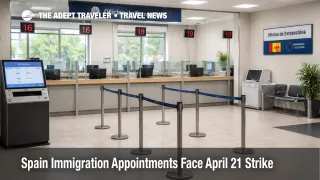
Spain immigration appointments are becoming a practical travel risk inside the country, not just a labor dispute, because Spain's government says online filings for its new regularization process open on April 16, 2026, while Reuters reports immigration officers are threatening to strike from April 21, 2026, one day after in person appointments begin. The pressure point is timing. People already in Spain who need residency, status alignment, or immigration office access could hit a paperwork bottleneck just as demand surges. For travelers with leases, job start dates, study plans, or onward departures tied to legal status, the safer move is to front load appointments and paperwork now.
Spain Immigration Appointments: What Changed
The immediate change is the overlap between a new application wave and a threatened office stoppage. Reuters says Spain's cabinet approved the new regularization drive on April 14, 2026, that online applications open on April 16, 2026, and that immigration officers are threatening to strike from April 21, 2026, after warning that the system does not have the resources to absorb the expected surge. Reuters also reports the new process could generate as many as half a million applications.
Official government FAQ material points to the same timing problem from the traveler side. The Ministry of Inclusion's published FAQ says the application window opens on Thursday, April 16, 2026, for telematic processing, while the in person system opens afterward for the presencial route. That means demand begins before any threatened strike starts, rather than building gradually over weeks.
Operationally, this looks less like a border story and more like an inside Spain documentation choke point. A traveler can still arrive in the country, but the next step, getting an appointment, filing a case, or resolving status on the ground, could become slower or unavailable at exactly the moment more people are trying to use the system.
Which Travelers In Spain Are Most Exposed
The highest exposure sits with people whose legal timeline depends on an office interaction in the next few weeks. That includes students shifting from one status to another, long stay visitors trying to regularize paperwork, digital nomads and remote workers managing residence rules, family reunification cases, and residents whose work, housing, or travel dates assume documents will move on schedule. Reuters' reporting is centered on the regularization push, but the practical risk for travelers is spillover across appointment capacity and processing attention inside the same system.
The travelers with the least room for error are those balancing several deadlines at once. If a lease starts on May 1, 2026, a work contract begins shortly after, or an onward trip depends on being able to stay legally in Spain without a gap, a delay at the appointment stage can force expensive workarounds. Those can include extra hotel nights, rebooked departures, rushed exits to avoid status problems, or losing a housing or job start window while paperwork lags behind. That does not mean every case will freeze, but it does mean administrative timing becomes part of the itinerary.
Travelers who have not yet sorted out the difference between a short stay visa, a residence process, and an in country status change should clarify that now. In the background, Spain is dealing with a much larger migration and documentation workload than a normal seasonal appointment rush, which is why ordinary assumptions about quick appointment availability are a bad bet. For a broader refresher on documentation categories before making plans, see Understanding Travel Visas: A U.S. Traveler's Guide.
What Travelers Should Do Before April 21
The first step is simple. File electronically as early as possible once the online window opens on April 16, 2026, if your case is eligible for telematic submission. Waiting for a later in person slot makes less sense when the strike threat begins on April 21, 2026, and Reuters says officers are explicitly warning that resources are insufficient for the expected volume.
The next decision point is whether your travel or housing plans assume fast document movement. If your legal stay, lease handoff, work start, or university timing depends on an appointment in late April or early May, build slack now. That can mean moving travel a few days earlier, postponing a domestic move until you have proof of filing, or avoiding nonrefundable onward bookings that assume a clean appointment outcome. The tradeoff is straightforward. Acting earlier may be inconvenient, but waiting could leave you competing with a larger queue and a possible labor stoppage at the same time.
Over the next 24 to 72 hours, the signals that matter most are whether unions confirm the strike formally, whether the government announces extra staffing or routing changes, and whether appointment capacity is widened beyond the most visible offices. If those signals do not improve, Spain immigration appointments should be treated as a live itinerary variable, not a background paperwork task.
Why Spain's Paperwork Risk Could Spread
The mechanism behind this risk is not hard to follow. Reuters reports that only five of Spain's 54 immigration offices are expected to handle cases directly, while other applications are spread among social security offices, post offices, and NGOs. That distribution may reduce pressure at one counter, but it also means travelers are relying on a more fragmented system right as volumes jump and staff are arguing that resources are inadequate.
That fragmentation matters because administrative disruption spreads outward. First order, appointments get harder to secure and applications take longer to enter the system. Second order, people begin missing work starts, slipping past lease dates, delaying domestic moves, and changing onward travel because legal status or proof of filing has not landed when expected. In practice, the strike threat raises the cost of tight planning. A paperwork delay can become a transport, lodging, and employment problem within days.
What happens next depends on whether the labor threat turns into a real stoppage and whether Madrid adds enough capacity to absorb the filing wave. Until that is clearer, Spain immigration appointments are best understood as a late April bottleneck for people already inside the country, especially anyone whose residency or visa path must line up with fixed real world dates.