

Booking.com Breach Raises Active Phishing Risk for Guests
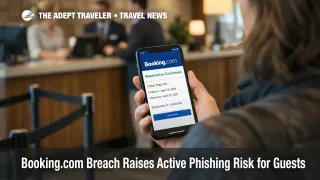
Travelers with current or recent Booking.com reservations should treat the Booking.com breach as an active scam risk, not a passive privacy story. Booking.com confirmed that unauthorized third parties accessed some guests' booking information and said it reset reservation PINs for affected stays, while multiple reports citing customer notices indicate names, email addresses, phone numbers, reservation details, and some messages shared with properties may have been exposed. The company has not disclosed how many people were affected or exactly which systems were accessed. For travelers, the immediate problem is that realistic phishing messages can now arrive with enough trip detail to look legitimate.
Booking.com Breach: What Changed for Travelers
What changed is not only that data may have been accessed, but that Booking.com itself is warning affected guests while resetting reservation PIN numbers tied to impacted bookings. Booking.com told TravelPulse it detected suspicious activity, contained the issue, and informed guests, and outside reporting indicates some customers were already seeing messages that appeared credible because they referenced real reservation details. That shifts the risk window from account security alone to trip execution, especially for travelers with imminent check in dates, prepaid stays, or properties that communicate heavily through Booking.com messaging.
Booking.com also said physical addresses were not leaked, according to TravelPulse. At the same time, reporting based on customer notices suggests other personal booking related data may have been accessible. Until Booking.com publishes a fuller incident scope, travelers should assume that any message referencing their real stay details could be part of a phishing attempt. That uncertainty is operationally serious because it raises the chance that guests will act on a fake payment demand, a false cancellation warning, or a bogus identity verification request while trying to protect a live booking.
Which Travelers Face the Most Exposure
The most exposed travelers are those with active reservations, especially stays arriving within the next several days, because scammers can use accurate dates, hotel names, reservation references, and prior message context to create urgency. Travelers managing multi stop itineraries, family bookings, or high value prepaid reservations also face more pressure because they have more to lose from a fraudulent cancellation, a fake payment request, or a last minute room problem.
The first order effect is direct phishing risk. A guest may receive an email, text, WhatsApp message, or phone call that appears tied to a real Booking.com reservation. The second order effect is broader trip disruption. If a traveler sends card details, pays outside official channels, or clicks a malicious link, the problem can spread into failed check in, frozen cards, replacement card delays, missed onward travel, and emergency rebooking costs at the destination. For travelers in transit, that can turn a manageable cyber incident into a same day lodging and payment failure.
What Travelers Should Do Now
Travelers with any Booking.com reservation should verify the status of the booking only through the Booking.com app, website, or a known customer service path, not through a link inside an unsolicited message. Booking.com's traveler safety guidance says customer service representatives should ask only for a reservation ID or reservation PIN, and that travelers should not be asked for passwords or sensitive payment details through email, phone, text, or WhatsApp. Any request for urgent wire transfer style payment, gift cards, or off platform payment should be treated as suspect.
If the stay is coming up soon, travelers should contact the property through known channels and confirm that the reservation remains valid, the payment status is unchanged, and no new document or card verification is required. If a suspicious message has already arrived, travelers should not reply, should preserve screenshots, should change the Booking.com password if they reused it elsewhere, and should monitor the payment card tied to the reservation for unauthorized activity. Travelers who receive a fresh PIN reset notice should assume the previous PIN should no longer be trusted in any saved communication thread.
The next decision threshold is simple. If a property or sender pressures the guest to act outside official Booking.com channels, the traveler should stop and verify independently before doing anything else. Waiting may feel slower, but it is safer than responding to a message that uses real trip details to manufacture urgency. That is the tradeoff travelers now face.
Why the Risk Extends Beyond a Single Security Notice
This breach matters operationally because reservation data is more useful to criminals than a generic contact list. A scammer with the right hotel name, dates, and guest details can imitate a property or platform message at exactly the point when a traveler expects contact. That lowers the usual skepticism travelers might bring to a random phishing email. Reports this week indicate that some attackers have already used hotel messaging or reservation context to make fraudulent payment or verification requests look authentic.
What happens next depends on whether Booking.com discloses a broader incident scope, including how many reservations were affected, which data fields were exposed, and whether the intrusion touched partner messaging workflows or another reservation system. For now, the confirmed facts are narrower than the traveler consequences. Booking.com says it contained the issue and reset affected PINs, but it has not yet published the kind of detailed incident accounting that would let travelers calibrate the risk more precisely. Until that changes, the practical assumption is that any guest tied to an active Booking.com stay should elevate scam vigilance for the rest of the booking lifecycle.
Sources
- Booking.com Announces Data Breach, TravelPulse
- Booking.com confirms hackers accessed customers' data, TechCrunch
- Booking.com confirms reservation data breach, tells customers hackers may have been able to access certain booking information, TechRadar
- Safety Tips for Travelers, Booking.com
- Online Travel Scams Are on The Rise. Here's How to Stay Safe, Booking.com Newsroom