

China Rail Ticket Crackdown Pushes Travelers to 12306
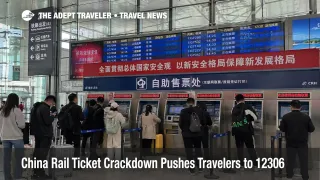
China rail ticket booking is getting less forgiving for travelers who depended on third party "snatch" tools during peak demand, after Chinese regulators warned major platforms not to use automated, high frequency programs that interfere with the official 12306 ticketing system. The practical effect starts now, ahead of the next heavy travel windows, because some unofficial workarounds may weaken or vanish while official sale times, identity checks, and waitlist functions matter more. For most travelers, this is not a broad tech policy story. It is a booking reliability change on a rail network that handled more than 4.6 billion passenger trips in 2025.
China Rail Ticket Booking: What Changed
What changed on April 10, 2026 is that the Cyberspace Administration of China and the National Railway Administration jointly summoned seven third party platforms involved in train ticket sales, including Trip.com, Tongcheng, Qunar, Fliggy, Meituan, Zhixing Train Tickets, and Gaotie Guanjia. The regulators said platforms must not use automated programs for large scale, high frequency ticket grabbing that interferes with 12306 security verification or the platform's stable operation. Reuters separately reported the same warning and identified the main commercial travel platforms that were called in.
That does not mean third party platforms disappear, and it does not mean travelers suddenly lose access to all indirect booking channels. It does mean the most aggressive automation layer is now under direct regulatory pressure. If a traveler previously leaned on paid acceleration features, "抢票" add ons, or background monitoring that tried to beat the official queue during sellouts, that tactic is now more exposed to removal, throttling, or degraded performance. 12306 itself also states that its official app is the authorized app and warns that other sites and apps are not authorized to offer similar service content.
Which Travelers Are Most Exposed
The most exposed travelers are those booking around China's biggest domestic surges, especially holiday periods, major weekend returns, and last minute corridor demand where seats can disappear within minutes. In an earlier Adept Traveler article, China National Day Golden Week: What Travelers Should Know outlined how concentrated demand can become during major China holidays. This new crackdown matters most to travelers who treated unofficial automation as a backup when official inventory looked hopeless at release.
Foreign travelers are exposed in a slightly different way. They are often less familiar with station specific sale times, passport verification rules, and the 12306 waitlist. 12306's English site says only foreign passports are accepted for account registration there, while its identity verification guidance says some passport users may need station window verification if their status remains pending. That means a traveler who waits until the last minute and assumes a third party app will solve account setup friction is taking more risk than before.
First order, some travelers will see fewer successful last second grabs on popular trains. Second order, broken rail plans can spill into higher airfares, misaligned hotel arrivals, and weaker same day onward options, especially on trips that depend on one rail segment to connect an airport, cruise port, or smaller city. When peak trains sell out in China, the problem is not just the train seat. It is the whole itinerary built around that seat.
What Travelers Should Do Now
The safest adjustment is to move earlier toward the official workflow. Build or verify your 12306 account well before you need it, especially if you are using a foreign passport, and check the station specific sale time for your departure station rather than assuming everything opens at one universal moment. 12306 provides a sale time lookup, and its English site says ticket sales and endorsement services generally run from 500 a.m. to 100 a.m. the next day, with shorter Tuesday hours.
Treat the official waitlist as a core tool, not a consolation prize. 12306 says registered users can place waitlist orders when tickets are sold out, and that fulfillment is handled in time order after payment, with automatic ticket issuance if matching seats become available. For travelers on dense corridors or holiday shoulders, that is the official substitute for the kind of acceleration marketing that regulators are now targeting.
Decision thresholds matter. If your trip depends on one high demand train and a missed seat would break a same day flight, cruise embarkation, visa timing, or remote hotel arrival, do not wait for unofficial tools to rescue the booking. Book at release, use the waitlist immediately if needed, and be ready with a backup departure time, backup station, or backup mode. If the trip is discretionary and the rail leg is not mission critical, waiting may still be reasonable, but only if your hotel and onward transport remain flexible.
Why This Is Happening, And What Comes Next
The mechanism is straightforward. China's rail system runs on real name ticketing, identity checks, controlled release windows, and a huge volume of demand that spikes hard during major travel periods. When unofficial platforms use automated, high frequency requests at scale, regulators see that as interference with the security verification and normal operation of 12306. The official system has spent years steering users toward verified accounts, monitored behavior, and waitlist fulfillment instead of pay more, click faster promises.
What happens next is likely not a ban on all third party travel platforms, but a narrower booking environment where the official channel gains relative importance and platforms have less room to market aggressive ticket grabbing features. Authorities said they will increase technical monitoring and will investigate behavior that interferes with 12306. For travelers, the practical outlook is simple: peak China rail travel is becoming more official channel dependent, not less. The sooner booking habits shift toward verified 12306 access, station sale time awareness, and waitlist use, the less exposed travelers will be when the next sellout wave hits.