

Delta One Suites Raise Premium Pressure for 2027
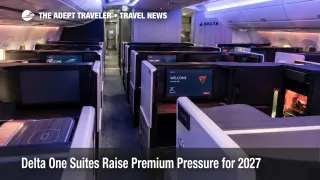
Delta One suites are getting a broader and more premium rollout at Delta Air Lines beginning in early 2027, when the carrier expects to receive its first Airbus A350-1000, its newest and largest aircraft. Delta says that jet will arrive with a 50 percent premium seat mix, while older Airbus A330-200 and A330-300 aircraft will also gain Delta One suites with privacy doors for the first time. For travelers, this is less about a nicer seat in isolation and more about Delta putting more of its long haul strategy behind premium cabins, sleep quality, and consistency across fleet types.
The product changes are meaningful. Delta says the new suites will offer a lie flat bed more than 3 inches longer than the current design, a new pillow top cushion layered over memory foam, added storage for shoes, phones, and glasses, a 24 inch screen on the A350-1000, Bluetooth connectivity, wireless charging, and a self serve refreshment station in Delta One. Beyond business class, Delta says every seat on the A350-1000 and refreshed A330-200 and A330-300 aircraft will get larger screens, USB C, universal AC power, and memory foam cushions, while Delta Comfort and Main Cabin will gain 1 extra inch of legroom from a slimmer seat design.
Who Benefits Most From Delta's Premium Push
The clearest winners are travelers booking long overnight international flights where sleep and privacy can materially change arrival day performance. That includes corporate travelers heading straight into meetings, leisure travelers paying cash for a splurge trip, and SkyMiles members using certificates, upgrade instruments, or premium redemptions on routes where the aircraft type matters as much as the fare brand. Travelers who already shop by cabin layout rather than by airline alone should treat this as a real product upgrade, especially once the A330 retrofits begin appearing in schedules.
There is another side to this shift. When an airline puts half the seats on a new flagship aircraft into premium cabins, it is signaling where it expects margins and demand to hold up best. Reuters reported in January that Delta forecast 2026 earnings growth driven mainly by higher income and corporate travelers, even as demand for economy seats was softer. That does not mean cheap long haul seats disappear, but it does point toward continued pressure on the best economy inventory, fewer easy upgrades at the last minute, and a wider gap between what travelers get in the front and the back of the plane.
How Travelers Should Plan Around Delta One Suites
The immediate planning move is simple. Do not book a fare assuming the new suite unless the aircraft type and seat map support it at the time of purchase. Delta's first A350-1000 is not due until early 2027, and retrofits on the A330-200 and A330-300 fleets will take time. Travelers who care about doors, bed length, storage, or screen size should wait until those flights are loaded with the right aircraft and then verify again close to departure, because equipment swaps can erase the advantage.
There is also a pricing decision. Book early if the trip depends on arriving rested, especially on overnight Atlantic, Pacific, Middle East, or Africa flying where Delta says these aircraft support its network growth. Wait, or stay flexible, if the premium features are nice to have rather than essential, because airlines often need multiple schedule seasons before a new cabin is reliably widespread. The main threshold is whether sleep quality, privacy, and productivity are worth paying for on that specific route, not whether the marketing photos look better.
Travelers flying other U.S. network carriers should also compare timing, not just branding. United says its Elevated interior includes larger Polaris Studio suites and is entering service now, while American has already begun flying A321XLR aircraft with Flagship Suite seats and plans broader international use as more aircraft arrive. The practical takeaway is that premium competition is real, but rollout speed, route assignment, and fleet scale will determine who actually gets the better seat on the day they fly.
What Makes This Different, and What Happens Next
What makes this announcement more consequential than a normal cabin refresh is the fleet level signal. Delta says the suite launch and related cabin work are part of more than $1 billion in upgrades, and that more than 800 aircraft are expected to carry the airline's newer interior design within five years. The airline also says it expects 90 percent of Delta One seats to be suites with sliding privacy doors by 2030. That is not a one off premium halo project, it is a long range attempt to standardize the airline around a higher value long haul product.
For travelers, the first order effect is a better top end product on more Delta widebodies. The second order effect is that competition among Delta, United, and American is increasingly focused on monetizing premium demand rather than restoring broad based affordability. The next thing to watch is route assignment. Once Delta begins publishing where the first A350-1000s will fly and when A330 retrofits enter service, the real value of these Delta One suites will become clearer, because that is when travelers can judge whether the upgrade changes their actual booking options, not just Delta's brand position.
Sources
- The Suite Spot
- Airbus A350
- Delta Air Lines orders 20 Airbus A350-1000 aircraft
- Delta leans on premium flyers for 2026 growth, orders Boeing 787s
- United Unveils the Elevated Aircraft Interior
- Tickets on Sale Today for United's First Boeing 787-9 Dreamliner with Elevated Interior Flights
- A suite treat: American Airlines welcomes the Airbus A321XLR to the fleet