

Princess Voyager Class Signals Bigger LNG Ships
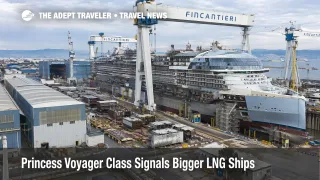
Princess Voyager class ships became official on April 16, 2026, when Princess Cruises and Fincantieri said they had signed for three new LNG powered vessels to be built in Monfalcone, Italy, for delivery in late 2035, 2038, and 2039. Each ship is planned at 183,000 gross tons with capacity for about 4,700 guests, which would make them the largest ships in the Princess fleet. For travelers, this is not a booking event yet. It is a long range fleet signal that Princess intends to keep expanding its big ship, amenity heavy, mainstream premium product rather than pulling back from scale.
Princess Voyager Class: What Changed
The immediate change is strategic, not operational. Princess moved from talking about its current Sphere class, led by Sun Princess and Star Princess, to committing capital for an all new platform beyond them. The company says the new ships will feature reworked outer decks, staterooms, and Piazza spaces, but it has not yet published itineraries, homeports, pricing, deck plans, or specific onboard venues. That means travelers should read this as evidence of where the line is going, not as a cue to delay a near term cruise decision waiting for these ships.
The scale shift is real. Princess lists Sun Princess at 177,882 gross tons and 4,300 guests, while the current fleet overview rounds both Sun Princess and Star Princess to 175,500 gross tons and about 4,310 guests. The Voyager class would step above that, which points to more public space capacity, more cabins, and likely more reliance on the line's newest ship design language.
Who Benefits Most From Princess Going Bigger
The travelers most likely to benefit are the same groups Princess has been courting with its newest ships, multigenerational families, premium mainstream cruisers who want more dining and entertainment choice without moving up to luxury pricing, and repeat Princess guests who like the brand but want fresher hardware. President Gus Antorcha said the line is trying to balance proven features with new concepts, which suggests Princess is not trying to abandon its existing customer base as it grows these ships.
There is also a second layer to this announcement. Bigger ships usually need the line to place them where demand is deepest, air access is strong, and shore side infrastructure can absorb more guests. That does not confirm future deployment, but it raises the odds that Princess will reserve its next generation flagships for major cruise regions and major gateway ports rather than niche programs. In an earlier Adept Traveler article, Japan Cruise Bookings Tighten As Tokyo Capacity Grows the line's broader capacity logic was already visible in Asia. In another earlier Adept Traveler article, Star Princess Sea Trials Completed Ahead of October 4 Debut Princess' current LNG strategy was already moving from concept into operating reality.
What Travelers Should Do With A 2035 To 2039 Fleet Signal
For anyone booking before 2035, the practical move is simple, do not wait for Voyager class ships. They are too far out, and the line has not published enough to justify changing real trip plans today. If your trip window is 2026 through 2028, the decision set is still the current fleet, especially Sphere class sailings on Sun Princess and Star Princess, plus the line's existing regional deployment choices.
For travelers who book far ahead, this announcement is more useful as a brand signal. It says Princess believes demand for larger, newer ships will still justify major investment well into the late 2030s. That should make loyal Princess guests more confident that the line plans to keep refreshing its top tier hardware, even if older ships remain important for secondary markets and varied itinerary lengths.
The next decision point is not whether to reserve a Voyager sailing, because that option does not exist yet. It is whether to treat Princess as a line that is doubling down on larger flagship style cruising. If that matches what you want, more entertainment, more cabin choice, more new ship energy, stay alert for design reveals and eventual deployment clues. If your priority is smaller ships, lower passenger counts, or port intensive itineraries, this news is a reminder to compare Princess against brands that are investing in different directions.
Why Princess Is Extending The Bet Through 2039
The mechanism behind this order is long lead time fleet planning. Cruise lines do not add brand new platforms quickly, and yards do not hold premium build slots open indefinitely. Fincantieri said the deal secures workload through 2039, while Princess said these ships fit Carnival Corporation's wider fleet enhancement strategy. Carnival also said the three vessels would become its 19th, 20th, and 21st LNG based ships, which shows this is part of a larger propulsion and fleet modernization program, not a one off experiment.
That matters because ship size and fuel choice affect more than marketing. First order, bigger LNG ships can reshape onboard experience, cabin mix, and where the line can most profitably deploy capacity. Second order, they can influence which homeports get the newest hardware, which itineraries absorb premium pricing first, and how the brand separates flagship ships from its older fleet over time. What happens next should come in stages, first with design specifics, then likely deployment hints, then eventual on sale dates years from now. Until those details appear, the serious takeaway is narrow but clear, Princess has made a structural, long horizon bet on bigger LNG ships, and future cruisers should read this as a map of the brand's direction, not an immediate reason to change 2026 or 2027 plans.