

Tokyo One-Way Cruises Shift Asia Fly-Cruise Math
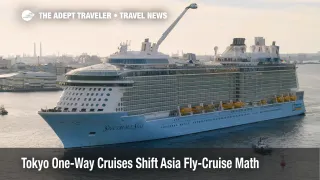
Tokyo one-way cruises are becoming a real Asia planning variable after Royal Caribbean opened Spectrum of the Seas' 2027-28 East Asia season on April 16, 2026, with sailings from three to 11 nights across 22 destinations. The practical shift is not just more Asia inventory. Royal Caribbean is mixing longer cruises, first time one-way Tokyo sailings, and seasonal blossom, foliage, and holiday departures into one booking window, which gives travelers more flexibility but also makes airfare, hotel, and transfer planning more complex earlier in the buying cycle.
Tokyo One-Way Cruises Change What Travelers Can Build
Royal Caribbean says Spectrum of the Seas will operate eight to 10 night voyages from Tokyo, Shanghai, and Hong Kong, and, for the first time, guests will be able to sail one way between cities starting or ending in Tokyo. That matters because open jaw cruise products can reduce repeated backtracking. Instead of flying into and out of the same city, some travelers can now build an itinerary that combines one cruise, multiple countries, and a different arrival and departure city in one trip.
The line is also stretching the product in two directions at once. Short three and four night sailings from Shanghai and Hong Kong still target quick regional breaks, while the longer end now reaches 11 nights and adds more destination depth. Royal Caribbean is also selling May 2027 blossom themed sailings, October 2027 foliage departures, Japan overnights on some eight night itineraries, and three holiday cruises around Thanksgiving, Christmas, and New Year's. In plain terms, this is no longer a simple round trip China deployment. It is a more layered East Asia fly-cruise program built around seasonality and routing choice.
Which Travelers Benefit Most From The New Asia Mix
The best fit is travelers trying to make one long haul flight do more work. A one-way sailing tied to Tokyo can let a traveler cruise into or out of Japan, then continue overland or by air without doubling back. That is especially useful for travelers combining Japan with Hong Kong, Shanghai, or a broader Northeast Asia land itinerary. Families and multigenerational groups may also like the spread between short escapes and longer school break friendly sailings, but the cleanest value is for travelers who want to turn one cruise into a wider multi-city Asia trip.
There is also a timing effect. Royal Caribbean is now competing in an Asia booking pattern that already shows pressure around Japan seasonality. In an earlier Adept Traveler article, Japan Cruise Bookings Tighten As Tokyo Capacity Grows, Tokyo centered cruise inventory was already tightening around blossom, festival, and fall foliage demand. In another earlier Adept Traveler article, Quantum Of The Seas Singapore Cruises Return In 2027, Royal Caribbean was already rebuilding a wider Asia homeport map around Singapore. This new Spectrum program adds a northern East Asia layer to that logic.
What Travelers Should Do Before Booking Flights
Travelers who care about exact seasonal moments should move earlier than they might for a generic Asia cruise. Blossom departures in May 2027, foliage sailings in October 2027, Japan overnights, and holiday departures are the likeliest categories to tighten first, because they compress demand around very specific dates instead of spreading it across a long season. If the trip only works during one school break, one retirement window, or one foliage or blossom period, waiting for lower airfares could cost more in cruise choice than it saves in flight spend.
The next threshold is whether the traveler wants a round trip or an open jaw vacation. A round trip is still operationally simpler. A one-way cruise can unlock more destination value, but it also adds moving parts, especially airfare into one city and out of another, extra hotel nights, baggage handoffs, visa checks, and transfer timing. Travelers should price the full trip, cruise, airfare, hotels, and city to port transfers, before assuming the more flexible itinerary is automatically the better value. Travelers who want simpler patterns can also compare these options against Royal Caribbean's broader Singapore program, while travelers exploring the category more generally can use Adept Traveler's Ocean Cruise coverage as a starting point.
Travelers should also watch port timing, not just cruise length. An eight night sailing with overnight calls in Osaka and Tokyo is a different product from an eight night itinerary that spreads time across more ports. The right choice depends on whether the traveler values city depth, easier independent touring, and pre or post cruise land time more than simple port count.
Why Royal Caribbean Is Reframing Asia Cruise Planning
The bigger mechanism is that Royal Caribbean is turning East Asia into a more modular cruise region. Longer itineraries, more destinations, and one-way Tokyo sailings create more ways to connect cruise travel with land travel, which is good for flexibility but also shifts pressure to airports, city hotels, and transfer planning. First order, travelers get more route choice. Second order, more travelers are likely to compete for the same seasonal windows in Tokyo, Hong Kong, and Shanghai, especially when sailings are built around blossom, foliage, and holiday timing.
Royal Caribbean's own wording points to the same strategy. The company says the longer itineraries are designed both for Chinese vacationers seeking deeper trips and for international travelers who want to explore Asia's seasonal highlights from China. That is a broader commercial signal than one ship schedule. It suggests Asia cruise planning is moving further away from short ex China loops and toward fly-cruise combinations that work across multiple gateways. What happens next will depend on how quickly these themed departures tighten, how aggressive airfare remains into Tokyo, Hong Kong, and Shanghai, and whether other lines answer with similarly flexible Northeast Asia deployments.