

Nairobi Protest Risk Raises April 21 Transfer Delays
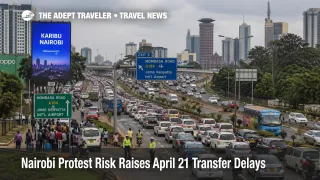
Travelers in Nairobi, Kenya, should build extra time into any cross city movement on April 21, 2026, after the U.S. Embassy in Kenya warned of planned demonstrations over higher fuel prices and governance issues, saying protests and strikes can block major roads and intersections and trigger wider congestion. Local reporting before the protests pointed to calls for a Nairobi CBD shutdown, while same day updates later reported arrests in the city center and a police denial that Mombasa Road in the Mlolongo area had been blocked. That makes this a real same day mobility risk, but not a confirmed citywide standstill. The practical problem for travelers is that even partial closures in central Nairobi can ripple quickly into airport runs, hotel transfers, meetings, and timed tour pickups.
Nairobi Protest Travel Risk: What Changed
The immediate change is not a new national rule or a formal road closure order. It is a same day security warning layered onto a city that already has a history of protest related movement disruption. The embassy said it was aware of social media calls for demonstrations on Tuesday, April 21, over higher fuel prices and governance issues. It also warned that demonstrations in Nairobi can block major roads and intersections and lead to widespread traffic congestion.
The fuel price trigger is concrete. Kenya's Energy and Petroleum Regulatory Authority published new pump prices for April 15, 2026, to May 14, 2026, and Reuters reported that Nairobi petrol rose to KSh 206.97 per liter and diesel to KSh 206.84 per liter after a sharp jump in imported petroleum costs. That price shock helps explain why the protest call gained traction this week.
The seriousness level is meaningful disruption risk, not yet confirmed citywide paralysis. Nairobi police had already warned against disruptive CBD protests before April 21, and local reporting on the day said protesters were arrested in the city center. At the same time, police told local media that traffic on Mombasa Road in the Mlolongo area was flowing normally, which matters because that corridor feeds the airport side of the city. Travelers should read this as a dynamic urban delay problem that can intensify in pockets, especially around the CBD and major junctions, rather than assume every airport approach is already shut.
Which Nairobi Trips Face the Most Risk
The most exposed travelers are people moving between central Nairobi and Jomo Kenyatta International Airport (NBO), especially anyone relying on a tight departure window. The Nairobi Expressway is the city's main fast link between the airport and the urban core, with the operator describing it as a route built for efficient transit and airport connectivity. That helps, but it does not remove risk if access roads, feeder junctions, toll approaches, or CBD exits become congested or restricted.
Trips touching the CBD face the highest same day uncertainty. Local reports tied the protest call directly to a planned shutdown of central Nairobi, and social media based local coverage cited affected or potentially affected corridors including Kenyatta Avenue, Uhuru Highway, Jogoo Road, Mombasa Road, and Waiyaki Way. Some of those reports are harder to verify corridor by corridor in real time, so the safer conclusion is narrower: central Nairobi movements and the main radial routes into and out of the CBD are the most likely places for delay spikes, police controls, or sudden rerouting.
Business meetings, embassy visits, intercity coach departures, and half day touring are also vulnerable. In Nairobi, road friction compounds fast because one blocked node can spill pressure into alternate roads rather than creating a neat detour. A late airport run is the obvious risk, but the second order problem is that missed pickups, missed coach departures, and failed same day sequencing become more likely once drivers start routing around police activity or protest concentrations.
What Travelers Should Do on April 21
Anyone flying out of Nairobi on April 21, 2026, should leave earlier than normal, even if a driver says traffic looks manageable when you depart. For international departures, this is a day to avoid tight check in assumptions. The better move is to front load the ground segment, because once protests, police barriers, weather, and commuter traffic overlap, recovery options shrink quickly. Same day reporting that Mombasa Road was still flowing is useful, but it is not a guarantee for later hours or for CBD linked approaches.
Travelers crossing Nairobi for nonairport reasons should cut optional movements, keep ride hailing plans flexible, and ask hotels or hosts to confirm the most current route before departure. If you have a meeting in the CBD, the threshold for switching to a virtual option is low on a day like this. If you have a timed pickup for a tour or coach, confirm both the pickup point and a fallback contact method, because roadblocks and congestion often break the first plan before operators can update everyone at once.
What to monitor is simple. Watch official embassy alerts, hotel transport advice, airline notifications, and reliable local reporting for whether demonstrations remain concentrated in the CBD or start affecting broader approach roads. If later updates show confirmed blockages on airport side corridors, the Nairobi protest travel risk moves from meaningful friction to a more serious itinerary threat. If the pattern stays concentrated downtown, airport access may remain possible with added buffer rather than full replanning.
Why Nairobi Delays Can Spread Fast
Nairobi's transport mechanism is what turns a protest warning into a traveler problem. The city depends heavily on a few major corridors and interchanges to connect the CBD, Westlands, the industrial and airport side, and the wider metro area. The Nairobi Expressway has improved airport access, but it still relies on entry and exit points that connect back into the city's broader road network. When a protest or police operation interferes with one central node, displaced traffic does not vanish, it shifts outward and starts loading alternate routes and junctions.
There is also a timing effect. Nairobi police warnings before the protests focused on the CBD, not the entire city, and the earliest same day reporting suggested airport side traffic was still moving. That pattern often means the first disruption is localized, then spreads if commuters, taxis, buses, and security controls all react at the same time. For travelers, that is why a protest that seems distant from the airport can still break an airport run later. The route may technically stay open, but the buffer that made it workable disappears.
What happens next depends on scale. If turnout remains limited and police keep activity concentrated in the center, Nairobi should see pockets of delay rather than a daylong citywide freeze. If protest crowds grow or authorities expand controls around major junctions, airport transfers, coach departures, and same day business travel become much less reliable. For now, the right reading is caution, extra time, and active monitoring. That is the operational core of the Nairobi protest travel risk on April 21, 2026.
Sources
- Demonstration Alert for U.S. Citizens, U.S. Embassy in Kenya
- US Embassy in Nairobi Issues Security Alert Ahead of Protests, The Star
- Police Warn Against Disruptive Protests in Nairobi CBD Ahead of Fuel Price Demos, The Star
- Police Arrest Eleven in Attempted Fuel Protests in Nairobi, The Star
- Maximum Retail Petroleum Prices in Kenya for the Period 15th April 2026 to 14th May 2026, EPRA
- Kenya Raises Retail Fuel Prices as Mideast Conflict Drives Up Crude Costs, Reuters
- The Nairobi Expressway
- The Nairobi Expressway Route Map