

Trinidad Emergency Keeps Travel Planning Heavy
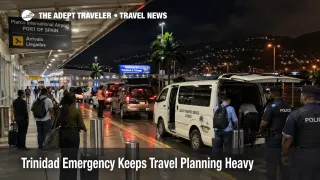
Travelers considering Trinidad and Tobago should still plan the trip as a higher friction Caribbean journey, not a normal island break. The U.S. State Department kept the destination at Level 3 on April 13, 2026, said the advisory summary was updated, added an area of increased risk, and kept a nationwide State of Emergency first declared on March 2 in view. In practice, that means visitors should assume a heavier police and military presence, sudden rule changes, and stricter movement realities around Port of Spain, especially after dark. The safest planning posture is to tighten airport transfers, avoid loose late night city movement, and pay more for location and transport certainty if the trip is still worth taking.
Trinidad Emergency Travel: What Changed
The headline did not get worse in the way a move from Level 3 to Level 4 would have, but the April 13 advisory update still changed the traveler picture. The State Department said there was no change to the advisory level, removed the kidnapping indicator, added an area of increased risk, and updated the summary. It also kept the nationwide State of Emergency prominently in place, with the government empowered to arrest people on suspicion of illegal activity, search public and private property, and suspend bail for some suspects. There are currently no curfews or restrictions on public gatherings, but officials say restrictions can change with little or no notice.
That matters operationally because a trip can feel stable on paper while becoming less flexible on the ground. A Caribbean holiday built around spontaneous nightlife, casual street movement, or late hotel changes works differently when the security environment is tighter and enforcement powers are broader. Travelers are not just managing crime risk, they are managing a destination where policing posture can shift fast and where the safest version of the trip usually costs more in hotel location, private transfers, and timing discipline.
Which Travelers Face the Most Friction
The highest exposure is on Trinidad, not Tobago. The State Department says crime rates are lower in Tobago than in Trinidad, and its specific no travel and after dark restrictions for U.S. government personnel are centered on Port of Spain. At any time, those restricted areas include Laventille, the southern end of Charlotte Street between Oxford Street and Park Street, Piccadilly Street, Besson Street, Beetham, Sea Lots, Cocorite, and the interior of Queen's Park Savannah. After dark, the restrictions also extend to Port of Spain beaches, downtown Port of Spain, Fort George, and Queen's Park Savannah.
That does not mean every visitor will go near those areas. It does mean many normal traveler patterns brush against the same urban geography, especially if a trip involves Port of Spain nightlife, event venues, casual sightseeing, or late airport to hotel transfers. Visitors arriving in the evening, booking cheaper hotels farther from controlled tourist corridors, or relying on improvised rides are the most exposed. Business travelers with fixed meetings, Carnival style event goers, and anyone planning nightlife heavy schedules should treat movement planning as a central part of the itinerary, not a detail to solve on arrival.
What Travelers Should Do Now
The practical move is to reduce variables. Book lodging with a location strategy first, price second, especially if you need to be in or near Port of Spain. Favor daytime arrivals where possible, and arrange airport pickup in advance rather than counting on last minute decisions after landing. If your schedule pushes you into a late arrival, the tradeoff is simple, paying more for a vetted transfer and a better placed hotel is cheaper than testing how resilient the ground environment is after dark.
The next decision point is whether your trip depends on nighttime spontaneity. If the plan is mainly resort time, family visits in controlled settings, or structured meetings with organized transport, the destination is easier to contain operationally. If the plan depends on bar hopping, beach visits after dark, flexible city movement, or self directed exploration in Port of Spain, the trip is carrying more risk than the usual Caribbean leisure template. That is where Trinidad and Tobago's current setting changes how the trip works, even without a curfew.
Travelers should also assume weaker recovery options if something slips late in the day. A delayed flight, a missed pickup, or a change of hotel can force decisions into the higher risk hours the advisory already flags. That makes buffer time more valuable than usual. Keep local contacts and hotel numbers handy, carry ID, enroll in STEP, and make sure travel insurance includes medical evacuation coverage, because the State Department also warns that routine and emergency medical services are limited in rural areas on both islands.
Why the Emergency Setting Still Matters
The mechanism is broader than generic crime advice. A state of emergency changes how security forces operate, how quickly conditions can tighten, and how comfortable visitors should be with unplanned movement. The U.S. Embassy's March 4 security alert said Americans should expect increased police and military presence, carry ID at all times, and cooperate with local authorities during emergency activities. That is a different operating environment from a standard advisory that warns about crime but leaves daily travel patterns largely intact.
There is also a timing problem for tourism. AP reported that the latest emergency was declared only about a month after the previous one ended, and noted concerns from tourism stakeholders that the measure could hurt visitor demand. Even when the government says there is no curfew, repeated emergency use tells travelers and insurers that the destination is still being managed under exceptional security logic. First order, that can suppress late bookings and push travelers toward more controlled trip designs. Second order, it can shift demand toward Tobago, organized tours, better located hotels, and daytime transport patterns, while making loosely planned urban stays harder to sell.
What happens next depends less on the headline advisory level and more on whether restrictions tighten, loosen, or remain fluid. Travelers should watch for any government changes to assembly rules, curfews, or transport related controls, and for any new U.S. embassy alerts that sharpen after dark guidance. Until that picture settles, Trinidad remains a destination where the security setting does not automatically cancel a trip, but it does force a more controlled version of one.
Sources
- Trinidad and Tobago Travel Advisory, U.S. Department of State
- Trinidad and Tobago International Travel Information, U.S. Department of State
- Security Alert: State of Emergency in Effect for Trinidad and Tobago, OSAC
- Trinidad and Tobago Declares New State of Emergency Over Persistent Violent Crime, AP News