

FAA Probes Southwest Near Miss at Nashville Airport
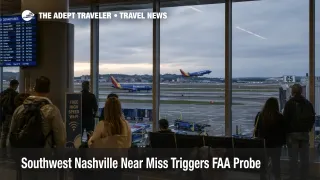
A Southwest Nashville near miss over Nashville International Airport (BNA) has drawn fresh FAA scrutiny after two Southwest Boeing 737s came unusually close during a go around on Saturday evening. The aircraft were reported to have passed within about 500 feet after Southwest Flight 507 aborted its landing in gusty winds and crossed into the path of departing Southwest Flight 1152. Both crews responded to onboard traffic alerts, and both flights continued safely. For travelers, the immediate takeaway is narrower than the headline, there is no sign of a broad BNA shutdown or ongoing schedule disruption, but the incident puts another spotlight on how quickly parallel runway operations can turn serious when weather, timing, and controller instructions line up badly.
Southwest Nashville Near Miss: What Changed
The FAA is investigating the event after the two Southwest flights came dangerously close near BNA at about 5:30 p.m. local time on Saturday, April 19. ABC News and other outlets reported that controllers instructed Southwest Flight 507 to make a precautionary go around, and that the maneuver put the arriving jet into the path of another Southwest aircraft departing from a parallel runway. Southwest said both crews responded to onboard proximity alerts, Flight 507 later landed without issue, and Flight 1152 continued its departure normally.
That matters because this was not a gate delay story or a weather ground stop story. It was a high consequence airspace event inside the airport environment, the kind of incident that can prompt procedural review even when passengers see no immediate follow on cancellations. The FAA's public BNA pilot information page notes that Nashville uses three parallel runways, which helps explain why a go around and a departure can become tightly sequenced in the same operating window.
For travelers booking Nashville right now, the key fact is what did not happen. Neither the FAA nor Nashville airport has announced systemwide operating restrictions tied to this incident, and there is no public sign that BNA schedules are being broadly reduced because of it. The story is serious, but at this stage it is a safety investigation, not an airport operations collapse.
Which Travelers Should Pay Closest Attention
Passengers flying in or out of Nashville in the next few days do not need to assume their trip is suddenly at unusual operational risk just because this happened. The more exposed group is travelers already vulnerable to small irregular operations, especially those on tight same plane turns, short same day domestic connections, or evening schedules where even minor delays can remove backup options. A near miss investigation can increase scrutiny and caution in tower and flight operations, which is appropriate, but that does not automatically translate into mass cancellations.
Southwest customers matter most here for a simple reason, both aircraft involved were Southwest flights, and BNA is an important airport in the carrier's network. That does not mean Southwest as a whole faces a visible customer facing disruption from this one event. It does mean travelers on Nashville itineraries should expect the airline, crews, and regulators to treat the incident seriously while the facts are reviewed.
The second group to watch is nervous flyers, because incidents like this can sound broader than they are. Modern airliners carry collision avoidance systems precisely because layers of protection are built to catch dangerous situations before they become catastrophic. In this case, both aircraft received alerts and both crews responded, which is one reason the event ended without injuries or damage.
What Travelers Should Do Now
Do not overreact into a voluntary rebooking unless your itinerary is already fragile for other reasons. There is no public evidence yet that the Southwest Nashville near miss is causing a persistent operating problem at BNA. Travelers with ordinary point to point trips should keep monitoring their airline app as usual, arrive on time, and avoid treating this as a sign that Nashville has become broadly unreliable overnight.
A different approach makes sense if your trip has very little slack. If you are connecting onward to a cruise, a major event, or a nonrefundable ground transfer, keep extra buffer around the Nashville segment and consider earlier departures where practical. The reason is not that this one incident should delay you directly, but that already tight itineraries break first when any airport faces added caution, weather complications, or evening recovery limits. Gusty winds were part of the setup in this case, and weather driven go arounds are normal enough that the real planning question is whether your itinerary can absorb a small operational wobble.
The next decision point is simple. Rebook only if your airline begins moving flights, if waivers appear, or if your Nashville itinerary was already exposed by a short connection or critical timed arrival. Otherwise, monitor for any FAA findings, Southwest customer notices, or same route schedule changes over the next 24 to 72 hours. Right now, the reporting supports vigilance, not panic.
Why This Happened, and What Comes Next
The mechanism here matters more than the headline phrase close call. Flight 507 reportedly aborted its landing because of gusty winds, then entered the path of a Southwest jet departing from a parallel runway. At an airport like BNA, which the FAA says operates with three parallel runways plus an intersecting runway, simultaneous or tightly sequenced arrivals and departures are part of normal capacity management. When one aircraft suddenly has to go around, spacing that looked acceptable seconds earlier can deteriorate very fast if instructions, climb profiles, and runway geometry do not stay separated.
What happens next is likely procedural before it is passenger facing. The FAA will investigate the sequence, controller instructions, aircraft tracks, and crew responses. That review could remain mostly invisible to travelers, or it could produce later procedural changes, training emphasis, or local operating adjustments if investigators find a specific breakdown. Until regulators publish more, the confirmed facts are that the planes came unusually close, alerts fired, the crews responded, and the flights ended safely. Travelers should keep that proportion in mind. The Southwest Nashville near miss is a serious safety event, but not yet a sign of ongoing disruption at Nashville International Airport.
Sources
- FAA Statements on Aviation Accidents and Incidents
- Nashville International Airport (BNA), FAA Flight Deck Information
- Two Southwest Airlines planes came dangerously close in Nashville and had to take evasive action
- 2 Southwest Planes Narrowly Avoid Collision After Flying Within 500 Feet of Each Other Over Nashville