

Nigeria Steps Back From Domestic Flight Shutdown
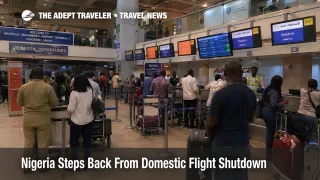
Nigeria's domestic airlines have stepped back from the edge of a nationwide shutdown, at least for now. After carriers warned they could halt flights from April 20, 2026, over a surge in Jet A1 prices, the Airline Operators of Nigeria first paused the action, then got a stronger signal on April 22 when President Bola Tinubu agreed in principle to write off part of their debts to aviation agencies and review taxes, levies, and fees on domestic tickets. The reprieve matters, but it is still provisional, because the government has not published the size of the write off and fuel pricing remains unsettled.
Nigeria Domestic Flight Shutdown: What Changed
What changed is not just that the shutdown threat faded. It is that the federal government moved from asking airlines to hold off to offering potential financial relief. Reuters reported that Tinubu agreed in principle to a partial write off of domestic airlines' debts to aviation agencies, asked for a formal request so he could decide the percentage himself, and backed a committee to review taxes, levies, and fees charged on domestic air tickets. That is a more concrete intervention than the earlier appeal for restraint that led airlines to suspend the shutdown plan conditionally ahead of the April 22 talks.
What the debt relief changes immediately is cash pressure. Airlines had complained not only about fuel prices, but also about service providers and government agencies demanding upfront payments while Jet A1 costs were surging. A write off, even a partial one, could reduce the near term risk of carriers losing access to services or pulling flights simply because working capital has become too tight. But the government has not yet said how large the write off will be, which debts qualify, or when any tax cuts would actually take effect. That leaves the operational benefit real, but still incomplete.
Which Travelers Still Face the Most Risk
Passengers with domestic Nigeria itineraries should not read this as a return to normal. The shutdown notice may be off the table for now, but the underlying fuel shock is still severe. Reuters reported that airlines said jet fuel prices had risen about 270 percent since late February, while Nigerian outlets citing AON put the move at more than 300 percent, from about N900 per litre to roughly N3,300 per litre. Even allowing for disputes over the exact market price, the common point is that fuel costs moved fast enough to make operations look unsustainable to carriers.
The travelers still most exposed are those relying on tight domestic to international connections, same day business trips, and lower frequency city pairs where one canceled or trimmed rotation can break the whole day. Nigeria's busiest business corridors should be more defensible than thinner spokes because airlines are likely to protect flights that carry the most passengers and revenue. That means the bigger practical risk is not necessarily a total network stoppage now, but a weaker backup system, fewer easy same day recoveries, and higher exposure if one delay forces a rebook. That route vulnerability is an inference from the economics airlines are describing, not a formally published cut list.
What Travelers Should Do Now
Travelers with domestic Nigeria flights over the next several days should keep more buffer than they normally would. For international departures, a domestic feeder on the same day now carries more risk than usual because the underlying dispute over fuel pricing is not fully resolved and no final debt relief package has been published. On itineraries that matter, arriving the night before remains the safer play than trusting a same day domestic connection.
The main decision threshold is whether your trip can absorb a missed rotation. If a domestic flight is feeding an international long haul departure, a visa appointment, or a fixed business meeting, protecting the itinerary is worth more than waiting for the situation to stabilize. If the trip is discretionary and the carrier is still selling a normal schedule without waivers, waiting may be reasonable, but only if you can absorb a later fare jump or a same day disruption with limited alternatives. Airlines had already warned that ticket revenues were no longer covering fuel costs alone, which means any renewed pressure could quickly show up in schedules or pricing.
The next signals to watch are concrete, not rhetorical. Travelers should monitor whether the government publishes the actual percentage of debt forgiveness, whether the tax and fee review produces fast cuts rather than a slow committee process, and whether talks with fuel marketers produce a visible retreat in Jet A1 pricing. If those three pieces stall, the risk shifts back toward trimmed frequencies, weaker punctuality, and renewed threats from carriers rather than a clean recovery.
Why This Is Happening, and What Comes Next
The mechanism is broader than one labor dispute or one airline complaint. Nigerian carriers were hit by the same fuel shock that has been pressuring airlines elsewhere, but Reuters reported that domestic operators also pointed to local supply constraints and foreign exchange pressure. Fuel already accounts for more than a third of airline expenses in Nigeria, well above the global norm, and Reuters also reported that Dangote Petroleum Refinery, described as Nigeria's sole domestic jet fuel producer, made no deliveries to the domestic market in March. That helps explain why the cost spike hit so hard and why the government's response had to address both fuel and non fuel financial burdens.
What happens next depends on whether April 22 becomes a bridge or just a pause. For now, airlines have formally stood down from the shutdown path in conditional terms, and the government has moved to keep the domestic network alive. But until the debt write off is quantified and fuel pricing pressure eases, this remains a fragile reprieve, not a solved crisis. First order, flights are still operating. Second order, travelers should assume the network has less resilience than normal, especially where missed connections, rebook limits, and time sensitive internal travel matter most.
Sources
- Nigeria moves to avert airline shutdown with debt relief, tax review
- Nigerian airlines pause flight suspension as minister urges talks on fuel costs
- Nigerian airlines threaten to halt flights over soaring jet fuel prices
- Airline operators suspend planned shutdown
- FG considering debt reduction for domestic airlines as aviation fuel cost bites