

Bali Airport Queues Delay Arrivals at Immigration
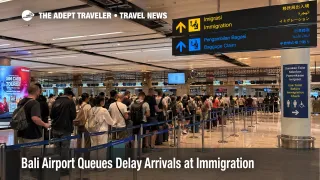
Bali airport queues are again turning arrival day into the first operational risk for visitors landing at I Gusti Ngurah Rai International Airport (DPS) on April 24, 2026. The pressure is concentrated at immigration, where travelers without completed digital paperwork, e visas, or autogate eligibility can face a much slower path into Bali than their flight time suggests. The airport has handled recent holiday volumes near peak season levels, and the practical consequence is clear: a late arrival into immigration can push hotel transfers, check ins, dinner bookings, and same day tours out of sequence before the trip has really started.
Bali Airport Queues: What Changed
The immediate change is not a new visa rule. It is the return of sustained queue pressure at the arrival process, especially when several international flights land close together and passengers split between visa payment, manual immigration counters, autogates, baggage claim, and customs.
Indonesia has tried to reduce that friction through digital processing. The official e Visa website says travelers must submit an arrival card within 3 days before arriving in Indonesia, and it also supports Electronic Visa on Arrival applications. Indonesian Immigration has also said foreign nationals can use autogates when they hold an electronic passport and an e VOA or e Visa, which can cut the immigration check itself to seconds when the traveler and document are eligible.
That does not make the whole arrival process frictionless. Travelers still need the right visa, a valid passport, a return or onward ticket, the arrival card QR code, baggage collection, customs processing, and ground transport. When any one of those steps is handled after landing instead of before departure, the queue risk shifts from manageable delay to itinerary disruption.
Which Arrivals Face The Longest Wait
The highest exposure falls on travelers who plan to buy a Visa on Arrival at the airport, families or groups with mixed document readiness, passengers with non electronic passports, and anyone arriving during a concentrated evening or late night flight bank. A traveler with an approved e VOA, completed All Indonesia arrival card, and eligible electronic passport has the best chance of using the faster path. A traveler who still needs to pay for a visa after landing is adding another line before immigration.
The difference between visa on arrival and e VOA is practical rather than theoretical. Visa on arrival keeps flexibility for travelers who did not apply before departure, but it exposes them to the payment counter and whatever queue is already forming. e VOA moves that work before travel, and for eligible passport holders it can support autogate use at arrival.
The weakest itinerary pattern is a same day plan that assumes a quick exit from the airport. A two hour immigration delay can break a prepaid hotel transfer pickup window, push a villa check in late into the evening, or make an arrival day tour unrealistic. Travelers continuing to Ubud, Canggu, Uluwatu, or north Bali also need to add road congestion after airport processing, not treat immigration as the only delay.
What Travelers Should Do Before Landing
Travelers should complete the All Indonesia arrival card within 3 days before arrival, apply for the correct e visa when eligible, save QR codes offline, and keep passport, onward travel proof, hotel address, and visa confirmation available before leaving the aircraft. The goal is to avoid doing any avoidable paperwork inside the arrivals hall.
For arrival day planning, treat 2 hours after landing as a realistic minimum buffer before a driver pickup, hotel check in commitment, or dinner reservation during busy periods. Use 3 hours for families, checked luggage, late night arrivals, or travelers who still need visa on arrival processing. Same day tours should be booked only when the operator allows a flexible pickup or no penalty timing adjustment.
Travelers should switch from visa on arrival to e VOA before departure when the trip is fixed and eligibility is clear. Waiting to pay on arrival only makes sense for travelers who cannot use the e VOA system, are uncertain about eligibility, or have a document issue that requires manual handling. Over the next 24 to 72 hours, the signal to watch is not just flight delay data, but clustered arrivals, holiday demand, and any airport or immigration advisory about passenger flow.
Why The Immigration Bottleneck Can Spread
The bottleneck spreads because airport arrival is a chain, not a single line. Immigration queues delay baggage claim timing, baggage claim delays customs exits, and late exits compress driver pickups at the curb. Once multiple flights release passengers late into the arrivals area, the ground side can become the second queue even after travelers clear the formal border process.
The airport's recent passenger volumes explain why small processing delays matter. During a March 2026 Eid travel period, local airport reporting cited 188,655 passengers over 3 days, including 110,267 international passengers, with daily airport throughput near peak season levels. That kind of traffic does not need a full system failure to create long waits. It only needs uneven arrival banks, incomplete pre arrival forms, and too few travelers using the fastest eligible lanes.
What happens next depends on whether digital preparation catches up with passenger volume. If more travelers complete arrival cards and e VOA steps before boarding, Bali airport queues should become more predictable even when the terminal is busy. If travelers keep treating entry paperwork as an arrival task, immigration delays will keep spilling into transfers, hotel operations, and first day plans.