

Italy Rail Works Squeeze Malpensa, Venice Airport Links
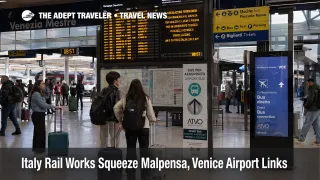
Italy rail airport disruption is becoming a planning problem for travelers using Milan and Venice in late April 2026, especially where airport access depends on regional trains, station transfers, and timed bus connections. The clearest pressure is around Milan's Malpensa Express corridor, where Trenord listed scheduled works affecting the Gallarate, Malpensa, and Milano Centrale line from April 6 to April 17. Venice is different, but still exposed. Marco Polo Airport does not yet have a direct rail station, so travelers depend on rail to Venezia Mestre and then a bus link to the airport.
Italy Rail Airport Disruption: What Changed
The disruption is not a single nationwide rail collapse. It is a set of practical airport access weak points that become more serious when maintenance work, timetable changes, and replacement buses land close to flight times.
For Milan, the affected Trenord notice specifically named the Gallarate, Malpensa, and Milano Centrale line as one of the routes affected by scheduled work at Milan Central Station from April 6 through April 17, 2026. That matters because the Malpensa Express is one of the main rail links between Milan and Milan Malpensa Airport (MXP), and reduced reliability on that corridor narrows the margin for travelers who planned to arrive at the airport just inside check in or bag drop windows.
For Venice, the exposure is more indirect. Trenitalia describes Venezia Airlink as a train plus bus product: travelers ride by train to Venezia Mestre, then continue by bus from the ATVO bus station at Via Cappuccina 183 to Venice Marco Polo Airport (VCE). That means rail changes at Venezia Mestre, Venice Santa Lucia, or upstream regional lines can still affect airport access, even though the final airport leg is by road.
Which Airport Transfers Face the Most Risk
The highest risk itineraries are flights where the airport transfer was built around a narrow rail to airport window. In Milan, that means travelers starting from Milano Centrale, connecting through the Malpensa Express corridor, or arriving from regional trains that feed into the airport train. A missed train can turn into a missed bag drop window faster than travelers expect when headways widen or replacement patterns change.
In Venice, the weaker point is the handoff at Venezia Mestre. A traveler arriving by regional train still has to reach the airport bus departure point, board the Airlink bus, and absorb road traffic between Mestre and Marco Polo. Trenitalia sells the train and bus together, but it also states that the rail service and the Actv or ATVO bus service are separate transport contracts when combined in one ticket. That detail matters if delays create missed connections or service complaints.
There is also a near term network signal beyond the airport products themselves. RFI station information for Venezia Mestre showed regional cancellations and timetable modifications between Venice Santa Lucia and Venezia Mestre on April 21, April 22, and April 23 because of work at Venice Santa Lucia. Separate station information also warned of train variations and bus substitutions from April 20 through May 13 because of works in the Milan hub.
What Travelers Should Do Before Airport Transfers
Travelers using Milan Malpensa should treat the train as one part of the airport buffer, not the whole plan. For long haul departures, build in enough margin to absorb one missed or canceled train, plus check in, bag drop, and security. For early morning departures, late evening arrivals, or itineraries with checked luggage, the safer move is to prebook a backup transfer or shift closer to the airport the night before.
Travelers using Venice Marco Polo should check both pieces of the transfer. The train to Venezia Mestre and the bus from Mestre to the airport can fail separately, so a normal looking rail itinerary does not guarantee a smooth airport arrival. If a flight is long haul, time sensitive, or nonrefundable, leave earlier than the integrated journey planner suggests and confirm the ATVO or Actv bus timing separately before departure.
The decision threshold is simple. If the next available train or bus would put arrival inside the airline's check in cutoff, switch to a taxi, private transfer, or airport hotel plan before the station becomes crowded. Waiting until the last rail option fails usually means competing with other travelers for the same road transfers, which raises cost and can leave limited same day availability.
Why The Venice Link Is Still Vulnerable
Venice's airport access will change once the direct rail connection is active, but that is not the current operating reality. Ferrovie dello Stato says the Venice airport rail project will create an approximately 8 kilometer link from the Venice, Trieste line to a new underground Venice Airport station, with activation listed for December 2026. Until that opens, Mestre remains the practical rail to bus handoff for many travelers.
That makes the current risk structural, not just seasonal. Milan has a direct airport rail product, but works around central nodes can affect frequency, routing, and confidence. Venice has an integrated airport product, but it still depends on a station transfer and a road leg. In both cities, the first order effect is longer headways or modified service. The second order effect is transfer compression, taxi demand, hotel pressure near airport nodes, and less tolerance for late arriving inbound trains.
Travelers should keep monitoring operator notices through the next 24 to 72 hours, especially for April 25 holiday movement and early May travel. The Italy rail airport disruption is manageable for travelers who build a real buffer, but it is a poor fit for tight same day airport connections, especially where a missed train leaves no clean fallback.