

JetBlue Boarding Groups Shift to Numbers April 29
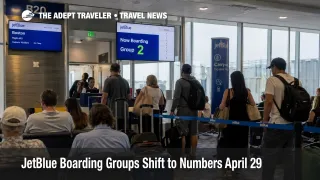
JetBlue boarding groups will change on April 29, 2026, replacing the airline's current mix of branded and lettered boarding calls with a numbered system from 1 to 8. The shift should make gate announcements easier to follow, but it also makes the value of early boarding more visible before the busy summer travel period. Travelers who care about overhead bin access, family boarding timing, or premium perks should check their boarding pass closely because the new system keeps priority access, but repackages where several customer groups sit in the order.
JetBlue Boarding Groups: What Changes April 29
Starting April 29, all JetBlue flights will board by numbered groups, Groups 1 through 8, instead of the older structure that mixed Mosaic tiers, Mint customers, EvenMore customers, Group A, Groups B through F, and remaining passengers. JetBlue says the change is meant to make boarding more intuitive, more consistent, and easier to hear and understand at the gate.
The airline's new order keeps preboarding for customers with disabilities before numbered boarding begins. Group 1 will include Mosaic 3 and 4 members and Mint customers. Group 2 will include Mosaic 1 and 2 members and EvenMore customers. Group 3 will include JetBlue Premier Card cardmembers, JetBlue Business Card cardmembers, Blue Extra fares, and Early Boarding Perks You Pick, excluding Blue Basic fares.
Courtesy boarding will still be offered after Group 3 for active military personnel and customers traveling with car seats or strollers. Group 4 will include JetBlue Vacations customers and general boarding based on seat location, while Groups 5 through 8 will continue general boarding based on seat location. Unaccompanied minors will still be escorted to the aircraft and board last.
Who Benefits From The New JetBlue Boarding Process
The clearest winners are travelers who already buy, earn, or hold products tied to early boarding. Mint travelers and higher tier Mosaic members remain at the front of the numbered queue. EvenMore customers move into a prominent Group 2 position, which makes extra legroom seating more valuable for passengers who also want earlier access to the cabin and overhead bins.
Group 3 is the more commercially important change. By placing premium cardholders, Blue Extra fares, and eligible Early Boarding Perks You Pick customers into a named numbered group, JetBlue is making early boarding easier to understand as a purchased or earned benefit. That does not automatically make the process worse for general boarding passengers, but it does make the hierarchy more obvious.
The main traveler risk is not the number system itself. The risk is gate crowding if too many passengers stand early, or if larger consolidated groups make the boarding lane harder to manage. JetBlue's own guidance tells customers to remain seated until their group is called, which is a practical detail travelers should not ignore. Boarding works best when the group number is visible, the announcement is clear, and passengers do not crowd the lane before their turn.
What Travelers Should Do Before Boarding
JetBlue passengers flying on or after April 29 should check the boarding group printed on the boarding pass before going to the gate. The group should appear above or next to the seat number. If it does not appear, JetBlue says travelers should ask a gate crewmember, preferably before boarding begins rather than during the rush.
Travelers carrying larger roller bags should treat the new numbered group as an overhead bin signal. Group 1 and Group 2 passengers should still have the best access, while later general boarding groups should be more cautious on fuller flights. If keeping a bag out of the checked baggage system is important, buying EvenMore, holding an eligible card, using an eligible fare, or selecting an eligible early boarding perk may matter more than it did under the less obvious lettered system.
Families should also watch the placement of courtesy boarding. Customers traveling with car seats or strollers will still receive courtesy boarding, but it comes after Group 3. That means families should be at the gate early enough to hear the courtesy call, especially at busy airports where boarding announcements can be hard to hear. Passengers also need to respect JetBlue's boarding cutoff rules. The airline says domestic passengers must be onboard at least 15 minutes before departure, and international passengers must be onboard at least 20 minutes before departure.
Why JetBlue Is Making Boarding Simpler
JetBlue is framing the change as a customer experience update, and there is a real operational reason for that. Boarding systems that mix names, letters, loyalty levels, fare products, and special categories can be hard to follow in a crowded gate area. A single 1 through 8 sequence gives travelers a simpler instruction and gives gate agents a cleaner announcement script.
There is also a revenue mechanism behind the change. Earlier boarding is not just a courtesy perk. It protects bin access, reduces uncertainty, and can make a paid seat or fare bundle feel more valuable. By placing EvenMore customers in Group 2 and eligible cardholders and Blue Extra fares in Group 3, JetBlue is tying part of the boarding experience to products that can generate incremental revenue.
The next test comes during summer travel, when fuller aircraft, more leisure travelers, and more carry on bags put pressure on the gate process. If the new JetBlue boarding groups reduce confusion, travelers should see cleaner announcements and fewer passengers asking where they belong in line. If the change mainly concentrates more people into early groups, the pressure point will shift to gate crowd control and overhead bin competition.