

London Security Alert Targets Jewish, U.S. Sites
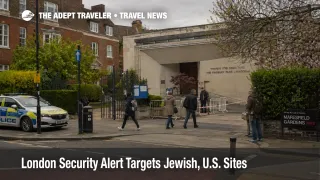
London security alert guidance from the U.S. Embassy now puts a sharper traveler lens on Jewish and American institutions in the United Kingdom and across Europe after a series of recent attacks and threats. The alert does not tell Americans to cancel U.K. trips, and it does not change the United Kingdom's broader State Department advisory level by itself. It does narrow the practical safety question for visitors who plan to attend services, visit Jewish community sites, stay near U.S. or Jewish institutions, or move through crowded tourist districts where a local incident can quickly affect streets, transit access, and security screening.
London Security Alert: What Changed
The U.S. Embassy in London issued a security alert on April 24, 2026, saying it had noted recent attacks and threats targeting Jewish and American institutions in the United Kingdom and Europe. The Embassy said U.S. citizens, especially those visiting institutions serving Jewish or American interests, should remain alert and exercise increased caution.
That makes this a targeted caution story, not a broad travel shutdown story. London remains open for tourism, business travel, study abroad, religious travel, and family visits. The operational change is that U.S. travelers should treat certain site visits, neighborhoods, and public gatherings as higher awareness situations, especially when those plans involve synagogues, Jewish schools, community centers, U.S. institutions, religious events, or visible group travel.
The advisory follows a series of incidents in London and elsewhere in Europe. Metropolitan Police said Counter Terrorism Policing is investigating attacks on premises linked to the Jewish community in northwest London, an attack on a Persian language media organization, and related incidents. Police said that since the March 23, 2026 attack on Hatzola ambulances in Golders Green, officers have arrested 26 people, charged eight with arson related offenses, and secured one arson conviction.
Which Travelers Should Pay Closer Attention
The most affected travelers are not ordinary visitors moving through the standard London museum, theater, restaurant, and airport circuit. The highest exposure is for U.S. citizens attending Jewish houses of worship, Jewish schools, community centers, American linked institutions, embassy related locations, political or religious events, and high visibility group programs.
Faith based trips need the most deliberate planning. A synagogue visit, a community event, a school program, or a memorial stop should now include basic arrival and exit planning, not just transit time. Travelers should know the nearest Tube or bus alternative, avoid lingering directly outside entrances after services or events, and follow any site specific security instructions without treating them as optional friction.
Families, students, and business travelers should also think about where they are staying. A hotel near a sensitive institution is not automatically unsafe, but it can be affected by police activity, temporary cordons, protest movement, or vehicle restrictions if an incident occurs nearby. The second order effect is often logistical rather than direct harm, with rideshare access, walking routes, and scheduled visits disrupted on short notice.
In an earlier Adept Traveler article, London Jewish Arson Attack Raises Golders Green Risk, the immediate issue was the Golders Green ambulance arson investigation. The new development is broader because the Embassy alert ties recent U.K. and Europe threat activity to practical caution for Americans visiting Jewish and American sites.
What U.S. Travelers Should Do Now
Travelers should keep London plans in place unless their own institution, organizer, school, synagogue, tour operator, or employer gives more specific instructions. The better move is to tighten execution. Confirm event times before departure, leave extra time for bag checks or entry screening, and avoid planning a hard timed activity immediately after a religious service, community event, or institutional visit.
The rebooking threshold is personal and itinerary specific. A standard London leisure trip does not need to be moved because of this alert alone. A group visit centered on Jewish institutions, a delegation using American linked venues, or a student trip with fixed public events should be reviewed with organizers, local hosts, and travel insurers. If a venue changes its security posture, restricts access, or moves an event, travelers should treat that as the decision point, not wait until the day of arrival.
U.S. citizens should enroll in the Smart Traveler Enrollment Program before departure or update their trip if already abroad. STEP is useful here because Embassy security alerts, demonstration alerts, weather alerts, health alerts, and travel advisory updates can be sent directly to travelers by email. Travelers should also check local news before crossing town for sensitive site visits, follow police instructions, and keep a simple fallback route back to the hotel.
Why the Risk Window Extends Beyond One Site
The mechanism is not a single closed attraction or a one day airport style disruption. Security incidents around religious or American linked sites can trigger short notice police responses, road closures, transport diversions, and heavier screening across nearby community locations. That means the travel effect can spread beyond the exact target, especially in dense London neighborhoods where a synagogue, school, residence, hotel, Underground station, and shopping street may sit close together.
The State Department's broader United Kingdom advisory remains Level 2, exercise increased caution, because of terrorism. Its guidance notes that potential targets can include tourist locations, transportation hubs, markets, shopping malls, hotels, clubs, restaurants, places of worship, parks, major sporting and cultural events, educational institutions, and other public areas. The Embassy's April 24 alert is narrower, but it sits inside that larger advisory environment.
The next signal to watch is whether police announce additional charges, identify a broader plot, or issue location specific security advice. Travelers should also watch for fresh Embassy alerts before major religious events, political demonstrations, or large gatherings. The London security alert is not a reason to avoid the city, but it is a reason for U.S. travelers visiting Jewish or American sites to move with more awareness, build extra time into plans, and treat local security instructions as part of the itinerary.
Sources
- Security Alert: Exercise Increased Caution, U.S. Embassy London, April 24, 2026
- Further Arrest In Investigation Led By Counter Terrorism Officers
- Security Minister Statement On Antisemitic Attacks
- United Kingdom Travel Advisory
- STEP, Smart Traveler Enrollment Program
- UK Police Make Another Arrest In Relation To Attacks On Jewish Linked Premises