

Seattle Ferry Delays Build Before May Fare Hike
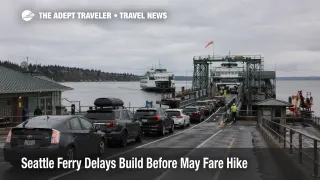
Seattle ferry delays are stacking into a more expensive travel window just before Washington State Ferries raises fares on May 1, 2026. The system's April 27 alert showed a morning crew shortage on the Seattle to Bainbridge Island route, weekday emergency repairs at Fauntleroy, and an upcoming 35% peak season surcharge for single ride vehicle and motorcycle fares. For travelers using ferries as part of airport transfers, cruise pre nights, island hotel arrivals, or timed tours, the problem is not one broken sailing. It is reduced slack across several routes at the same time.
Seattle Ferry Delays: What Changed
Washington State Ferries said the No. 1 Wenatchee started Monday, April 27, 2026, out of service on the Seattle to Bainbridge Island route because of a crew shortage. The 620 a.m. sailing from Bainbridge Island and the 705 a.m. sailing from Seattle were canceled, and WSF later said the vessel would resume with the 7:55 a.m. sailing from Bainbridge Island. The alert still warned that later No. 1 vessel sailings could be canceled if the crewing issue returned.
Fauntleroy adds a separate pressure point. WSF said maintenance crews would be at the Fauntleroy terminal starting April 27 for emergency repairs to the vehicle transfer span, the overwater bridge that connects the ferry and dock. The work is scheduled from 900 a.m. to 300 p.m. on weekdays for about one week, with only one lane available for vehicle loading and unloading during the repair window.
The fare change arrives days later. Beginning Friday, May 1, passenger and vehicle fares are scheduled to rise by an average of 3%, and a 35% peak season surcharge begins for single ride vehicle and motorcycle fares through September 30. WSF says the peak season surcharge does not apply to passenger tickets or multi ride tickets.
Which Ferry Travelers Face the Tightest Windows
The most exposed travelers are those treating a ferry leg as a short transfer rather than a variable transportation segment. Bainbridge travelers heading to Seattle connections can lose time quickly when an early vessel is canceled, because the missed sailing pushes vehicles and passengers into later departures even after service resumes. That matters for morning flights from Seattle Tacoma International Airport (SEA), cruise embarkation timing, and hotel check in plans built around a fixed arrival.
Fauntleroy, Vashon, and Southworth travelers face a different constraint. The repair window does not close the route, but one lane for loading and unloading can slow vehicle movement during the middle of the day and may leave delays after 3:00 p.m. That makes late morning and early afternoon vehicle travel riskier than the published schedule may suggest, especially for travelers driving to the dock with luggage, rental cars, children, pets, or tour departure deadlines.
San Juan Islands travelers should also keep more protection in their plans. WSF's April alerts said the Anacortes and San Juan Islands route had been operating with the 90 vehicle Sealth as the No. 2 vessel because of maintenance, repairs, and inspections, with reservations adjusted to avoid overloading vessels. Even when a specific sailing is not canceled, smaller vessel assignments reduce how much excess vehicle demand the route can absorb.
What Vehicle Travelers Should Do Now
Vehicle travelers with hard deadlines should plan around the ferry queue, not just the sailing time. For Bainbridge, Vashon, Southworth, and San Juan trips tied to flights, cruise check in, wedding events, or prepaid tours, the safer planning threshold is to target at least one earlier sailing than normal. If missing the ferry would break the trip, build enough time to miss one sailing and still make the next required connection.
For Fauntleroy, avoid driving into the 900 a.m. to 300 p.m. repair window when the trip depends on a timed arrival. Travelers who cannot avoid that period should pre purchase where possible, check terminal cameras before leaving, and treat the posted sailing as a target rather than a guarantee. Walk on travelers, bicyclists, and riders using transit connections may have more flexibility than vehicles during lane constrained loading.
For May travel, vehicle travelers should price the route again after May 1 instead of relying on older estimates. The peak season surcharge applies to single ride vehicle and motorcycle fares, while passenger tickets and multi ride tickets are outside that surcharge. Travelers making repeated island trips should compare multi ride options, expiration rules, and card payment costs before defaulting to one off vehicle fares.
Why the Ferry System Has Less Slack
The operational issue is capacity, not only punctuality. A crew shortage can remove a vessel from the schedule, a terminal repair can slow loading even when boats are running, and smaller vessel assignments can shrink the number of vehicles moved per trip. Each problem is manageable on its own. Together, they make ferry schedules less forgiving for travelers who need the ferry to behave like a fixed bridge.
That pressure is likely to matter more as May begins. The 35% peak season surcharge runs from May 1 through September 30, which is also the period when leisure trips, island stays, motorcycle travel, cruise extensions, and weekend vehicle demand build. Higher fares may not reduce demand enough to offset summer crowding, so the practical risk remains the same: travelers who arrive late to the terminal may wait longer and pay more for the same trip.
The next signal to watch is whether WSF clears the Fauntleroy repair work on schedule and whether Bainbridge crew coverage stabilizes after the April 27 morning disruption. Travelers should keep checking WSF alerts on the day of travel, especially before driving to Fauntleroy, Seattle, Bainbridge Island, Southworth, Anacortes, or the San Juan terminals. Seattle ferry delays can still be managed, but only if the ferry leg gets treated as the fragile part of the itinerary.