

Las Vegas Is a U.S. Travel Affordability Signal
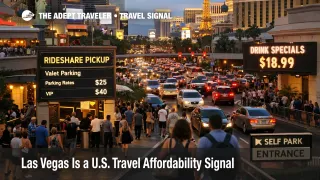
Las Vegas is starting to look like more than a single destination with a pricing problem. It is becoming a useful read on how far U.S. discretionary leisure travelers will stretch before a trip stops feeling worth it. High end demand still appears to be holding in parts of the market, but softer broad visitation, pressure on small tourism linked businesses, weaker spending at the everyday end of the visitor economy, and complaints about parking, drinks, meals, gas, and airfares point to a more important divide. The signal is not that luxury travelers have disappeared. The signal is that middle market leisure demand may be getting harder to sustain in one of America's clearest airfare sensitive, optional spend destinations.
Las Vegas Travel Affordability Is Showing a Split Market
Las Vegas works as a travel signal because it compresses so many discretionary trip decisions into one place. Visitors usually do not buy only a room. They buy airfare, hotel nights, parking or rideshare, meals, drinks, entertainment, and local movement, often in a short window where price stacking becomes obvious very quickly. That makes the city a useful stress test for whether travelers still believe the full trip offers enough value to justify the cost.
The picture emerging from your brief is a split market rather than a full collapse. Luxury demand and private aviation activity remain resilient enough to keep the top end of the city moving. At the same time, softer traffic lower in the system is hitting restaurants, small businesses, tipped workers, and services that depend on steady visitor volume rather than a smaller number of high spend guests. That distinction matters operationally. A destination can still look busy in its premium segments while losing elasticity in the middle, and that is often where broader travel softness starts to show first.
The seriousness of the signal is still moderate rather than conclusive. Las Vegas is not yet proving that U.S. leisure demand is broadly breaking. It is showing that the value equation may be deteriorating in a market built around optional spending and easy volume. That is an early warning worth watching, especially if the same pattern starts appearing in other leisure cities that depend on cheap lift, short stays, entertainment spending, and travelers booking air plus hotel separately.
Where The Vegas Travel Demand Pressure Could Spread
The most exposed travelers are the ones least able or willing to absorb rising incidental costs after the booking is made. That includes price sensitive domestic leisure travelers, Canadians facing a weaker case for cross border discretionary trips, independent travelers packaging their own air and hotel, and event driven visitors whose budgets can be pushed off course by parking, food, drink, and local transport before the trip is half over.
Las Vegas is especially useful because the city's economics make stress visible fast. Room prices can pull attention at search stage, but the traveler decision is usually made on total trip cost, not the base room alone. If airfares stay elevated and the on the ground spend feels punitive, some travelers will shorten stays, trade down in hotel tier, skip shows and premium dining, move trips into shoulder periods, or abandon the trip entirely. First order, the traveler buys less. Second order, the businesses and workers that depend on high volume, mid range spend feel pressure first.
That pattern could matter well beyond Las Vegas. Other U.S. leisure destinations with similar exposure, especially those that rely on airfare, hotel occupancy, food and beverage spending, and optional entertainment purchases, could face the same demand problem if travelers begin to treat the full trip as extractive rather than attainable. The common thread is not casinos. It is discretionary travel behavior in markets where the all in cost rises faster than travelers' willingness to keep saying yes.
What Travelers Should Watch Before Booking Las Vegas
For travelers, this is not yet a stay away signal. It is a value discipline signal. The next decision point is not whether Las Vegas remains open or active, but whether the full trip price holds together once airfare, hotel, fees, parking, food, and local transport are added. Travelers should price the whole itinerary before committing, not just the room rate or a headline fare. A cheaper hotel can stop being cheaper very quickly once resort fees, parking, and on property spending are included.
There is also a tradeoff emerging that could work in travelers' favor if the market keeps softening below the luxury tier. A weaker middle market often produces selective discounting before it produces obvious headline cuts. Expect resort credits, shoulder period promotions, package nudges, flash sales, dining offers, and tactical airfare discounting before the market meaningfully lowers its premium ceiling. Travelers with flexible dates should watch for that type of targeted value rather than assume a broad price reset is coming.
A stronger traveler response becomes warranted if several indicators begin moving together. Meaningful discounting without a corresponding event spike, weaker passenger trends at Harry Reid International Airport (LAS), lower visitor volumes, shorter restaurant hours, mid tier hotel softness, and more visible Canada related demand weakness would suggest the signal is firming. Stabilization would look different. Better air pricing into Las Vegas, firmer occupancy without aggressive promotions, steadier visitor volumes, and less evidence of stress among small tourism dependent businesses would suggest the market is absorbing the cost pressure rather than rolling it downhill.
Why This Pattern Could Matter Beyond Las Vegas
The mechanism here is straightforward. Las Vegas depends heavily on travelers who can be persuaded into a trip, not only on travelers who must take one. That makes it more sensitive to changes in sentiment around value, convenience, and optional spending. When the trip still feels attainable, the city benefits from high volume and wide participation across hotels, restaurants, attractions, and transportation providers. When the full cost starts to feel inflated at too many touchpoints, the middle of the market can retreat even while the top end keeps moving.
That is why Las Vegas can function as a useful forward signal for U.S. leisure travel. A city with strong brand recognition, dense air access, broad hotel inventory, and a long history of absorbing demand should not need perfect conditions to hold its middle. If it starts struggling to keep value oriented travelers engaged, the issue may not be local irritation alone. It may be an early sign that discretionary leisure demand is becoming less resilient in other airfare dependent markets built around hotels, dining, events, and optional spend.
The right conclusion for now is cautious, not dramatic. Las Vegas is not proving that a national leisure downturn has arrived. It is showing where pressure could appear first if travel costs keep climbing faster than travelers' tolerance for them. Watch whether softness stays contained to the lower value tiers, or whether airlines, hotels, and destination marketers start responding more aggressively to protect volume. If that response broadens, Las Vegas travel affordability will look less like a local complaint and more like a national warning.