

South Asia Floods And Cyclone Ditwah Hit Winter Travel
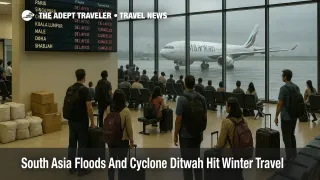
Deadly floods triggered by Cyclone Ditwah and weeks of extreme monsoon rain have turned parts of Sri Lanka, Thailand, Malaysia, and Indonesia into active disaster zones just as winter sun season begins, and travelers now need to treat low lying resorts, intercity roads, and some domestic flights as higher risk than usual. Regional tallies suggest more than 1,100 people have died in less than a week, with Indonesia, Sri Lanka, and southern Thailand recording the heaviest tolls and Malaysia reporting smaller but still serious losses. For visitors who still plan to fly into the region in early December, the priority is to separate open and functioning tourism belts from areas where cleanup, search and rescue, and basic relief work will dominate the next several days.
The South Asia floods winter travel by flooding key roads, closing or limiting some resorts, and disrupting short haul transport, even as many flagship destinations and main international airports remain open and able to receive guests.
Sri Lanka, Ground Zero For Cyclone Ditwah
Sri Lanka is carrying some of the worst damage, after Cyclone Ditwah made landfall on the island at the end of November and brought the heaviest flooding in roughly a decade. Government and disaster agency figures on December 1 report around 355 to 366 confirmed deaths, a similar number of people missing, and hundreds of thousands forced into temporary shelters, with rivers breaching their banks near Colombo and across large parts of the central and southern regions. President Anura Kumara Dissanayake has declared a national emergency and described the disaster as the most challenging the country has faced in its modern history.
Sri Lanka's main international gateway, Bandaranaike International Airport (CMB), north of Colombo, remained technically open, but heavy rain, diversions, and airspace restrictions produced a mix of cancellations, long delays, and at one point at least 15 inbound diversions within a single day as aircraft aborted approaches or waited out storms at alternate hubs. Conditions were difficult enough that the Indian Air Force mounted evacuation flights to Thiruvananthapuram for stranded Indian nationals, shuttling several hundred people out of Colombo after food and water supplies in the terminal became strained. While commercial flights are operating again, travelers should assume irregular schedules and plan for overnight stays near Colombo if inbound aircraft or ground transfers are delayed.
Inside the country, the greatest safety and access issues lie away from the main coastal resort belts. Hill country districts such as Badulla and Nuwara Eliya have seen deadly landslides, washed out bridges, and power cuts, with Sri Lanka's Disaster Management Centre warning that flood and slide risk will remain elevated at least through the first week of December. Road and sometimes rail links into tea country and remote eco lodges are therefore fragile, and self drivers or tour groups planning inland loops should be ready to reroute, trim side trips, or postpone overnights until access is clearly restored.
Along the west and south coasts, from Negombo down past Galle and Mirissa, reports point to localized flooding, river surges, and scattered property damage, but many established resorts sit on slightly higher ground and have remained structurally intact. The main challenge for guests is more likely to be intermittent power and water supply, debris on coastal roads, and time lost to detours around submerged low spots rather than total closure of the resort strip. Sri Lanka's tourism and immigration authorities have responded with flexible measures including free visa extensions and relaxed rebooking rules for affected visitors, which gives tourists already on the island or due to travel in the next few days more room to adjust their stays.
Indonesia And Sumatra's Isolated Communities
Across the Indian Ocean, Indonesia's Sumatra island has suffered some of the starkest images of whole villages torn apart by water and mud. National disaster officials now estimate that hundreds of people have died and several hundred remain missing after flash floods and landslides swept through parts of North Sumatra, West Sumatra, and Aceh, with some reports putting the current death toll above 400 as remote areas become accessible. Bridges, local roads, and water systems have been destroyed in multiple valleys, and aerial footage shows homes and farmland stripped from hillsides.
For travelers, this cluster of disasters mostly affects inland and small town tourism on Sumatra rather than the better known international hub of Bali, whose Ngurah Rai International Airport (DPS) is operating normally. Surf camps, trekking lodges, and cultural homestays in impacted Sumatra districts may be closed outright, short staffed, or repurposed as shelters, and reaching them often depends on exactly the roads and ferries that are now under repair. Anyone with winter itineraries focused on Sumatra should make direct contact with local operators, be prepared to move trips to Java or Bali, and treat online availability calendars as unreliable until owners confirm by phone or email.
Southern Thailand And Northern Malaysia
Southern Thailand and parts of northern Malaysia have also endured some of the worst floods in a decade after a sequence of strong monsoon surges and nearby storms. Thai and regional reporting describe deep floodwater in major urban centers such as Hat Yai and widespread damage across 80 to 90 districts, with at least 160 to 176 deaths and millions of residents affected in the south alone. Images from Songkhla province show vehicles parked on flyovers to escape several meter high floodwater, and hospitals moving bodies into temporary facilities after morgues reached capacity.
At the same time, Thai tourism advisories stress that many of the country's headline destinations, including Phuket, Krabi, and the Gulf islands around Koh Samui, remain open, with flights operating to Phuket International Airport (HKT) and ferries running under weather dependent restrictions. Travelers should still anticipate temporary ferry cancellations during periods of strong wind in the Gulf of Thailand, soggy or partially washed out secondary roads, and last minute route changes for buses and minivans that rely on low lying highway sections.
In Malaysia, official and humanitarian situation reports highlight tens of thousands of people displaced across at least seven to eight states, including Perlis, Kedah, Kelantan, Perak, and parts of Selangor and Terengganu, after the northeast monsoon produced river floods across 22 districts. Several thousand evacuees are now living in temporary relief centers while water levels along some rivers remain at danger stage. For visitors, the practical impact is strongest in smaller northern towns and rural inland areas, while major gateways such as Kuala Lumpur International Airport (KUL) and resort islands like Langkawi and Penang are operating, albeit with occasional surface access disruption during heavy rain.
What Remains Usable For Winter Trips
Despite the scale of the disaster, the region is not closed to tourism. Many cities and islands vital to winter travel remain functional, even if they are hosting evacuees or dealing with supply chain strain. In Sri Lanka, Colombo and the main coastal highway are clearing, and Bandaranaike International Airport is processing international flights again, although schedules may be uneven for several days. Large parts of central and northern Thailand, much of peninsular Malaysia away from the worst river systems, and Indonesia's main tourism hub of Bali all sit outside the most damaged zones.
For travelers who are committed to visiting the region in December, safer short term choices include city stays in Bangkok, Kuala Lumpur, and Singapore as entry points, high ground resorts that are explicitly outside current evacuation maps, and itineraries that concentrate on one or two hubs instead of multi stop cross border loops. Trips that depend on long overland transfers through affected provinces, night buses that cross mountain passes, or back to back ferry and flight combinations are more vulnerable to disruption and should be simplified. Adept Traveler's earlier coverage of Southeast Asia floods and winter travel risk offers additional context on which routes have been fragile since late November. Southeast Asia Floods Disrupt Winter Travel Plans
Flights, Ferries, And Connection Strategy
International trunk routes into the region are mostly operating, but travelers need to assume thinner schedules and occasional cancellations on regional links that connect smaller cities and islands. Airlines serving Colombo, Bangkok, Phuket, Hat Yai, Kuala Lumpur, and Medan have already reported waves of weather related delays and diversions over the past several days, while some Indian carriers cut flights to and from Tamil Nadu when Ditwah's outer bands brought heavy rain to Chennai. Domestic flights into flood hit Thai cities such as Hat Yai International Airport (HDY) and secondary Indonesian airports near Sumatra's worst affected districts may operate with shorter booking windows, schedule changes, or rolling cancellations as crews and aircraft rotate and airfields dry out.
In this environment, tight same day connections are an avoidable gamble. Travelers should build at least four hours between separate tickets and strongly consider overnighting at major hubs like Bangkok's Suvarnabhumi, Kuala Lumpur International, or Singapore Changi if a missed connection would cascade into lost cruise embarkations or nonrefundable resort nights. Ferries linking Thai and Malaysian islands may sail on adjusted or weather limited schedules, and operators can halt service at short notice when wind waves exceed safety thresholds, which makes same day air plus ferry bookings especially sensitive to delay.
Insurance, Airline Waivers, And Refund Rules
From an insurance and consumer rights perspective, these floods and Cyclone Ditwah count as natural disasters or severe weather events rather than airline or operator errors. Most standard policies will only pay out if the insured traveler purchased cover before the event became a known issue and if the policy explicitly includes trip interruption or cancellation for natural disaster or unsafe accommodation. In practice, that usually means claims are strongest when a booked hotel, cruise, or tour becomes uninhabitable or officially unreachable, rather than simply inconvenient.
Airlines in the region are starting to publish change fee waivers and flexible rebooking policies for travel into named airports and affected dates, and Sri Lanka's authorities have already announced free visa extensions for visitors who cannot depart as planned. Travelers who booked through online travel agencies or third party platforms should secure written confirmation of any fee free changes or vouchers, keep boarding passes and receipts, and be realistic about the limits of compensation, since even European style passenger rights rules do not normally cover weather driven cancellations on non European carriers or itineraries. Adept Traveler's evergreen guidance on travel insurance for weather disruptions and monsoon travel planning in Asia can help travelers decide whether to delay, reroute, or proceed with extra buffer. Guide To Travel Insurance For Weather Disruptions
Background, Monsoon And Cyclone Patterns
Flooding on this scale is not just an unlucky single storm. Regional agencies and climate analysts have warned for years that warmer oceans and air are increasing the intensity of monsoon bursts and tropical systems, and that stalled weather patterns can dump extreme volumes of rain over the same catchments in a short window. In this case, a strong monsoon phase and Cyclone Ditwah combined with already saturated ground in parts of Sri Lanka, Sumatra, southern Thailand, and northern Malaysia, so rivers overtopped levees quickly and hillsides failed in multiple locations.
For travelers, the key lesson is that "wet season" is no longer a simple shorthand for daily afternoon showers. Late November and early December in South and Southeast Asia can now bring higher odds of short, sharp, and very damaging flood episodes that cluster around a few weeks in the season. Planning that assumes only mild disruption is increasingly risky, especially when trips depend on inland roads, hill country rail lines, or ferries across narrow seas where stronger winds and waves are more common.
Practical Steps For Travelers Holding Bookings
Travelers with imminent departures to Sri Lanka, southern Thailand, northern Malaysia, or Sumatra should take three main steps. First, identify whether their planned hotels or key roads fall within current flood or landslide zones by cross checking official maps, hotel updates, and embassy travel advice; if a core destination is clearly compromised, they should look at rebooking to different parts of the region. Second, work through airlines and insurers to secure flexible tickets and written approvals for any changes, especially where natural disaster clauses apply. Third, build more generous time margins into every transfer, including airport to hotel drives, ferry to flight connections, and day trips into rural areas that might still see flash flooding if a new band of heavy rain rolls through.
Those who hold trips later in December have more options. They can keep a close watch on how quickly floodwaters recede and infrastructure reopens, then decide whether to switch to more resilient hubs such as Bangkok, Kuala Lumpur, Bali, or northern Sri Lanka, or whether to push travel into January. Either way, the region will remain open to visitors, but the coming weeks will demand more flexibility than a typical winter sun season and a willingness to accept that some bucket list side trips will be better saved for a drier year.
Sources
- Sri Lanka's cyclone death toll climbs to 355, with 366 missing
- Cyclone Ditwah, Other Flooding Leave Hundreds Dead In Sri Lanka, Indonesia, Malaysia And Thailand
- Is Sri Lanka Safe to Travel to After Cyclone Ditwah
- Flash Update No. 1, Flooding in Peninsular Malaysia and Southern Thailand, 25 November 2025
- Floods Across Indonesia, Sri Lanka, Thailand and Malaysia Kill More Than 1,140 People
- Floods and Landslides in Indonesia's Sumatra Kill at Least 174
- More Than 900 Dead and Hundreds Missing in Southeast Asia Floods
- Malaysians Recall Race Against Rising Waters After Major Flood