

Machu Picchu Peru Protests Disrupt Trains And Buses
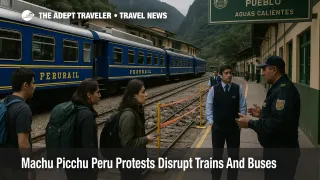
Anyone planning a bucket list trip to Machu Picchu in early 2026 now has to treat the approach through Cusco and Aguas Calientes as a protest corridor, because Machu Picchu rail blockades tied to a shuttle bus concession fight twice shut the route in September and November 2025 and triggered overnight evacuation trains for about 1,400 tourists while roughly 900 more were left temporarily stranded in the gateway town. Those flare ups have hit everyone from high end tour groups to backpackers on PeruRail and Inca Rail services, not just last minute bookers. To keep a dream visit from turning into a multi day lock in, travelers now need wider buffer windows, more flexible bookings, and backup Andean plans if buses or trains stop again.
Put simply, the Machu Picchu rail blockades and bus protests have turned access to Peru s flagship site into a structurally fragile system, so anyone transiting through Cusco and Aguas Calientes over the next few months should assume plans may need to shift on short notice.
How The Machu Picchu Rail And Bus System Works
Most visitors reach Machu Picchu in three stages. They fly first to Alejandro Velasco Astete International Airport (CUZ) in Cusco, or sometimes connect through Jorge Chavez International Airport (LIM) in Lima, then travel by road or train to the Sacred Valley town of Ollantaytambo. From there, PeruRail and Inca Rail services run along a single track line through the Urubamba valley to Machu Picchu Pueblo, also known as Aguas Calientes, where a fleet of shuttle buses climbs the steep switchback road to the citadel entrance.
For three decades, that short road from Aguas Calientes up to the archaeological site was controlled by Consettur under a long running concession. When that concession expired in 2025 and authorities selected rival firm San Antonio de Torontoy to take over, local groups argued that the bidding process lacked transparency and fairness, and that profits from the route were not being shared widely enough with nearby communities. The dispute quickly broadened beyond the buses themselves into a wider fight over who benefits from the hundreds of thousands of international visitors that Machu Picchu pulls in every year.
Because there is only one railway and one practical vehicle road serving Aguas Calientes, any blockade can choke off almost all movement at once. Residents and protest leaders have repeatedly used rocks, debris, and sit ins on the tracks and road bends as leverage, knowing that even a few hours of closure can strand thousands of people whose flights, hotel nights, and tour slots are tightly sequenced.
What Happened In September And November 2025
The most dramatic incident so far came in mid September 2025, when protesters placed rocks on the tracks near Aguas Calientes and forced the concessionaire Ferrocarril Trasandino S A and operators such as PeruRail to suspend train services on safety grounds. Peru s tourism minister said that about 1,400 tourists were moved out overnight on special evacuation trains, while some 900 remained stuck in the town until the line could be cleared and additional departures organized.
The United States Embassy in Lima warned at the time that rail and road traffic to Machu Picchu could be disrupted without notice and urged travelers to avoid protests, carry extra supplies, and stay in close touch with train companies about schedule changes. After several days of negotiations, trains resumed and a provisional operating arrangement was put in place for the bus route, but community leaders made clear that they would suspend tourist operations again if they felt shut out of the process.
That is roughly what played out again in late November 2025. New demonstrations over the same concession fight led to fresh blockades on the railway approaches, another wave of stranded visitors in Aguas Calientes, and the deployment of additional evacuation trains to move people with looming international flights, older travelers, and families out first. International coverage and local advisories stressed that this second round of disruption confirmed a pattern rather than a one off shock, and that further protests remain possible while the underlying dispute is unresolved.
Although PeruRail now reports that services have returned to normal timetables and that its train portfolio, including Expedition and Vistadome, is operating fully, the company and the rail concessionaire both note that operations remain subject to safety stoppages if the tracks are blocked again. That means current smooth sailing should be treated as a snapshot, not a guarantee.
Where Impacts Are Most Likely
Based on both protest tactics and the geography of the route, the points of greatest risk are the rail section between Ollantaytambo and Aguas Calientes, the short bus road from Machu Picchu Pueblo to the citadel entrance, and the alternative road corridor to the Hidroelectrica station that some budget travelers use as a backup. Small groups placing rocks or staging sit ins on a few key bends can halt trains entirely, and once equipment is backed up in the valley there is limited sidetrack capacity to shuffle rolling stock.
Blockades have tended to cluster around community access points and near the town itself rather than deeper inside the national park. That is a mixed blessing for visitors. On the one hand, people already inside the ruins site have generally been able to complete their visits before the park closes for the day. On the other, Aguas Calientes is small, and if several days of trains are cancelled or capped, hotel capacity, food supplies, and cash machines can come under pressure quickly.
Travelers who plan to walk part of the way, for example by entering or exiting via the Hidroelectrica trail, should not assume that a blockade only affects rails or buses. The same political anger that shuts the line can also lead to checkpoints on local roads and ad hoc fees or delays for vehicles, and official guidance consistently warns people to avoid demonstrations altogether rather than trying to navigate through them.
How To Build Buffer And Backup Plans
For trip planning, the biggest shift is psychological. Machu Picchu access can no longer be treated as a perfectly reliable conveyor belt that will automatically line up with tight flight schedules. It is now more like a high value trek or a small ship cruise, where you plan the rest of your itinerary around a volatile central element.
The safest pattern is to give yourself at least two full buffer days in Cusco or the Sacred Valley, with Machu Picchu in the middle rather than at the very start or end of your Peru journey. That way, if a blockade delays your outbound or return train by a day, you are moving hotel nights within the region instead of cutting into long haul flights out of Lima. Avoid booking Machu Picchu on the last day before a nonrefundable international departure.
When choosing trains, aim for morning or early afternoon departures that give operators more options to rebook you later in the day if earlier slots are disrupted. Look for tickets that allow date or time changes with low fees, and be wary of deeply discounted fixed departure products that cannot move if protests flare. If you are traveling independently, consider booking through a trusted local agency that can reroute you quickly and handle Spanish language calls to rail and hotel partners if things go sideways.
Backups should also include alternative destinations. If your Machu Picchu window collapses, you can shift days to other Andean sites such as the ruins at Ollantaytambo, Pisac, or Moray, longer hikes in the Sacred Valley, or time in Arequipa, Lake Titicaca, or the Colca Canyon instead of sitting and waiting in a cut off Aguas Calientes. That may not fully replace a missed wonder of the world, but it is far better than burning your entire Peru budget in a stranded town.
Safety, Information, And When To Rethink The Trip
From a safety standpoint, the main risk for most visitors is disruption and stress, not direct violence, but common sense precautions still apply. Embassies advise staying away from demonstrations, keeping passports, cash, and medications accessible in case you need to board an evacuation train quickly, and having travel insurance that covers trip interruption and extra nights if you are forced to change flights.
If you have mobility issues, complex medical needs, or very limited time, it may be worth delaying a Machu Picchu visit until there is a durable settlement of the bus concession and a more predictable operating pattern. The site is not going anywhere, and Peru offers enough alternative itineraries that you can still fill a week or more without staking everything on a single mountain corridor.
For those who do go, the best defense is information and flexibility. Monitor PeruRail and Inca Rail alerts daily in the week before your visit, check embassy demonstration notices, and keep in touch with your hotel or tour operator in Cusco for real time local conditions. Pair that with flexible flights through Lima and an extra night on either side of your Machu Picchu segment, and you can still make the most of a bucket list trip even in a protest prone season.
Sources
- Demonstration Alert, Protests Regarding Machu Picchu Bus Contract, U S Embassy Lima
- Peru Protest Strands Hundreds Of Tourists Near Machu Picchu, Reuters
- Suspension Of Railway Operations, PeruRail
- Tourist Access To Machu Picchu Disrupted As Bus Row Leaves Visitors Stranded, Economic Times
- Hundreds Of Tourists Left Stranded On Machu Picchu After Bus Disruption, The Independent
- Machu Picchu In Crisis After Protests And International Scrutiny, Tu Boleto Cultura