

Asia Floods And Cyclones Disrupt December Travel
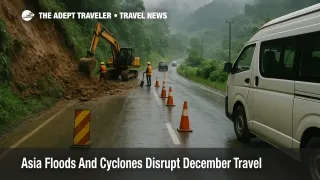
Asia floods travel disruption is now a real December risk, as late season cyclones and extreme monsoon rains hammer Sri Lanka, Indonesia, Thailand, Malaysia, Vietnam, and the Philippines, killing more than 1,300 people and displacing millions since late November 2025. Sri Lanka has taken some of the hardest hits after Cyclone Ditwah made landfall on November 28 and triggered nationwide flooding and landslides, while Cyclone Senyar and other systems are flooding northern Sumatra, southern Thailand, and peninsular Malaysia. For travelers, that mix translates into flooded roads, unstable hillsides, stressed airports, and short notice changes to bus, rail, and regional flight schedules across several popular winter destinations.
In practical terms, this Asia floods travel disruption pattern means anyone planning December itineraries through Sri Lanka or flood affected parts of Indonesia, Thailand, Malaysia, Vietnam, or the Philippines needs more buffer time, more flexible tickets, and a realistic plan to reroute inland segments if local operators flag landslides, washed out bridges, or prolonged road closures.
Sri Lanka Cyclone Ditwah Has Turned Hill Country Routes Fragile
Sri Lanka's emergency from Cyclone Ditwah is the sharpest single example for travelers. A World Health Organization update describes torrential rain, severe flooding, and landslides across all 25 districts, worsened by the northeast monsoon, with more than 1.4 million people affected and hundreds dead or missing. Many of the worst hit areas are inland and upland, in central and hill country districts that normally anchor classic itineraries built around Kandy, tea country, and hiking.
The government has declared a nationwide state of emergency, and international agencies report extensive damage to roads, bridges, and hillside villages, with some rural communities only reachable by helicopter or on foot. That matters for tourism because the same narrow, winding roads that draw visitors for scenery and homestays are also the first to close when soil is saturated, embankments fail, or fresh landslides are triggered by aftershocks of rain.
The United States and United Kingdom have both updated their travel advice to highlight severe flooding, landslide risk, and infrastructure damage. A recent U S Embassy alert warns that Cyclone Ditwah has caused significant damage to road infrastructure and that certain areas remain hazardous to travel, advising U S citizens to avoid nonessential road journeys, monitor local media, and enroll in the Smart Traveler Enrollment Program. The UK Foreign, Commonwealth and Development Office likewise points to severe weather, flooding, and landslides causing travel disruption nationwide, even as many coastal resort belts continue to operate.
For December trips that include Sri Lanka, that combination means travelers should not improvise inland routes based only on pre storm guidebooks or social media posts. Instead, work with local tour operators or hotels that are actively checking road conditions, especially for transfers into or within the central highlands. Build extra time for any journey that crosses steep terrain, consider breaking very long days into two shorter legs with an overnight stop, and be ready to pivot to rail or air if authorities advise against road travel on certain corridors.
Even where resorts are open on the coast, it is important to factor in how guests and supplies reach them. If airport to resort transfers normally use secondary roads or river bridges that are still under inspection, be prepared to accept rerouting, longer drive times, or shared transfers in vehicles that can handle debris and shallow floodwater. Travelers who must visit friends, family, or volunteer projects in rural interior communities should allow local hosts to dictate the timing and routing, because normal assumptions about how long a given road segment takes no longer apply.
Storm Impacts Across Indonesia, Thailand, And Malaysia
Further northeast and east, Tropical Cyclone Senyar and trailing systems have brought torrential rain, flooding, and landslides to northern Sumatra in Indonesia, southern Thailand, and peninsular Malaysia. The World Meteorological Organization notes that this kind of tropical cyclone so close to the equator remains rare, but that in this case it combined with monsoon moisture to drive exceptional rainfall totals. Indonesian authorities report about 800 deaths in parts of Sumatra, with hundreds more missing and whole communities cut off by floodwaters and landslide debris.
In southern Thailand, the Department of Disaster Prevention and Mitigation has documented severe flooding in multiple southern provinces, affecting more than 3.8 million people, while Malaysian agencies have issued repeated warnings for riverine and flash flooding along parts of the peninsula. Local and regional reporting describe road closures, washed out sections of highway, and power cuts, along with bus and rail disruptions and weather related delays or cancellations for some short haul flights.
For travelers, those details matter more than whether a storm has a formal name. Flooded segments on key north south roads can force long detours that add hours to overland transfers between islands, beach areas, and domestic airports. In some cases, operators are replacing rail segments with buses, or consolidating multiple departures into a single service when crews and vehicles are limited. That can easily break the tight same day connection patterns many visitors use to link, for example, a morning flight into Bangkok with an afternoon train or bus to southern islands.
Vietnam and the Philippines have also been dealing with heavy flooding and landslides tied to the same late season pattern, with November storms destroying homes, schools, and agricultural land and displacing millions. While main tourist corridors have, in many cases, reopened quickly, back roads to rural homestays, mountain treks, or lesser known beach communities remain vulnerable to further rain and are slower to get full services restored.
Background, How Cyclones And Monsoon Rains Combined
The broader pattern is not a one off freak event but a convergence of seasonal monsoon rains with unusually strong or poorly timed cyclones. The World Meteorological Organization has highlighted that tropical cyclones like Senyar, interacting with already saturated ground and seasonal monsoons, can generate extreme rainfall and landslide risk across a wide area, even far from the storm center. Al Jazeera and other analyses point out that deforestation, mining, and unplanned construction have amplified the impact in some regions by destabilizing slopes and reducing natural drainage.
Climate scientists quoted in Associated Press and partner coverage describe the deadly Asian floods as part of a new normal, with warming oceans and atmosphere increasing the odds of late season storms that dump huge volumes of rain in short windows. While individual storms differ, the operational takeaway for travelers is that seasonal expectations based on older patterns, such as "the worst of the rains are over by late November," are becoming less reliable.
Planning December Trips To Sri Lanka
For Sri Lanka specifically, December travelers should assume that inland detours are risky and that route knowledge from reputable local partners matters more than app maps. Stick to itineraries that have been sanity checked within the last few days by operators or hotels, particularly for trips into the central and hill country districts most affected by landslides. Build in time for roadblocks and temporary closures, and avoid booking very late night arrivals if your onward transfer depends on narrow mountain roads that are harder to monitor safely after dark.
Independent travelers who usually prefer to improvise point to point should consider a hybrid approach for this season, using trusted agencies or driver guides for the trickiest segments, then adding free time inside cities or regions that are confirmed as safe and accessible. Even where main resort areas on the south and west coasts remain open, ask detailed questions about how staff, supplies, and emergency services reach the property, and keep expectations realistic about amenities when supply chains are still under pressure.
Rail can be an attractive alternative, but only when national rail services confirm that specific lines are operating and not under slow orders or closure due to landslide inspections. Travelers should monitor Sri Lanka Railways and tourism board updates, and avoid planning tight rail to flight or rail to cruise connections on the assumption that trains will run exactly to their pre storm timetables.
Planning December Trips To Southeast Asia's Flood Zones
In flood affected parts of Indonesia, Thailand, Malaysia, Vietnam, and the Philippines, the main decision for many travelers is whether to adjust destinations or simply adjust logistics. Coastal resort areas that sit on higher ground and are linked by main highways or airports may be operating relatively normally, while low lying villages, rural homestays, and riverbanks are still in emergency mode. Using recent satellite imagery and local news, rather than generic tourism marketing, as required reading before finalizing overland segments can help avoid booking into areas that will remain difficult for weeks.
Where itinerary flexibility is limited, shifting more long hops onto air rather than buses or overnight trains can reduce exposure to washed out road segments, even if it costs more. Travelers should prioritize flexible or changeable fares on domestic and regional flights so they can move dates or times if local authorities extend school or office closures, or if airlines consolidate lightly loaded services during the recovery phase. For ferries and island hops, assume that high water, debris, or port damage can cause outright cancellations at short notice, and keep an extra day between sea crossings and fixed events such as weddings, tours, or cruises.
Because these floods are affecting large agricultural regions, visitors should also be prepared for higher food prices, occasional shortages of specific products, and stressed local labor markets. Choosing locally owned operators that are transparent about where your trip money goes can support recovery, but it is worth accepting that some favorite experiences, such as certain hikes or farm visits, may be paused this season for safety or humanitarian reasons.
Insurance, Health, And Long Tail Risks
For any December or early 2026 trip that touches South or Southeast Asia, travelers should treat insurance as essential, not optional. Policies differ sharply in how they handle "known events," weather related disruption, and evacuation, so it is critical to check whether flood and landslide impacts in the specific countries you are visiting are covered, and whether you have benefits for trip interruption, additional accommodation, and rerouting. Look for explicit wording on natural disasters, government ordered evacuations, and inaccessible accommodations rather than relying on generic delay language.
Health risks are also elevated after major floods. The World Health Organization warns that contaminated water, damaged health facilities, and increased vector borne disease risk often follow large scale flooding and landslides, as seen in Sri Lanka after Ditwah. Travelers should check vaccination guidance, pack any prescription medications in excess of the planned trip length, and carry basic supplies such as oral rehydration salts, water purification tablets, and a small first aid kit, especially if they will be outside major cities.
For a deeper look at how weather patterns affect travel reliability and planning, it is worth pairing this piece with coverage of Brazil summer storms and flight disruption, which shows how similar issues play out in a different region, and with an evergreen guide to travel insurance for extreme weather and natural disasters that breaks down policy language and exclusions.
Sources
- Sri Lanka Floods And Landslides, Cyclonic Storm Ditwah, November 2025, World Health Organization
- Devastating Rainfall In Asia Claims Hundreds Of Lives, World Meteorological Organization
- Weather Alert, Travel Concerns Due To Cyclonic Storm Ditwah, U S Embassy Sri Lanka
- Is It Safe To Travel To Sri Lanka During Severe Flooding, The Independent
- 2025 Southeast Asia Severe Storms, Center For Disaster Philanthropy
- Indonesia Promises Action On Any Mining Permit Violations As Sumatra Floods Toll At About 800, Reuters
- Deadly Asian Floods Are No Fluke, They Are A New Normal, The Weather Channel, Associated Press