

India Fare Caps After Domestic Flight Chaos
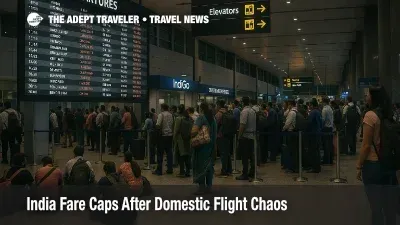
India domestic flight cancellations have now entered a fifth day as IndiGo's schedule meltdown keeps major hubs in Bengaluru, Mumbai, Delhi, and Hyderabad under strain on December 6, 2025. With the country's largest carrier cancelling hundreds of flights per day and holding more than 60 percent of India's domestic market, capacity on key routes has plunged, leaving weddings, business trips, and family visits in limbo. The Indian government has responded with temporary one way fare caps, added special trains, and controversial safety rule exemptions, so travelers must decide whether to hold tickets, switch airlines, or drop to rail for critical journeys through mid December.
The new fare caps and pilot rule exemptions change how India domestic flight cancellations will play out across December, limiting how far last minute prices can spike even as regulators loosen rest rules that pilot unions argue were designed to protect crews and passengers.
Government Fare Caps And Safety Rule Exemptions
On December 6, India's Ministry of Civil Aviation imposed temporary nationwide caps on one way domestic economy fares, responding to reports of sky high prices as capacity vanished on popular routes. The caps, which apply to base fares before airport and security charges, are structured by distance band: up to 500 kilometers, Rs 7,500; 500 to 1,000 kilometers, Rs 12,000; 1,000 to 1,500 kilometers, Rs 15,000; and above 1,500 kilometers, Rs 18,000. Airlines and online travel agencies must respect these ceilings while the order is in force.
For a trunk route like Delhi to Mumbai, roughly 1,140 kilometers, that means a one way economy base fare cannot exceed Rs 15,000 under the temporary rules, even if rival carriers are almost sold out. Taxes and airport user fees still sit on top, so out the door prices will be higher, but the order at least stops the most aggressive opportunistic pricing seen earlier in the week.
At the same time, regulators have granted IndiGo relief from parts of the new flight duty time limitation, FDTL, rules that took effect on November 1. Those rules restrict the number of night landings and increase weekly rest periods for pilots, changes that IndiGo admits it did not adequately staff for, triggering its current crew shortage. The Directorate General of Civil Aviation, DGCA, has now temporarily put some of those provisions on hold and approved exemptions for IndiGo on night duty and rest norms until February 10, 2026, to allow the carrier to rebuild schedules.
Pilot associations and safety advocates have criticized this rollback, arguing that weakening fatigue protections in response to a rostering failure sets a poor precedent and shifts risk back onto crews and passengers. Travelers who are concerned about fatigue may want to favor daylight flights, shorter duty days, or alternative carriers until the system has clearly stabilized.
How Bad Are The Cancellations By Day And Route
The disruption began to accelerate in early December as IndiGo cut flights to cope with the tighter duty rules. By December 4, Bengaluru's Kempegowda International Airport had reported 73 IndiGo cancellations in a single day, and the airline's on time performance fell into single digits. On December 5, more than 1,000 IndiGo flights, over half its planned schedule, were cancelled, with some periods when no IndiGo services operated from Delhi at all.
Government figures suggest more than 2,000 domestic flights have been cancelled since Tuesday, cutting into capacity across the network. Media tallies for December 6 vary, but most put cancellations between roughly 400 and 850 flights, still a massive hit to what would normally be one of the busiest holiday weekends of the year. Because IndiGo usually carries more than 60 percent of passengers on many domestic city pairs, cutting even half of its schedule removes a similar share of available seats on routes such as Delhi to Mumbai, Delhi to Bengaluru, and Bengaluru to Hyderabad.
IndiGo now says it has restored about 95 percent of its network connectivity and plans to operate around 1,500 flights per day from December 7 onward, with a goal of "near normal" schedules between December 10 and 15 if crew rosters hold. Even if those targets are met, stranded passengers and displaced demand will take several more days to flush through the system, which is why Indian Railways has stepped in with at least 84 to 89 special trains over a three day window to clear backlogs on corridors linking Delhi, Mumbai, Chennai, Bengaluru, Patna, Howrah, and other big stations.
The DGCA has also served a show cause notice on IndiGo's CEO, demanding an explanation for the week long operational failure and ordering the airline to process all pending passenger refunds by 8:00 p.m. on Sunday, December 7, with the threat of further regulatory action if it fails.
Passenger Rights For India Domestic Flight Cancellations
Under India's Passenger Charter and DGCA Civil Aviation Requirements, your entitlements depend on both flight length and delay or cancellation timing. For domestic flights, airlines must provide free meals and refreshments once delays cross two hours on short sectors, three hours on medium sectors, and four hours on longer flights, assuming you checked in on time.
If your domestic flight is expected to be delayed by more than six hours, the airline must offer you either an alternate flight within six hours of the original schedule or a full refund, and overnight or 24 hour plus delays can trigger hotel accommodation with transfers when the cause is within the airline's control. For cancellations not notified at least two weeks in advance, passengers are entitled to both a refund and cash compensation that scales with flight duration, generally Rs 5,000 on short sectors, Rs 7,500 on medium sectors, and Rs 10,000 on flights longer than two hours, subject to caps based on basic fare and fuel charges.
Because the IndiGo disruption is rooted in rostering and crew planning rather than weather or air traffic control, it squarely falls into the "within airline control" category, which weakens any attempt to deny care or compensation on force majeure grounds. IndiGo has publicly committed to automatic refunds to original forms of payment, a full waiver of change and cancellation fees for travel between December 5 and 15, and broad use of hotel rooms, surface transport, food, and lounge access for stranded passengers, moves that go beyond the minimum charter in some cases.
If your claim is rejected or delayed, the next escalation step is to file a complaint through the government's AirSewa portal or app, then consider consumer protection channels if the dispute involves significant financial loss or clear non compliance with DGCA rules. Our earlier coverage in India Domestic Flight Cancellations: December 5 Update walks through the initial wave of disruption and can help you compare how today's measures change the risk picture.
For a deeper primer on how these entitlements work beyond the IndiGo crisis, see Adept Traveler's Guide To Flight Delay And Cancellation Rights In India, which breaks down the charter by delay length, cause, and route type.
Alternatives: Switching Airlines, Going By Rail, Or Moving Dates
Given the new fare caps, switching to a rival such as Air India or Akasa will no longer expose you to the worst of last minute price spikes, but availability will still be tight on core routes over the next several days. If you are traveling on essential dates between December 7 and 12 and your IndiGo flight is still confirmed, you now have three realistic strategies.
First, stay on IndiGo but treat the flight as high risk. Build at least three to four hours between separate domestic legs and avoid same day self made connections to international departures from Delhi, Mumbai, Bengaluru, or Hyderabad. If your trip is time sensitive, monitor your booking closely and use the carrier's waiver to move earlier in the day or one day forward when seats appear.
Second, move to another airline entirely where a non stop or one stop itinerary is still available at or below the new caps. For example, if you originally booked IndiGo on Delhi to Mumbai, compare non stops on Air India and Vistara plus one stop routings via Ahmedabad or Goa, checking that the total journey time and connection cushions are acceptable. The fare caps mean these alternatives remain bounded, even when demand is intense.
Third, drop to rail on corridors where Indian Railways has added special trains or where high frequency services already exist. The new special trains are concentrated on dense flows such as Delhi to Mumbai, Delhi to Patna, and Bengaluru to Chennai, but even on other routes a confirmed AC berth may be a better bet than gambling on a same day flight during the peak of the disruption.
Timing Strategies Through Mid December
Through about December 9, risk will remain highest on routes where IndiGo normally dominates and where the added trains do not fully soak up displaced demand. If you can shift a discretionary trip to depart between December 11 and 15, especially on a non IndiGo carrier in the early morning or late evening, your odds of an on schedule departure improve significantly as the airline rebuilds from roughly 95 percent network coverage back toward its full timetable.
Beyond mid December, two factors will still matter. First, IndiGo has until February 10 to operate under relaxed FDTL rules, so watch how quickly it adjusts rosters and whether regulators re tighten limits on schedule. Second, India's peak wedding and holiday travel season will keep loads high into January, so even a normalized schedule will offer less slack than in a typical shoulder month.
For now, the safest play for most travelers is to avoid tight domestic connections, push nonessential trips out of the December 5 to 12 window, and treat any remaining IndiGo booking as a candidate for proactive change or refund rather than assuming it will operate as ticketed.
Sources
- India caps airfares as IndiGo crisis leaves hundreds stranded for fifth day
- India caps airfares as IndiGo flight cancellations leave hundreds stranded for fifth day
- IndiGo disruption, govt imposes airfare caps to bring down sky high fares
- Govt caps domestic airfares amid IndiGo disruptions
- Govt caps airfares at Rs 7500-Rs 18000 across India amid IndiGo crisis
- Railways add 84 special trains as IndiGo flight cancellations leave passengers stranded
- Railways announces 89 special trains following IndiGo flight cancellations
- Govt imposes temporary fare caps; IndiGo says cancellations on Sat less than 850 flights
- 2025 IndiGo disruption
- India's pilot safety rules that grounded IndiGo flights
- About DGCA's selective exemptions to IndiGo to ease flight disruptions
- Passenger Charter, Ministry of Civil Aviation India
- Your rights when a flight is delayed or cancelled
- IndiGo disruption, refunds, waiver on cancellation fees and care