

Spain Flu Surge Brings Hospital Mask Rules
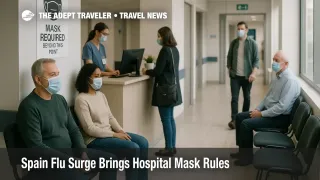
Spain is preparing to apply hospital mask rules again as a sharp flu surge builds ahead of the winter holidays, and regional governments move first with new mandates. Travelers heading to Spain will see the biggest changes in hospitals, primary care centers, and residential care facilities, while everyday tourism, dining, and sightseeing remain largely unaffected. The new measures focus on protecting older adults, people with chronic conditions, and anyone who needs medical care during a winter season that already shows unusually rapid growth in respiratory infections.
In early December 2025, Spain s Ministry of Health and all 17 autonomous communities approved a Common Protocol for influenza, COVID 19, and other respiratory infections, which spells out when masks, teleworking, and other measures should be used at four different risk levels, from baseline to very high. Under this protocol, regional authorities can require masks in healthcare settings when local data show strong increases in flu and other respiratory illnesses, or when hospitals come under pressure. For travelers this means that mask rules will not be identical everywhere in Spain, but healthcare environments are steadily moving back toward mask use as the default.
Several regions have already acted. Andalucia has restored mandatory mask use in hospitals, health centers, and care homes under a regional order that runs through early January, citing rising respiratory infections and the need to protect vulnerable residents. Murcia has ordered masks in hospitals, health centers, and primary care emergency services from December 9, 2025, after reporting a 110 percent weekly increase in flu cases, a 29 percent rise in COVID 19, and further growth in bronchitis and other acute respiratory infections. Other communities such as Aragon and parts of northern Spain are using the new protocol to justify either strong recommendations or full mandates inside healthcare facilities.
How The New Mask Protocol Works
The national protocol does not bring back blanket mask rules for streets, shops, or public transport. Instead, it sets four tiers of epidemiological risk and links each tier to escalating measures. At low and medium levels, the emphasis is on vaccination campaigns, encouraging symptomatic people to mask, and improving ventilation in public buildings. At high and very high levels, masks can become mandatory for patients, visitors, and staff in hospitals, primary care centers, and long term care facilities, with teleworking and stricter limits on visits used as additional levers.
Because health is largely managed at the regional level in Spain, each autonomous community applies the protocol based on its own surveillance data and hospital capacity. That is why a traveler in Seville or Malaga may encounter a clear mask mandate at hospital entrances, while a visitor to another region might only see strong recommendations or signage for symptomatic visitors. The Ministry of Health has made it clear that the protocol is designed to be flexible, but also expects regions to act when their indicators cross into higher risk categories.
What This Means For Travelers In Spain
For most tourists, city life continues much as usual. Hotels, restaurants, museums, and outdoor attractions remain open under normal rules, and there is no national plan to reintroduce general mask mandates on streets or in hospitality venues based solely on the current winter flu wave. However, anyone who needs to visit an emergency room, urgent care clinic, pharmacy based consultation room, or residential care facility should plan on masking from the door inwards, especially in regions that have already formalised requirements.
Travelers with chronic illnesses, immune suppression, or advanced age are strongly encouraged to update their flu and COVID 19 vaccinations before departure. Spanish authorities are accelerating booster campaigns for seniors, healthcare workers, and high risk groups, and stress that vaccination plus mask use in healthcare spaces are the core tools for keeping hospitals below capacity as cases rise into late December and early January. Travelers who qualify for boosters at home will be better protected if they complete those doses before flying.
Visitors who expect to accompany relatives in hospital, or who are arranging elective procedures in Spain, should also allow extra time around appointments. In regions where mandates are active, hospitals may screen for symptoms at entrances, require specific mask types for some wards, or limit the number of visitors allowed at bedsides in intensive or oncology units. These policies are usually published on hospital or regional health department sites, but can change with little notice as local risk levels are reassessed.
Background, Masks In Spanish Healthcare Settings
Spain lifted most national COVID 19 restrictions in 2022 and 2023, including general mask mandates, but retained the option to require masks in certain settings during high circulation of respiratory diseases. During the 2023 2024 and 2024 2025 winters, individual regions already experimented with temporary mask rules in hospitals and clinics when flu waves arrived early or hit hard. The new 2025 protocol formalises this pattern by tying mask use to shared risk thresholds and standardised indicators.
For travelers, this means a more predictable, but still region specific, framework. Mask rules inside hospitals will not be one off emergency decrees, but part of a wider menu of measures that includes teleworking, leave policies for sick workers, and capacity management in clinics. The protocol also signals that respiratory protection in healthcare, including for visiting relatives and short stay patients, is likely to remain a recurring winter feature rather than a one time COVID era exception.
Practical Tips For Planning A Trip To Spain This Winter
First, pack a small supply of high filtration masks, such as FFP2 or equivalent, in your carry on baggage, and keep a few in a day bag whenever you go out. While Spanish rules largely focus on healthcare sites, a quality mask is still a useful backup in crowded indoor situations such as buses to rural clinics, packed waiting rooms, or airport pharmacies.
Second, factor healthcare access into your itinerary. If you are traveling to regions already under mandatory mask orders such as parts of Andalucia or Murcia, assume that any contact with the healthcare system will involve masks, and possibly some screening, from the moment you enter the building. Travelers with complex medical needs should consider pre booking appointments and verifying any special requirements, including visitor limits, by checking hospital websites or asking their accommodation provider for local guidance.
Third, treat vaccination and basic hygiene as your main risk reducers. Spain s protocol places heavy weight on vaccination campaigns for at risk groups because flu and COVID 19 vaccines reduce severe disease and hospitalisation, even when they do not fully prevent infection. Regular hand washing, avoiding indoor spaces when you feel unwell, and masking when you develop cough or fever are not only advisable for your own health, they are also seen as a mark of courtesy toward local residents and healthcare workers.
Finally, consider how winter health rules intersect with broader European travel changes. New EU entry exit systems and growing use of tourist taxes in major cities already add friction to some trips. Spain s mask focused approach in healthcare settings is relatively light compared with full movement restrictions, but it signals that health based rules remain part of the European travel landscape. For a broader overview of how border checks, fees, and conduct rules are evolving across the continent, see Adept Traveler s explainer on Europe 2025 travel rules, border checks, and costs.
For now, Spain is trying to keep the winter health response tightly targeted. Mask rules are returning to hospitals and care homes where vulnerable people gather, not to the plazas, museums, and cafes that most visitors come to enjoy. Travelers who pack masks, keep vaccinations current, and stay alert to local health advisories should be able to navigate the season with little disruption beyond extra precautions when they step inside a clinic door.
Sources
- Spain approves protocol against influenza, COVID 19
- Sanidad y las comunidades pactan recomendar llevar mascarilla a la población con síntomas gripales
- Sanidad y las CCAA pactan el protocolo contra la gripe y otros virus respiratorios
- Face mask mandate issued in Andalucia amid surge in flu cases
- Mascarilla obligatoria en hospitales y centros de salud desde el 9 de diciembre en la Región de Murcia