

Bolivia Visa Free Entry For US And Israeli Tourists
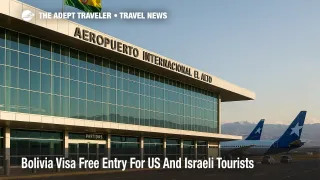
Bolivia visa free entry is now a live option for many long haul planners, after the country scrapped tourist visas for selected nationalities as of December 1, 2025. The new rules cover citizens of the United States, Israel, South Korea, South Africa, and several Eastern European states, turning a once cumbersome process into simple passport control for visits of up to 90 days. For travelers, this removes a costly paperwork hurdle, but it does not erase Bolivia's persistent risks of protests, roadblocks, and flight disruptions, so itineraries still need generous buffers.
In practical terms, the new Bolivia visa free entry framework allows eligible visitors to arrive for tourism or short business trips without applying for a tourist visa in advance, provided they respect a 90 day limit in a one year period and meet standard entry requirements. The move fits President Rodrigo Paz's wider effort to repair relations with Washington, bring back high spending visitors, and inject dollars into an economy that officials and analysts describe as facing its worst crisis in forty years.
Who Is Now Visa Free, And For How Long
Government and media reports agree that the core beneficiaries of the change are citizens of the United States, Israel, South Korea, South Africa, and several Eastern European countries. Different outlets name different European states, but Latvia, Estonia, and Romania appear consistently, while some travel industry sources also list Bulgaria, Malta, and the United Arab Emirates among the eight nationalities shifting into Bolivia's Group 1, the visa exempt category.
For US citizens, the US Embassy in La Paz now confirms that no visitor visa is required for tourism or business stays up to 90 days in a one year period. Travelers must carry a passport valid at least six months beyond entry, provide an address of stay, and, especially when heading into lowland or Amazon regions, hold an international yellow fever vaccination certificate. Similar 90 day limits are being reported for other newly exempt nationalities in official statements and industry briefings.
Crucially, the visa exemption appears to cover tourism, transit, and short business visits only. Longer stays, employment, study, volunteering, and residency still require the correct Bolivian visa or immigration status. That matters for remote workers, NGO staff, and long term language students who may have assumed that a tourist stamp would suffice.
What Changes For Trip Planning
Under the old regime, US citizens were placed in Bolivia's most restrictive group, and had to pay roughly 160 to 185 US dollars for a visa, submit bank statements, hotel bookings, and police records, and sometimes face shifting rules at different consulates or border posts. That discouraged many travelers from tacking Bolivia onto Peru or Chile, especially if the salt flats or La Paz were only a three or four day add on.
Removing that hurdle immediately simplifies classic Andean loops. A traveler could now fly into Lima, overland through Cusco and Lake Titicaca, cross into Bolivia for La Paz, Salar de Uyuni, and perhaps the Amazon around Rurrenabaque, then exit via Chile or Brazil, without any pre trip consular appointments if they hold one of the newly eligible passports. Airlines and booking engines that still show "visa required" for Bolivia will lag reality for a while, so travelers should check directly against official sources before cancelling or rerouting plans.
The policy is also designed with foreign exchange in mind. Paz's government and external analysts estimate that strict visa rules have cost Bolivia around 900 million dollars in tourism revenue since they were imposed in 2007, and they project roughly 80 million dollars in extra visitor spending over the next four years if the new approach sticks. That is a modest number in global terms, but significant for a country wrestling with fuel shortages and a shortage of US dollars.
If You Already Bought A Visa
Many travelers will already have Bolivian visas in their passports, purchased shortly before the change was announced. At the time of writing, there is no sign that the government plans to invalidate those visas early; they should remain usable until expiry, though they are no longer required for entry if you are covered by the new exemption.
Fee refunds are less likely. Consular and visa service policies for Bolivia typically describe visa fees as non refundable once issued, with only narrow exceptions for withdrawn or rejected applications. Anyone who recently applied should contact the specific consulate or third party provider that handled their case, but travelers should plan on the assumption that the cost is sunk, even if the visa will never be needed.
Protests, Roadblocks, And Flight Disruptions Still Matter
The US State Department still rates Bolivia at Level 2, exercise increased caution, and keeps a separate "Do Not Travel" line for the Chapare region because of crime and limited government access. The same advisory warns that demonstrations, strikes, and roadblocks can occur at any time, cut off highways, restrict the flow of goods and fuel, and lead to delayed or cancelled domestic and international flights.
Other governments echo that picture. The UK and Canada highlight how protest groups often block main roads into cities and to airports without warning, and urge travelers not to attempt to pass barricades. Australia's Smartraveller notes that political tensions remain high, that protest activity has surged around recent elections, and that visitors should travel with extra food, water, and medication in case they are stranded by a blockade.
For trip design, this means that visa free entry is an administrative benefit, not a guarantee of smooth logistics. Itinerary choices still need to take into account that Bolivia's rugged geography often channels traffic onto a single main road between cities, so one well placed blockade can shut down a route entirely. Travelers should build at least one buffer night before any non changeable long haul departure, avoid tight same day connections between domestic and international flights, and keep in close contact with local operators about planned protests.
Adept Traveler's broader coverage of protest risk in Latin America and specific blockade patterns in countries like Mexico can help set expectations about how quickly road closures can ripple through flight schedules and tour departures.
Background, Politics, And Tourism Strategy
This visa shift is also a political signal. Rodrigo Paz's government has explicitly presented it as a break from the reciprocity focused, anti US stance of former president Evo Morales, who expelled US drug agents, imposed strict visa requirements on US and Israeli visitors, and aligned Bolivia with governments in Russia, China, and Venezuela.
After Morales left office in 2019, interim and subsequent administrations toggled between loosening and tightening visa rules. That inconsistency, layered on top of recurring civil unrest, made it difficult for tour operators and airlines to market Bolivia as a stable add on destination, even as destinations like Peru and Chile continued to grow.
The new policy, framed in official rhetoric as part of a "Bolivia to the World, World to Bolivia" program, is meant to reassure not only tourists, but also investors in mining, lithium, and infrastructure who depend on easier mobility for short term visits. Visa free entry for US and allied travelers also dovetails with Paz's attempts to secure fresh multibillion dollar finance from regional development banks and to rebuild security cooperation with Washington.
How To Use The New Rules In An Andean Or Atacama Itinerary
For practical planners, the big opportunity lies in making Bolivia a flexible node in a wider South America route. With visas off the table, it becomes easier to route through La Paz or Santa Cruz for a few days of city and altitude acclimatization before heading to Salar de Uyuni, Lake Titicaca, or the lowland Amazon. Multi country tickets that loop Peru, Bolivia, and northern Chile, or Bolivia, Argentina, and Brazil, can now be priced and marketed without the caveat that one leg requires separate consular work.
Travelers who are nervous about unrest can front load their Bolivia segment, leaving higher frequency hubs such as São Paulo or Santiago at the end of the trip as more resilient exit points. Those comfortable with more complexity can still use Bolivia as a central hub, but should track election calendars, major protest anniversaries, and domestic fuel or transport disputes through embassy alerts and local media.
Finally, anyone planning self drive or overland segments between Bolivia and neighboring countries should pay close attention to current road conditions and cross border rules, and consider pairing this visa focused article with a broader regional guide to protests and roadblocks in South America that explains common tactics and contingency planning in more depth.
Sources
- Bolivia eases visa requirements for U.S. and Israeli travelers, Associated Press
- Visitor Visas No Longer Required, U.S. Embassy Bolivia
- Bolivia Grants Visa Free Entry to U.S. Citizens, VisaHQ
- Bolivia International Travel Information, U.S. Department of State
- Bolivia Travel Advisory, U.S. Department of State
- Bolivia lifts visa requirements for eight countries, VisasNews
- Bolivia Travel Advice and Safety, Smartraveller
- Safety and security, Bolivia travel advice, UK FCDO