

Costa Rica Crime Alert For Vacation Rentals, ATMs
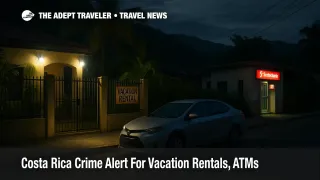
A new Costa Rica crime alert from the U.S. Embassy in San José is reshaping the risk calculus for winter trips, because officials now flag criminal gangs that target foreign owned homes, vacation rentals, and travelers at ATMs across the country. The November 25, 2025 security message says recent property crimes, financial crimes, and robberies have hit foreigners, including U.S. citizens, with break ins, extortion, and forced cash withdrawals or bank transfers. Instead of canceling plans outright, travelers need to treat lodging security, cash exposure, and location choice as core planning decisions, not afterthoughts.
The Costa Rica crime alert tells travelers and foreign residents that organized gangs are actively looking for higher yield targets, such as foreign owned rentals and businesses, and that coercion at ATMs and banks now sits alongside classic pickpocketing in the threat mix.
What The Costa Rica Crime Alert Covers
The November 25 security alert organizes incidents into three broad categories that affect foreigners, property crimes, financial crimes, and robberies. Embassy officials say criminal gangs have targeted foreign owned residences and businesses for robberies, break ins, and extortion schemes, and report that some victims have been forced to withdraw large sums of cash from ATMs or authorize bank transfers under threat.
Media coverage in Costa Rica and abroad highlights a similar pattern, with repeated reports of armed intruders hitting short term rentals, including Airbnbs and comparable platforms, and coercing occupants into handing over cash, electronics, and cards before marching some to nearby ATMs. These are not opportunistic phone snatches, they are directed robberies against guests who are concentrated in one property and often surrounded by valuables.
The embassy's alert does not change Costa Rica's overall U.S. State Department advisory level, which remains Level 2, exercise increased caution, due to crime. That advisory has long noted that petty theft is common and that violent crime, including armed robbery and sexual assault, also affects tourists. The new piece is the clarity of the target set and the specific mention of forced ATM withdrawals and bank transfers.
Why Vacation Rentals And ATMs Stand Out
Vacation rentals sit at the center of the new alert because they combine high value property with relatively low structural security. Many stand alone homes or small villas have simple perimeter walls, basic locks, and little night lighting, yet host guests who arrive with laptops, cameras, phones, passports, and cards in one place. Visitors may also assume a relaxed "Pura Vida" baseline and leave doors, windows, and balcony sliders less secure than they would in a big city.
The combination makes isolated rentals extremely attractive to groups that want to get in, threaten, and get out before police can respond. Local reporting describes cases in which gangs have scoped properties, waited for hours when guests are most vulnerable, then struck with clear instructions about where valuables are stored. In some coastal areas, police presence is concentrated on main roads and beaches, which can leave outlying homes more exposed.
Banks and ATMs are the second major focus. The security alert and several third party reports describe robberies that hinge on cash access, either by forcing victims to withdraw the maximum at one or more ATMs, or by compelling them to authorize instant transfers from phones or laptops while an armed robber stands over them. Even if the totals are not made public, the fact that this tactic appears in an official alert is a clear signal that criminals see ATM choke points and online banking as tools to increase their haul.
How Risk Varies Across Costa Rica
Although the alert applies nationwide, risk is not flat across every province or town. In and around San José and the Central Valley, existing State Department language already warns about petty crime, car break ins, and urban robbery risks, especially at night and in less trafficked neighborhoods. Here, the new element is a sharper focus on banks and ATMs, particularly when people make large visible withdrawals or linger with cash outside branches.
In major beach towns and eco areas, such as Tamarindo, Jaco, Santa Teresa, Nosara, Dominical, and Puerto Viejo, heavy foreign traffic intersects with a dense map of short term rentals and boutique lodges. Costa Rica's tourist police already maintain posts in several of these destinations, which helps with response, but short staffed or isolated properties on side roads may still sit outside the main patrol circuits.
Separately, the State Department warns that demonstrations and strikes are common in Costa Rica and can block roads or affect fuel and public services. That matters for crime risk because blocked highways or slow emergency response can complicate what happens after an incident, especially in rural regions where police and medical resources are thin.
How This Alert Fits With Earlier Coverage
This new security message deepens themes that were already visible when the embassy first called out Costa Rica crime risks around vacation rentals in late November, coverage we summarized in a prior Costa Rica crime alert focused on short term rentals. What has evolved in subsequent reporting is the emphasis on forced ATM withdrawals and the amplification of those risks in mainstream outlets, which suggests that both criminals and authorities are paying closer attention to cash access and digital transfers.
For travelers, that means this is not a one day blip, but part of a sustained adjustment in how Costa Rica security is framed internationally, even while the official advisory level stays at exercise increased caution rather than reconsider travel.
Practical Lodging Choices, Without Overreacting
The embassy's advice can be boiled down to a simple principle, stop being an easy mark. Before booking, travelers should read reviews with "break in," "robbery," "unsafe," or "security" as loud warning bells, and should pay as much attention to locks, lighting, and neighbors as to pools and views.
Moving from a standalone villa on a dark road to a staffed condo tower or hotel in a busy district will not eliminate risk, but it adds layers, controlled access, cameras in common areas, and more people around if something goes wrong. Our earlier Costa Rica crime alert for rentals makes the same point, shifting from isolated properties to better located buildings or branded hotels is often the single biggest safety upgrade for the same nightly rate.
On arrival, travelers should walk the perimeter in daylight, confirm that every door and window locks properly, identify blind spots where lighting is weak, and secure passports, spare cards, and high value electronics in an interior room or safe rather than leaving them in plain sight. When something feels off, switching properties is usually cheaper than absorbing the cost of a serious theft.
Safer Cash And Card Habits In A Forced ATM Era
Because forced ATM withdrawals and on demand bank transfers are now explicitly part of the Costa Rica crime picture, travelers should assume that a determined thief might demand access not just to wallets, but to debit cards and banking apps.
A few structural choices can limit damage. Keeping only modest balances in the account linked to an ATM card and parking the rest in a non linked or higher friction account reduces the amount a robber can extract in one night. Setting conservative daily withdrawal caps and transaction limits for foreign ATMs will not stop an assault, but it can turn a catastrophic loss into something more manageable. Using ATMs in bank branches or malls during business hours, rather than at isolated street units at night, cuts exposure at the most vulnerable moments.
Phones deserve special attention, because they now hold banking apps, digital cards, and multi factor authentication tools. Strong PINs, limited app access from lock screens, and the ability to trigger remote wipe are all useful baselines. Travelers should also carry bank contact numbers outside the phone, on paper or a separate device, in case the handset is taken and cards need to be frozen quickly.
What Property Owners And Long Stay Guests Should Do
Foreign residents, second home owners, and long stay guests sit squarely inside the target profile described in the alert, since they are more likely to operate businesses, handle payrolls, or keep higher value assets on site.
For this group, the embassy recommends upgrading cameras and motion lighting, cutting the amount of cash held at home or at small businesses, and reducing the amount of personal detail shared on social media about properties, routines, and travel plans. Staff training also matters, particularly for gatekeepers and housekeepers who may be first to deal with someone posing as a utility worker, delivery person, or even police.
Owners should know how to contact both the regular police and Costa Rica's Organismo de Investigación Judicial, OIJ, which handles serious crimes, and should be realistic about response times in their specific district. In some cases, shifting from a free standing property to a community with controlled access or to a building with a doorman or guard may be the safest long term choice.
Where This Leaves Costa Rica Winter Trips
Despite the alert, Costa Rica still attracts roughly three million visitors a year, including about 1.6 million from the United States, and remains one of the most popular Central American destinations for beach and eco trips. The vast majority of those visits end without serious incidents.
The difference now is that the threat model is clearer and more explicitly centered on foreign owned rentals, small businesses, and cash or digital banking access. Travelers who treat the Costa Rica crime alert as a prompt to choose better located lodging, separate their money, harden their devices, and avoid obvious risk situations, especially at night and around ATMs, can still plan high value trips with manageable exposure.
For readers who want to go deeper on rental specific risk, our earlier Costa Rica crime alert for vacation rentals is a useful companion piece, and our broader coverage of short term rental regulations, such as Milan's 2026 key box ban, helps map how cities and countries are trying to rein in some of the structural vulnerabilities of the rental model.
Sources
- Security Alert, U.S. Embassy San José, Costa Rica, November 25, 2025
- Costa Rica Travel Advisory, U.S. Department of State
- U.S. Embassy in Costa Rica Issues Security Alert Due To Rising Crime Threats, The Tico Times
- U.S. Issues Security Warning for Popular Winter Vacation Destination, People
- Security Alert For Popular Tourist Destination Warns Of Gangs And Violent Crime At Rental Properties, New York Post
- U.S. Issues Security Alert For This Popular Destination Amid Rise In Crimes Targeting Tourists, Travel + Leisure
- Urgent Travel Advisory Warns Of Break Ins And Armed Robberies At Airbnbs, The Street
- Costa Rica Crime Alert Hits Vacation Rentals, The Adept Traveler
- Milan Key Box Ban From 2026 For Short Term Rentals, The Adept Traveler