

Spain Doctors Strike Cuts Hospital Care Dec 9 12
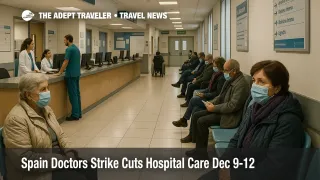
Spain doctors strike hospitals from December 9 to 12, 2025 is already slowing care in public facilities, as thousands of physicians and medical staff walk off the job across Spain during a busy winter flu surge. Travelers who rely on public hospitals and clinics in Madrid, Barcelona, Andalusia, or the islands now face longer waits for non life threatening problems and a higher chance that routine visits will be pushed into later December. Anyone with chronic conditions, winter sports or adventure plans, or limited travel windows should build buffer around any medical appointments, check whether private clinics are covered by their insurance, and keep essential medicines topped up.
The Spain doctors strike hospitals from December 9 to 12 trims capacity in the public health system just as mask rules and flu driven demand are rising, so visitors can still get emergency help but should not assume quick access for non urgent care.
How Spain's Four Day Doctors Strike Works
The current walkout is a national action called by the Spanish Confederation of Medical Unions, CESM, alongside regional groups such as the Sindicato Médico Andaluz and Metges de Catalunya. More than 100,000 doctors and other medical staff have been summoned to strike from December 9 to 12, in protest at the Ministry of Health's draft reform of the Estatuto Marco, the framework law that governs working conditions in the public health system.
Unions argue that the proposal fails to reduce heavy workloads, leaves overnight and weekend on call duty poorly compensated, and does not create a specific professional statute that reflects doctors long training and responsibilities. Early union statements claim participation rates of 85 to 90 percent among those not tied to minimum service obligations in some areas, while regional governments in places such as Andalusia report lower figures around one third of eligible staff, underlining how uneven the impact can be across Spain.
As required by Spanish law, the strike is subject to servicios mínimos, minimum service rules that keep emergency rooms, intensive care units, oncology, dialysis, and other critical services open. In practice, authorities in several regions have set quite high minimum staffing levels, sometimes above 50 percent of normal rosters, which unions criticise as "abusive" because they limit the ability to fully stop work while still leaving gaps in non urgent care.
Where Travelers Are Most Likely To Feel The Impact
For most tourists, everyday life in Spanish cities, resorts, and cultural sites continues largely as usual, but anyone who needs medical attention should assume more friction. Local reporting indicates that non urgent consultations, diagnostic tests, and planned surgeries are being postponed across the public system, with many primary care centres cancelling routine appointments entirely on some days of the strike.
In Madrid and Barcelona, where foreign visitors frequently tap into public emergency rooms or primary care for sudden illnesses, minimum services keep emergency departments open but do not eliminate delays. Patients with non life threatening problems may see triage nurses divert staff to more serious cases, and some walk in consultations may be turned into later appointments rather than handled on the spot.
Andalusia, home to popular coastal destinations and cities such as Seville, Granada, and Málaga, has both high seasonal tourist numbers and active participation from the Andalusian Medical Union. Regional authorities acknowledge that the four day stoppage is likely to lengthen waiting lists for surgeries and diagnostic procedures, which means that visitors who had arranged elective care there may see short notice rearrangements.
On the islands, unions in the Balearic Islands report strong support in hospitals in Ibiza and Formentera, with strike participation over 80 percent among some hospital staff, while roughly half of primary care doctors have joined despite high flu related demand. Travelers in Mallorca, Ibiza, and the Canary Islands are therefore more likely to encounter reduced staffing and longer queues at local health centres, particularly in the mornings when rallies and demonstrations take place.
Private hospitals and clinics, which many visitors use through international insurance policies, are not the main target of the strike, but some specialists work across both public and private facilities, so knock on effects and rescheduling are still possible. Travelers should not assume that a private appointment is immune from changes if the same doctor also holds a public post.
How The Strike Interacts With Spain's Winter Mask Rules
Adept Traveler's recent coverage of Spain's winter respiratory protocol explained how regional health authorities can now bring back mask requirements in hospitals, primary care centres, and care homes when local flu and COVID 19 indicators hit high levels. Regions such as Andalusia and Murcia already require masks in many healthcare settings, with screening at entrances and limits on visitors, even before the strike.
The doctors walkout lands on top of that system, during what Spanish health outlets describe as a strong flu wave that is already pushing up emergency room visits and hospital admissions. Minimum services are calibrated against this winter pressure, so emergency and flu related care will continue, but the combined effect is fewer staff available to handle the kind of non urgent but important problems that travelers often bring to clinics, such as minor injuries, respiratory infections, or flare ups of chronic conditions.
For visitors, this means two layers of friction. First, entry procedures at hospitals and public clinics may already include mask checks, symptom screening, and limits on companions. Second, once inside, there may simply be fewer doctors on the floor to see patients who do not meet strict emergency criteria.
When To Seek Care, When To Wait, And How To Prepare
The most important rule is that true emergencies still take priority. Chest pain, signs of stroke, severe breathing difficulty, uncontrolled bleeding, and other life threatening symptoms should go straight to the nearest emergency department or call Spain's 112 emergency number, regardless of the strike. Minimum service obligations are designed specifically to protect that level of care.
Where the strike bites is everything below that threshold. Travelers with mild respiratory symptoms, minor sprains, or routine prescription renewals may find that public primary care centres can only offer telephone advice or delayed appointments, especially on the middle days of the strike. In many areas, local health authorities are advising patients to postpone non urgent visits or use telemedicine channels instead of walking in without an appointment.
Ahead of a trip, it is prudent to travel with at least several extra days of any essential medication, plus a written summary of your diagnoses and current prescriptions. This reduces the need to rely on last minute doctor visits for refills, and gives Spanish clinicians a quicker path to safe care if you do end up in an emergency room. Travelers should also check whether their travel insurance or home health plan offers virtual doctor consultations in English, which can bridge minor issues without adding load to the Spanish system during the strike window.
If you already have a public hospital appointment scheduled during December 9 to 12, contact the hospital or your referring physician's office as soon as possible to confirm whether it is still on the calendar. Many non urgent consultations and tests are being rescheduled, sometimes by text message or online portal, and you may need to actively rebook if you do not receive a clear update before travelling.
Insurance, Private Clinics, And Documentation
Because the strike largely targets the public system, travelers who hold robust travel medical insurance or international health plans that include private Spanish hospitals may have more options. Before departure, review your policy for networks in key destinations such as Madrid, Barcelona, Málaga, the Balearic Islands, and the Canary Islands, and note which facilities offer 24 hour urgent care. Many insurers can pre authorise visits or direct you to less busy clinics if you call their assistance line ahead of time.
However, even private facilities may feel some indirect pressure, particularly if residents who can afford it shift away from the public system during the strike. Appointment slots may tighten and up front payment may be required, with reimbursement handled later between you and your insurer. Keep copies of all invoices, proof of appointment cancellations, and any written explanations from hospitals or clinics, since these documents can strengthen later insurance claims if you incur extra costs or need to extend your stay.
Travelers who combine Spain with other European countries in one itinerary should also remember that Spain's winter health rules sit alongside broader Europe wide changes to border checks, permits, and local travel costs, including the phased Entry Exit System and expanding tourist taxes. It can be helpful to plan your Spanish segment with slightly more slack than usual for health related errands, while using Adept Traveler's Europe 2025 travel rules explainer to anticipate non medical friction elsewhere on the route.
Background, Why Doctors Are Striking Now
The draft Estatuto Marco now at the centre of the dispute is the latest attempt to modernise rules that date back to 2003, which unions say never fully reflected the reality of long training paths, heavy responsibility, and high rates of burnout in Spain's public health workforce. Doctors groups warn that without clear limits on weekly working hours, better pay for night and weekend guardias, and a statute that recognises doctors as a distinct professional category, the system will continue to haemorrhage talent to other European countries and the private sector.
The Ministry of Health argues that its proposal increases job stability, improves family life balance, and harmonises working conditions for all health professionals, not just doctors, but so far those assurances have not prevented what local outlets describe as the biggest doctors strike in decades. Both sides signal that negotiations will continue, and unions are already flagging possible renewed actions in January if the current stoppage does not produce changes, which means that winter travelers should treat the December 9 to 12 strike as part of a broader period of healthcare friction rather than a one off event.
For now, the most realistic approach for visitors is to assume that Spain's public hospitals remain safe and available for serious emergencies, but that anything short of that may involve more waiting, more paperwork, and a greater need to lean on private options and good preparation than in a typical winter.
Sources
- Spain Flu Surge Brings Hospital Mask Rules
- Más de 100.000 médicos, convocados a cuatro días de huelga
- CESM, convocatoria de huelga médica nacional 9 al 12 de diciembre
- Huelga de médicos en España, fechas y claves del paro
- What about my appointment, four day health strike in Spain
- Spain, health advisory for December 9 to 12 doctor strike
- Huelga médica, servicios mínimos marcados por la gripe y las urgencias