

Thailand Cambodia Border Clashes Tighten Travel Zones
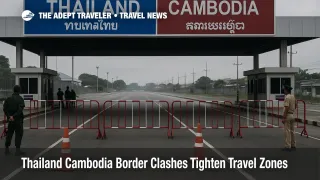
Renewed fighting along the Thailand Cambodia frontier since December 7, 2025 has turned the latest Thailand Cambodia border travel warning into concrete no go belts for visitors, even as most of the country continues to operate normally. Travelers bound for Bangkok, Chiang Mai, Phuket and the southern islands still see regular flights and tours, but anyone heading toward land borders with Cambodia now faces tightened checkpoints, closed crossings and artillery fire within about 50 kilometers of the line. Trip planners need to treat overland hops and temple trips near the frontier as high risk, build in generous buffers or switch to flights instead.
The new phase of the Thailand Cambodia border travel warning centers on a patchwork of 50 kilometer exclusion belts on both sides of the frontier, while confirming that mainstream Thai itineraries far from the border remain open and operational for now.
Fighting along much of the 817 kilometer border has escalated since early December, with artillery, rockets and air strikes reported in multiple sectors. International agencies and local officials report at least a dozen deaths and hundreds of thousands of people displaced on both sides of the frontier as villages and small towns near the line are evacuated into temporary shelters. While the combat has not reached core tourism hubs, it has hardened government risk maps and pushed foreign ministries to draw clearer no travel belts rather than vague border cautions.
The Tourism Authority of Thailand, TAT, has repeated that "travel and tourism activities across the country remain normal and unaffected" while stressing that security has been tightened in seven provinces that border Cambodia, specifically Ubon Ratchathani, Si Sa Ket, Surin, Buri Ram, Sa Kaeo, Chanthaburi and Trat. TAT messaging and regional tourism offices in Europe echo that popular destinations such as Bangkok, Chiang Mai, Phuket, Samui, Krabi, Pattaya and Ayutthaya are operating normally, with airports, rail lines and coastal resorts open. The practical catch is that travelers are now being urged to avoid routes that clip the border belt, even briefly, which rules out many classic overland visa runs and temple side trips.
At the same time, foreign ministries have converged on a clear distance rule. The United States warns against travel to areas within 50 kilometers of the Thai Cambodian border because of "ongoing fighting between Thai and Cambodian military forces" and notes that the US government has limited ability to assist citizens in those provinces. Canada similarly reports that armed conflict resumed on December 7, 2025, has intensified since December 9 and that travelers should avoid all travel within 50 kilometers of the Cambodia Thailand border. Australia's Smartraveller now tells its citizens "do not travel" within 50 kilometers of either side of the border, listing Cambodian provinces such as Banteay Meanchey, Oddar Meanchey, Preah Vihear, Battambang, Pailin, Pursat and Koh Kong as part of a continuous Level 4 belt.
The United Kingdom mirrors this approach from the Thai side, advising against all but essential travel to within 50 kilometers of the entire border with Cambodia, including islands such as Koh Chang and Koh Kood that sit inside the mapped risk zone. Taken together, these advisories form a fairly precise band of territory where standard travel insurance may be void and where tour operators are cancelling or rerouting excursions, even as normal policies still apply in Bangkok and other distant regions.
On the ground, most official land border checkpoints between Thailand and Cambodia have either closed outright or are operating in a stop start pattern that can shift with little notice. Reporting from regional outlets and tour operators describes repeated closures at major crossings such as Poipet Aranyaprathet and smaller checkpoints in Sa Kaeo and Surin, along with curfews and tight military control on key approach roads. Long distance bus companies that once linked Bangkok to Siem Reap and Phnom Penh have largely stopped selling tickets for direct border runs, or are quietly moving passengers onto routes that terminate well inside Thailand instead of at the frontier itself.
For air travel, the picture is more stable. Bangkok Suvarnabhumi Airport (BKK) and Don Mueang International Airport (DMK) continue to handle normal schedules, and flights between Bangkok, Phnom Penh International Airport (PNH) and Siem Reap Angkor International Airport (SAI) are operating with minor routing adjustments, rather than widespread cancellations. Travelers holding tickets that combine a flight into Bangkok with a same day bus or private transfer to Cambodia, however, face a high risk that the land leg will be cut. The safest play is to rebook onto through flights between Thailand and Cambodia and to treat any itinerary that relies on a border crossing as a separate, cancellable project.
How The New No Go Zones Work
For travelers who are used to thinking in city names, the 50 kilometer belt can be easier to understand as a set of provincial edges. On the Thai side, the highest risk areas run through the eastern edges of Ubon Ratchathani and Si Sa Ket, much of Surin and Buri Ram close to the line, and large portions of Sa Kaeo, Chanthaburi and Trat where rural roads run toward well known checkpoints. On the Cambodian side, provinces abutting the border like Banteay Meanchey, Oddar Meanchey and Preah Vihear have seen repeated evacuations and shelling, while coastal provinces such as Koh Kong sit inside the Australian Level 4 map even when fighting is not visible from the beach.
Certain border temples and heritage sites that once served as day trips from both countries, such as the Preah Vihear and Ta Muen Thom complexes, are now firmly out of bounds under most advisories, both because of active fighting and lingering land mine risks. Operators that still list these sites in old brochures are generally suspending visits, and some, like regional destination management companies, have pushed all programs near the frontier back into at least early 2026.
Impacts On Overland Trips And Visa Runs
The most immediate practical impact is on backpackers and long stay visitors who had planned to combine Thailand and Cambodia via classic bus and minivan routes. Routes that once ran overnight between Siem Reap or Phnom Penh and Bangkok now face full corridor closures in the border belt, and in any case would spend hours inside areas that multiple governments label as do not travel zones. Visa runs that relied on quick exits and re entries at land checkpoints are also compromised, with Thailand already tightening rules on repeated land entries well before the current conflict.
Self drive trips face similar constraints. Even in areas outside active shelling, security forces have set up checkpoints on highways that approach the frontier, and long detours are sometimes required to avoid closed stretches or curfew zones. Rental car companies may also refuse permission to take vehicles into specific border districts, leaving travelers responsible for any damage if they ignore contract terms and drive toward restricted roads.
What Travelers Can Safely Keep
For most visitors, the key reassurance is that Thailand's main tourism clusters remain open and reasonably insulated from the fighting. City breaks in Bangkok, temple and food trips to Chiang Mai, and beach vacations in Phuket, Krabi, Samui or Hua Hin continue with normal operations, aside from the usual seasonal weather and crowd patterns. Domestic flights and rail links that connect these regions avoid the border belt, and international carriers are still selling tickets into major Thai airports without conflict driven restrictions.
That makes this a classic case where partial rerouting, rather than full cancellation, is often the right move. A traveler planning a two week itinerary that combined Bangkok, Angkor Wat and a coastal stay could, for example, keep the Bangkok and Thai beach segments and swap an overland Angkor leg for a later stand alone trip once the situation stabilizes. Similarly, visitors who had planned to loop through border provinces in Isan may choose to focus on more central or northern provinces instead, keeping flights and hotel bookings that are far from the 50 kilometer belt.
Update To Earlier Coverage
This article updates Adept Traveler's December 9 Thailand Cambodia border travel warning coverage, which flagged the initial round of closures and air strikes that triggered the first wave of advisories, and it sits in a longer sequence of reporting that began with the mid 2025 escalation and subsequent Level 4 warnings. Readers who need a deeper timeline of how the corridor went from sporadic clashes to today's entrenched no travel zones can review Thailand Cambodia Border Fighting Triggers Travel Warning and Thai Cambodian Border Level 4 Warning Seals Crossings for earlier details on checkpoint closures, martial law tools and evacuation patterns. For broader context on how Thai border policies affect overland tourist routes, Thailand Travel Warning: Land Border Ban Disrupts Tourist Routes and Best Times to Travel to Asia: Avoid Summer Crowds and Costs can help frame when and where it makes sense to rely on buses and crossings rather than flights.
What Travelers Should Do Now
In practical terms, travelers with near term departures should start by mapping their entire route against the 50 kilometer belts now embedded in major advisories. Any segment that dips into the border strip between Thailand and Cambodia, whether for a temple, a homestay or a border crossing itself, should be treated as a candidate for rerouting or cancellation. Existing flights into and within Thailand that serve Bangkok, northern cities and southern beach areas are generally worth keeping if they do not depend on land borders to connect onward.
Where possible, shift multi country itineraries onto air bridges between Bangkok and Cambodia's main cities and avoid buying new tickets that terminate at border towns. Travelers who cannot avoid proximity to the frontier, for example because of family obligations in affected provinces, should register with their embassy, keep fuel, food and water reserves on hand, and prepare for short notice evacuations or curfews that could disrupt ordinary movement. Everyone else can treat the new Thailand Cambodia border travel warning as a strong signal to redraw maps, not to give up on Thailand altogether.
Sources
- Travel Advisory - Border Safety Measures in Place Across Eastern and Northeastern Thailand
- Security Alert: Escalation of Armed Conflict Along the Thailand Cambodia Border
- Thailand International Travel Information
- Travel Advice and Advisories for Thailand
- Travel Advice and Advisories for Cambodia
- Thailand Travel Advice, United Kingdom
- Smartraveller Advisory on Thailand Cambodia Border
- Is It Safe To Travel To Thailand And Cambodia As Border Clashes Escalate
- Renewed Thailand Cambodia Border Fighting Displaces Hundreds Of Thousands
- Cambodia Ready At Any Time For Talks To End Thailand Conflict