

Israel ETA IL Now Required For Visa Exempt Visits
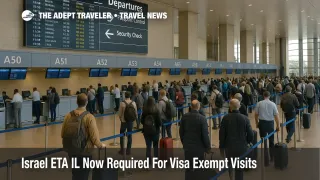
From January 1, 2025, travelers from most visa exempt countries can no longer treat Israel as a simple stamp at the border, because the Israel ETA IL travel authorization has become a mandatory pre approval for short stays. Nationals of countries such as the United States, Canada, and most of Europe must now hold a valid ETA IL before airlines will allow boarding, and before immigration officers will admit them on arrival. For trip planning, this means budgeting extra time for paperwork, watching validity dates, and treating Ben Gurion Airport and Israel land borders as places where documents are checked more than once.
The change is part of a wider global trend toward electronic travel authorizations, but in practical terms it means that most visa exempt visitors must complete the ETA IL process online, pay a 25 shekel fee, and wait for a decision that usually arrives within 24 to 72 hours.
How ETA IL Works In Practice
ETA IL, short for Electronic Travel Authorization Israel, is an online pre screening system run by the Population and Immigration Authority, often referred to as PIBA. Starting January 1, 2025, tourists arriving with passports from visa exempt countries must obtain ETA IL approval before travel, using an official government portal that carries the gov.il domain. The application collects personal data, passport details, and basic trip information, and can only be filed with a passport that remains valid for at least three months beyond the planned entry date.
Once approved, ETA IL is generally valid for two years, or until the traveler's passport expires, whichever happens first, and it usually allows multiple short visits of up to 90 days at a time for tourism or business. It is not a work permit or a long stay visa, and travelers who wish to stay longer than 90 days in a single visit must apply separately to the Population and Immigration Authority.
Who Needs ETA IL, And Who Is Exempt
The new system applies to citizens of countries that already enjoyed visa free entry to Israel, which includes the United States, Canada, the United Kingdom, and all European Union member states, along with several other partners. It covers most short stay travelers, whether they come for tourism, family visits, or business meetings, and it applies at both air and sea entry points.
Israeli citizens, dual nationals who travel on an Israeli passport, and people who hold an Israeli identity number do not need ETA IL, and should instead use their national documents. Travelers who already require a full visa because their nationality is not visa exempt continue to follow the existing consular process, and do not switch into ETA IL simply by choice. In every case, border officers retain full discretion to question travelers, to check documents again on arrival, and to refuse entry if they conclude that a visitor does not meet conditions, even when ETA IL is already approved.
Costs, Processing Times, And Where To Apply
The official fee for ETA IL is 25 Israeli shekels, payable online by credit card, which at current exchange rates is under 7 dollars for most cardholders. Several embassies advise travelers to apply at least 72 hours before departure, and the government itself says that most applicants can expect an email decision within that time frame, though approvals may arrive sooner for straightforward cases.
Applications must be submitted through the official ETA IL portal or linked government sites, which clearly display the gov.il domain and direct users back to the Population and Immigration Authority. Third party sites already promote paid assistance and appear in search results, often charging significantly higher fees for what is essentially form filling, so travelers who want to avoid unnecessary costs should confirm that they are on an official government service page before entering card details.
Background, How ETA IL Fits The Global Pattern
Israel's move aligns it with destinations such as the United States, Canada, and, in the near future, most of Europe, which rely on systems like ESTA, eTA, and ETIAS to pre screen visitors who would otherwise travel visa free. The idea is that basic checks happen before travelers ever reach an aircraft door or land border crossing, which allows carriers to deny boarding early when documentation is incomplete, and gives border officers more time to focus on higher risk arrivals.
For travelers, the trade off is that what used to be a simple pass through the passport lane now includes a digital form, a small fee, and a need to track validity periods that extend across multiple trips. Because ETA IL can cover travel for up to two years, it can simplify repeat visits once it is in place, but only if people remember when their authorization expires and update it before a new trip.
Interaction With Security Checks And Disruption Risk
ETA IL does not reduce the security footprint at Ben Gurion Airport, or other Israeli entry points, which already mix airline interviews, baggage screening, and behavioral checks that are more intensive than those in many other countries. Travelers should assume that even with an approved authorization they may still be asked about their itinerary, local contacts, and prior visits, particularly during periods of heightened tension or active conflict.
This new paperwork step also stacks on top of operational disruptions. Recent storms such as Storm Byron have flooded highways and stressed drainage around Tel Aviv and other cities, complicating airport transfers and domestic travel in ways that have nothing to do with documents but everything to do with timing. In practice, a traveler who cuts departure day margins too fine could find themselves delayed by weather on the way to the airport, then dealing with crowded security lanes and secondary screening, and finally facing carrier checks for ETA IL at the gate. That compounds the case for generous buffers, confirmed airport transfers, and flexible tickets.
For overland combinations, such as linking a stay in Jerusalem with side trips through Jordan, the same logic applies. Prior Adept Traveler reporting on Jordan demonstrations and rolling roadblocks around Amman and the Dead Sea has shown how quickly political events can affect airport transfers, which now sit alongside ETA IL checks as joint constraints on tightly sequenced itineraries.
Planning Tips For 2025 And 2026 Trips
For most travelers from visa exempt countries, the first planning step should be to confirm quickly whether ETA IL applies to their nationality, using either official government portals or up to date embassy advisories from their home country. Once that is clear, the safest pattern is to apply for ETA IL a few weeks before the first expected trip, but at least three days before departure, so there is room to react if an application is refused or delayed.
Next, travelers who expect to visit Israel several times in the next two years should think about stacking trips within a single validity period, rather than scattering them in a way that forces repeated authorizations and extra fees. Someone planning a first time Jerusalem city break followed by a later Negev or Dead Sea hiking trip could, for example, cluster both journeys within the two year window covered by a single ETA IL approval, and then reassess whether to renew.
It is also worth thinking about entry conditions in context. Adept's recent coverage of Storm Byron's impact on Israel travel has underlined how heavy winter rains can cut roads and cause local evacuations around Tel Aviv, Jerusalem, and the Negev, just as airlines and border posts are adapting to the new ETA IL checks. As a result, people heading in for December and January trips should not only hold their authorization and insurance confirmation, but also allow extra time between landing, onward regional flights, and bus or train departures.
Travelers can deepen their planning by pairing entry formalities with on the ground research into where they will spend their time once in the country. Adept's Jerusalem destination guide, for example, offers context on how to use the city as a base for regional day trips, which becomes more useful when visitors know that their entry documents are in order and their ETA IL validity comfortably covers their stay.
What To Watch For Next
The Israeli government still has room to refine ETA IL as it moves from launch into routine operation, for example by clarifying processing times, expanding guidance for special categories of travelers, or adjusting how long each approval lasts. Travelers should expect occasional updates, and should not be surprised if security interviews, luggage checks, and war related advisories remain central to how trips play out, even when the electronic paperwork becomes familiar.
For now, the basic rule is simple. If you are from a visa exempt country and plan to fly to Israel in 2025 or 2026, you should treat ETA IL as a non negotiable pre trip task, alongside insurance and flights, rather than a nice to have. Those who handle it early, through the official site, and who build weather and security buffers into their ground plans, are far less likely to discover new rules only when they reach the check in counter.
Sources
- ETA IL, Government of Israel
- Israel Entry, ETA IL Official Portal
- Important Information For Travelers To Israel, ETA IL Requirement, Embassy Notices
- Mandatory Israeli Electronic Travel Authorization Program, U.S. Embassy
- Israel, The West Bank and Gaza, Country Information, U.S. Department of State
- Digital Entry Visa For Tourists, Electronic Travel Authorization ETA IL, Embassy Notice
- Storm Byron Flood Threat For Israel Winter Trips, Adept Traveler
- Jerusalem, Israel Destination Guide, Adept Traveler