

Lima Emergency Extended, Rainy Season Closes Roads
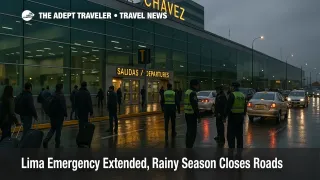
Lima Callao emergency extension planning now matters as much as weather planning for Peru itineraries. Peru extended the state of emergency in Lima, Peru, and Callao with increased security presence, effective November 21, 2025. Travelers connecting through the capital should add time for airport runs, stay clear of demonstrations, and build bigger buffers for onward moves into the Andes as rainy season closures become more likely.
The Lima Callao emergency extension adds an additional operational constraint to Peru trips at the same time Canada and Australia warn that the November to May rainy season can close roads and disrupt rail in the Andes.
Per Australia's Smartraveller, a 30 day extension is in effect for Lima and Callao from November 21, 2025, with armed forces on the streets and a reminder that protests can disrupt public transport, including transport to and from Machu Picchu. Peru's extension was formalized via Supreme Decree N.° 132 2025 PCM, which extends the emergency for 30 calendar days from November 21, 2025, and sets out that police maintain internal order with armed forces support, alongside restrictions or suspension of certain rights during the period.
Lima Callao Emergency Extension, What Travelers Will Notice
A state of emergency in Peru is not just a headline, it is a set of on the ground changes that can affect how long it takes to move around a city. Smartraveller notes that during states of emergency, the armed forces may assist police, and measures can include restricting movement, curfews, searches, and detentions. The decree language for the Lima and Callao extension also explicitly ties the measure to criminal violence, keeps police in control with armed forces support, and restricts or suspends specific constitutional rights during the extension period.
For travelers, the practical translation is simple. Expect more visible patrols, occasional checkpoints, and a higher chance that an otherwise routine transfer, especially at night, takes longer than maps suggest. Keep a physical ID on you, do not assume every route will flow normally, and avoid getting pulled into crowd movement in the historic center if a demonstration begins.
If your trip includes Lima as more than a transit point, set expectations with hotels and drivers ahead of time, especially for early departures. A prearranged transfer with clear pickup instructions is more reliable than improvising curbside when police activity or traffic controls are heavier than normal.
Peru Rainy Season Road Closures, Why November To May Changes Plans
Canada's travel advisory is blunt about what the rainy season can do in the Peruvian Andes. From November to May, seasonal flooding, mudslides, and landslides can hamper overland travel, close popular tourist areas, reduce essential services, make roads impassable, disrupt rail services, and damage bridges. This is the exact pattern that breaks tightly packed itineraries built around long road days, fixed rail departures, and same day connections.
The rainy season risk is not evenly distributed across Peru. The highest traveler impact usually shows up in mountainous corridors and valleys where there are few alternate routes, and where a single slide can sever access for hours or days. That is why Cusco region logistics are the first place to add slack, even if the skies in Lima look fine.
If you are building a classic route, Lima to Cusco to Sacred Valley to Machu Picchu, treat every handoff between modes as a potential failure point. Rain can slow roads, which can cause missed train departures, which can cascade into a scramble for rooms in the valley, and expensive last minute rebooking.
How Airport Transfers Change In Lima
Jorge Chávez International Airport (LIM) remains open, but getting there can become less predictable during periods of heavier security activity. The extension itself does not mean flights stop, it means you should plan for the ground side to be slower and more controlled than usual. The best mitigation is to leave earlier than you normally would, and to reduce variables.
If you are arriving late, plan your transfer in advance and confirm with your lodging that they can coordinate pickup even if traffic is slow. Keep your first night plan simple, and avoid stacking a late arrival with an immediate early morning departure, because any friction, even a minor checkpoint delay, can break the schedule.
For travelers who plan to self transfer between separate tickets, the Lima Callao emergency extension is an extra reason to avoid tight margins. A missed onward flight on separate tickets becomes your problem financially, and rainy season disruptions elsewhere in the country make same day recovery harder when seats fill.
Protests And Machu Picchu Transport Disruption Risk
Smartraveller specifically warns that political protests and strikes are common, and that past demonstrations have turned violent and disrupted public transport services, including transport to and from Machu Picchu. That is not theoretical, it is an operational risk to the rail and road chain that most visitors rely on.
If Machu Picchu is a must do, build the itinerary so you can absorb a disruption without losing the whole trip. The simplest structural fix is a buffer night before and after the Machu Picchu segment, so a delayed arrival does not force you to forfeit entry times, rail tickets, or flights out of Cusco. For context on how fragile the access chain can be during local actions, see Adept Traveler's recent reporting on rail and shuttle corridor disruption risk tied to the Machu Picchu access system. https://adept.travel/news/2025-11-28-machu-picchu-bus-dispute-rail-access
When To Switch From Road To Air In The Andes
Do not wait until you are standing at a blocked road to make the mode switch decision. The trigger to replace long road legs with flights is usually one of three things, a credible heavy rain forecast for your corridor, confirmed closures on a primary route, or early signals that rail operations are being curtailed. If any of those show up, stop trying to preserve the original plan, and pivot early while seats are still available.
Flights will not solve every problem, weather can also affect airports, but replacing a six to eight hour mountain drive with a flight can reduce exposure to the exact failure mode Canada describes, impassable roads and damaged bridges. When you do pivot, protect the rest of the chain by spacing critical commitments, and keeping the next step refundable or changeable.
A practical approach for Cusco region trips is to avoid planning a major intercity drive on the same day as a fixed rail departure, and to avoid planning a Machu Picchu day trip that must be followed by a same day flight out. If the schedule is already locked, your best tool is slack, add time, add a buffer night, and accept that you are buying reliability.
What To Do Next If You Travel In Late November Or December
The combined message of the Lima Callao emergency extension and Peru's rainy season guidance is not to cancel trips, it is to design them to survive friction. Keep airport transfers conservative, keep overland days flexible, and avoid stacking multiple non refundable, same day commitments. If your itinerary runs through the Cusco region in the rainy season, plan for the possibility of road or rail disruption, and build at least one recovery day into the schedule. That is the safest way to travel while the Lima Callao emergency extension remains in effect and rainy season closure risk stays elevated.
For related background and planning help, you may also want to review Adept Traveler's prior Lima and Callao emergency coverage and an evergreen Machu Picchu planning page for packing and routing considerations. https://adept.travel/news/2025-11-25-lima-callao-state-of-emergency https://adept.travel/destinations/south-america/peru/cusco/machu-picchu