

United Flight 803 Returns To Dulles After Engine Failure
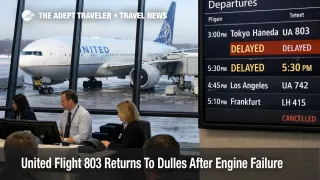
A United Airlines Boeing 777-200 operating Flight 803 experienced an engine power loss shortly after departure and returned safely to Washington Dulles International Airport (IAD). The disruption hit travelers booked from the Washington area to Tokyo, including passengers with onward connections across Japan and Asia that depend on tight long haul arrival banks. If you were on the flight, or were connecting to it, the priority is to lock in a protected reroute or refund decision quickly, then triage hotels, tours, and rail so the delay does not cascade into additional nonrefundable losses.
United Flight 803 engine failure matters because it turns one long haul segment into an inventory crunch, where rebooking options can tighten within hours and the knock on effects spread across multiple parts of a traveler's itinerary.
Who Is Affected
The most directly affected travelers are those ticketed on United Flight 803 from Washington Dulles to Tokyo International Airport (HND), along with anyone booked on a United itinerary that was meant to connect into that departure. United said there were 275 passengers and 15 crew members onboard, and that there were no reported injuries. The FAA said it will investigate the incident, which involved a Boeing 777-200.
The second group is passengers whose plans depend on landing in Tokyo on schedule, particularly travelers who had same day onward flights to Sapporo, Osaka, Seoul, Taipei, Manila, or other time sensitive connections, and travelers with prepaid Shinkansen tickets or reserved airport transfers. A delay of several hours can still be salvageable if it lands in the same operational bank, but once the departure slides far enough, it can force a next day arrival that breaks hotel check in dates, tour start times, and rail reservations.
A third group is anyone trying to rebook in a constrained environment. Even when a carrier intends to operate a replacement aircraft, the practical reality is that reaccommodation can involve a mix of same day swaps, later departures, and next day routings, depending on seats and crew legality. If broader system disruption is also present, for example weather or ATC constraints, rebooking friction rises, which is why it helps to understand the broader backdrop described in Flight Delays And Airport Impacts: December 15, 2025.
What Travelers Should Do
Start by getting a definitive status in writing from United's app or an agent, then decide whether you are aiming for same day arrival in Tokyo or whether you can tolerate a next day slip. If you have onward connections on the same ticket, push to be reprotected all the way to your final destination, not only to Tokyo, and ask the agent to confirm minimum connection feasibility after the new arrival time. If you have checked bags, assume extra time on both ends, because aircraft swaps and irregular operations can separate passengers and luggage.
Use a clear decision threshold: if the best protected option gets you to Tokyo too late to make your onward connection or your first night commitments, ask for an alternate routing that lands earlier, even if it is a different hub or a partner itinerary, or consider taking a refund and rebooking if the protected options no longer meet your trip's purpose. In the U.S., there is no automatic cash compensation regime for delays, which means the practical leverage is refunds for cancellations or significant changes, airline goodwill for meals and hotels, and your own card or policy coverage, as outlined in U.S. Backs Off Airline Delay Compensation.
Over the next 24 to 72 hours, monitor three things: the confirmed re departure plan for your replacement flight, your reprotected itinerary's connection times and terminal changes in Tokyo, and the documentation trail you will need for claims. Keep every receipt for meals, lodging, and transport, and ask United for delay or disruption verification you can submit to benefits administrators. If you have meaningful prepaid exposure, review Travel Insurance and your credit card trip delay terms so you know the time thresholds and the categories of reimbursable expenses before you spend.
How It Works
An engine power loss event on departure tends to create a multi layer disruption even when the aircraft returns safely. At the source, the airline has to protect safety, return the aircraft, deplane passengers, and pull the jet from service for inspection, which instantly removes a high capacity long haul asset from the schedule. Because transpacific flights are often tied to specific aircraft routings and crew duty windows, a single removal can also disrupt the next segment that aircraft was scheduled to operate, and it can consume spare aircraft that were meant to cover other irregular operations.
The second order ripples show up in the network. Tokyo arrivals are banked to feed onward Asia connections and domestic Japan flights, and a late departure from Washington can miss that bank and push travelers into fewer, more expensive options, sometimes involving overnighting at the hub. That, in turn, strains hotel inventory near the departure airport, increases rebooking queue times, and can create baggage and customer service bottlenecks, especially if many travelers are trying to change to the same limited set of alternative flights.
Finally, the disruption propagates into non airline parts of the travel system. A late or next day arrival can invalidate prepaid hotel nights, tours with strict start times, and reserved rail seats, and it can force travelers into last minute ground transport choices that cost more and have fewer backups. That is why the most effective strategy is to secure a workable air plan first, then immediately renegotiate the rest of the itinerary around the new arrival reality, rather than waiting for a best case recovery that may not materialize.