

Long Beach Carnival Firenze Delay Cancels Ensenada Stop
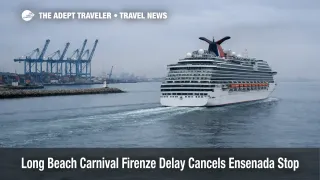
Carnival Firenze's sailing out of Long Beach, California, left well behind schedule after an IT systems issue disrupted ship and port operations, and the itinerary dropped its Ensenada, Mexico call. Guests traveling for the six night Mexican Riviera itinerary, especially those arriving on turnaround day, faced late embarkation, changed shore plans, and knock on costs for hotels, transfers, and flight changes. Travelers should confirm the revised schedule in the Carnival HUB app and email updates, then adjust flight, hotel, and excursion timing before local availability tightens.
The Carnival Firenze Long Beach delay matters because an onboard systems failure can force itinerary changes and compress port time in ways that break tightly timed travel plans.
Cruise Industry News reported the ship departed at 120 p.m. PT on Tuesday, December 16, 2025, about 21 hours after its originally scheduled 330 p.m. PT departure on Monday, December 15, 2025. The same report said the Ensenada call was canceled due to the late sail away, while Cabo San Lucas remains on the plan with an overnight call starting Thursday, December 18, 2025, and departure on Friday, December 19, 2025. Cruise Industry News also reported guests said Carnival offered $100 onboard credit per cabin as compensation for the revised itinerary.
Maritime Executive framed the disruption as a connectivity outage that was significant enough to delay departure until systems were restored, highlighting how digital connectivity now underpins onboard transactions and guest service functions. That operational reality is why a technology failure can be treated more like a mechanical constraint than a minor inconvenience, because it can affect safety processes, revenue systems, and communications, all at once.
Who Is Affected
The most exposed travelers are those who planned to arrive in the Los Angeles area on turnaround day with minimal buffer, including guests flying into Long Beach Airport (LGB), Los Angeles International Airport (LAX), John Wayne Airport (SNA), or Hollywood Burbank Airport (BUR), then heading straight to the terminal. When departure processing slips, the first day becomes a logistics problem rather than a vacation day, and any delay in boarding can cascade into missed dining reservations, missed muster timing, and a scramble to rebook plans that were anchored to an assumed sail away.
Guests with prepaid Ensenada plans are also directly affected, including Carnival shore excursions, independent tours, and third party transport that cannot simply be moved to a different day. Even when refunds are available, the time cost is real, you may need documentation, you may need to wait for credits to post, and you may need to repurchase alternatives quickly for Cabo while inventory is still available.
Travelers with a pre cruise hotel night in Long Beach, Los Angeles, or Anaheim are indirectly affected because an unexpected late departure can change whether it is worth extending a hotel stay, shifting check out timing, or moving transfers. Families, groups, and anyone using separate tickets for flights face higher friction, because the cruise line can adjust ship operations, but cannot automatically fix independently booked air travel.
What Travelers Should Do
First, lock down the facts you can control. Verify the current itinerary and port times inside the Carnival HUB app, save screenshots of any itinerary update, and keep your ship notifications enabled. If you have independently booked Ensenada tours or transportation, contact the provider immediately with the port cancellation and ask about refund and reschedule options, then document any denial so you can decide whether to dispute charges later through your card issuer or travel insurance.
Next, use a simple threshold for changing flights and hotels: if your return home depends on a tight same day flight after disembarkation, or you have a protected connection you cannot miss, move it to later in the day or to the next day now, while seats and hotel rooms are still available. If your plans are flexible and you can tolerate uncertainty, waiting can make sense, but only if you have a clear fallback, including a backup airport, a refundable hotel option, and enough time to absorb a long line at guest services or a busy call center.
Over the next 24 to 72 hours, monitor three things: whether Carnival posts any additional compensation or policy guidance inside your booking, whether shore excursion inventory in Cabo tightens as Ensenada demand shifts, and whether customer service channels slow down as more passengers call in. This is also the window when you should confirm how any canceled port expenses are handled, and whether credits post automatically or require follow up.
How It Works
Cruise departures run on tightly sequenced systems that connect the terminal, the ship, and shoreside networks. When core IT systems degrade, the immediate effect is slower processing for embarkation workflows and slower resolution for passenger issues, because staff often rely on digital tools for identity checks, account access, onboard charging, and messaging. Maritime Executive emphasized that connectivity and digitally enabled transactions have become essential to cruise operations, which helps explain why a "systems" issue can hold a ship alongside even when the vessel itself is physically ready to sail.
The second order ripple is where travelers feel the real pain. A delayed departure compresses the remaining itinerary, and the first port that gets cut is often the most time sensitive call, in this case Ensenada. Once a port is dropped, shore excursion demand concentrates into the remaining call, which can raise prices and reduce availability for popular tours. That effect is familiar across very different disruption types, from weather driven port constraints like Port Tampa Bay Fog Delays Cruise Embarkation December 7 to operational pileups like Port Canaveral Utopia Turnaround Delay Backs Up Embarkation, where delayed processing squeezes traveler choices into fewer remaining windows.
Finally, IT disruptions tend to produce customer service congestion. When many guests need answers at once, onboard lines build, phone support queues grow, and response times in apps and email slow down. That matters because the financial cleanup often happens after the fact. Carnival's guest facing terms note that shore excursions can be canceled, and when they are canceled, refunds are the remedy, but the traveler still has to track what posts to their account, and what remains outstanding. For travelers who want a broader explanation of why modern travel systems can fail in unexpected ways, including the cascading effects of software and connectivity vulnerabilities, Cosmic Rays, Bit Flips, and the Airbus A320 "Icarus" Recall is a useful parallel read, even though it is aviation focused, because the operational pattern is similar.
For planning purposes, treat the Carnival Firenze Long Beach delay as a reminder that cruise itineraries have less slack than they appear to, and that one systems failure can cut a port, reshape shore plans, and force expensive last minute changes unless you build buffer on both ends.