

Jamaica Hyatt Resort Closures Extended To Nov 2026
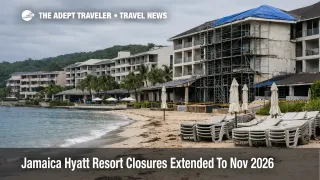
Hyatt Hotels Corporation has extended the shutdown of seven Hyatt affiliated all inclusive resorts in Jamaica after Hurricane Melissa damage assessments, pushing the planned restart to November 1, 2026. The change affects travelers who booked Montego Bay area stays at Breathless Montego Bay Resort and Spa, Dreams Rose Hall Resort and Spa, Hyatt Zilara Rose Hall, Hyatt Ziva Rose Hall, Secrets St James Montego Bay, Secrets Wild Orchid Montego Bay, and Jewel Grande Montego Bay Resort and Spa. If you are holding a reservation in the impacted window, treat it as a forced replan, confirm your cancellation and refund path in writing, and lock in an alternative resort before peak season inventory tightens further.
The practical shift is that a short, storm driven closure has become a long capacity removal in Jamaica's most concentrated all inclusive corridor. Hyatt said it will use the added time both to repair storm damage and to make enhancements, while offering impacted guests the option to cancel without penalty or to rebook at select Hyatt Inclusive Collection destinations outside Jamaica. A key detail for travelers who followed earlier updates is that Hyatt's initial post storm pause covered eight Montego Bay resorts through January 31, 2026, while this extension names seven resorts and does not include Zoëtry Montego Bay Jamaica, which had appeared on earlier storm updates. For the earlier timeline and how it fit into the wider island recovery, see Hyatt Pauses Jamaica Resorts Through January 31 and Hurricane Melissa Jamaica Hotel Reopenings Timeline.
Who Is Affected
Travelers are the immediate audience, but the ripple runs wider than a single brand's guest list. Anyone who typically books a higher amenity all inclusive stay around Montego Bay should expect fewer like for like alternatives, more date compression into the resorts that are open, and sharper price swings when a flight and hotel package has to be rebuilt close to departure.
Travel advisors and group planners are exposed because these properties anchor wedding blocks, incentive travel, and repeat winter charters. When a large room base stays offline, the disruption propagates into airline demand patterns, charter uplift decisions, and even transfer operators that staff and schedule around predictable hotel occupancy. Travelers arriving via Sangster International Airport (MBJ) often pick Montego Bay specifically for short transfer times, so the closure concentrates substitution pressure into the same geographic strip, rather than spreading demand evenly across the island.
Tourism workers and local suppliers are also directly impacted. The Bustamante Industrial Trade Union said the extended shutdown leaves thousands of workers facing uncertainty about income security, benefits, and job retention, and it warned that Jamaica's recovery is fragile enough that a prolonged loss of premium room stock can spill into airlift, visitor arrivals, tourism linked services, and foreign exchange earnings.
What Travelers Should Do
If you have an impacted reservation, move fast and document everything. Contact your booking channel, confirm that cancellation penalties are waived, verify how refunds or credits will be issued, and ask Hyatt's support channels what comparable properties they can actually confirm in writing, not just suggest. If you prepaid excursions, transfers, or travel protection, line up those cancellations in the same session so you do not end up with stranded add ons attached to a hotel that will not reopen on your travel dates.
Use a clear decision threshold for whether to wait or rebook. If your trip falls in a peak demand week, if you need a specific room type, or if you are traveling with a group, you should treat the closure as final and rebook now, because replacement inventory in Montego Bay can disappear quickly once a major resort cluster stays offline. If your trip is far out and flexible, you can hold while monitoring whether airlines, tour operators, or Hyatt publish broader accommodation programs, but only if you also have a refundable backup option in place.
Over the next 24 to 72 hours, watch three things: your airline's schedule changes for Jamaica routes, your resort's written status in your reservation record, and any official guidance from Hyatt on where it will place displaced guests. Also monitor ground truth signals like transfer operator availability and excursion confirmations, because those are early indicators of whether the on island visitor economy is tightening or normalizing in your specific corridor.
Background
Hurricane Melissa struck Jamaica on October 28, 2025, and caused severe damage and disruption across the island, with follow on public health and reconstruction pressures still playing out. Recovery in tourism tends to be uneven: smaller and less damaged properties can reopen in phases, but large all inclusive complexes need coordinated repairs across rooms, kitchens, utilities, pools, water systems, and beach infrastructure, then they have to rebuild staffing and supplier cadence before they can operate safely at scale. That is why an inspection finding at one resort can cascade into a much longer closure window than the initial post storm estimate.
For travelers, the key system effect is that hotel capacity is one of the main governors of airlift and schedule stability in leisure markets. When thousands of rooms stay offline in Montego Bay, airlines may adjust frequencies, timings, or aircraft gauge based on softer demand signals, and package operators can reshuffle where they place guests, which in turn changes transfer demand and excursion load. The second order ripple hits connections and trip structure: a rebooked hotel might move you to a different coast, which changes drive times, tour feasibility, and the reliability of same day plans, especially if you were relying on short transfers from Montego Bay's airport corridor.
The macro recovery context also matters. Reuters reported that Jamaica secured up to $6.7 billion in international support for reconstruction over the next three years after Melissa, underscoring how large the rebuilding effort remains even as visitor areas reopen. That scale is one reason traveler plans should be built with buffers and flexibility through 2026, particularly in corridors where big resort footprints are still under repair.