

Weather Shifts Nova Scotia, Newfoundland Ferry Sailings
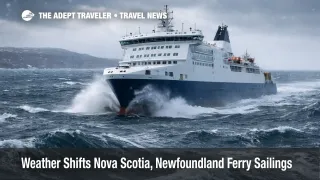
Marine Atlantic is reshuffling crossings between North Sydney, Nova Scotia, and Port aux Basques, Newfoundland and Labrador, after issuing adverse weather updates that move some departures and add restricted commercial only sailings. Travelers with vehicles, cabins, and time sensitive holiday plans are the most exposed, because the added sailings are not usable by most leisure customers, and revised departure times can be earlier than expected. The practical next step is to recheck the booking, lock in a rebook plan before driving to the terminal, and widen buffers for hotels, long drives, and any onward flights.
The Nova Scotia Newfoundland ferry weather disruption matters because a single unstable operating window compresses demand into fewer passenger suitable departures, then ripples into lodging, rental car timing, and domestic connections on both sides of the crossing. Marine Atlantic's travel advisories posted on December 18, 2025 show two separate schedule changes for December 18 and December 19, 2025, plus newly added restricted commercial only departures, and a wider warning that additional sailings may see weather related delays through December 21, 2025.
On December 18, 2025, Marine Atlantic added a 1600 departure from North Sydney to Port aux Basques as a restricted commercial only sailing. It also added a 0300 departure on December 19, 2025 from Port aux Basques to North Sydney as a restricted commercial only sailing. Those additions support commercial flow, but they do not create new space for most vacation vehicles or foot passengers, and they can still tighten the set of realistic passenger options if travelers assume that every added sailing is bookable for leisure trips.
Marine Atlantic also rescheduled two unrestricted passenger sailings. The 2330 Port aux Basques to North Sydney departure on December 18, 2025 was moved earlier to 2200, with an updated check in time of 2000. The 1145 North Sydney to Port aux Basques departure on December 19, 2025 was moved earlier to 0930, with an updated check in time of 0700. Reserved customers are to be rescheduled to the new departure times and contacted, which makes it essential to confirm that the traveler's message and email on file are current, and that the booking shows the revised schedule.
At the same time, Marine Atlantic warned that additional sailings could face potential delays, including departures later on December 19, 2025, and multiple departures on December 20 and December 21, 2025. That is the hallmark of a rolling weather event, where a sailing may operate, but the schedule can remain fragile as wind and sea state fluctuate across the Cabot Strait. Environment Canada marine forecasts for the Cabot Strait area showed a gale warning on December 18, 2025 with strong winds and building seas, a combination that often produces stop start ferry operations rather than a clean, predictable recovery.
This pattern is not unique to Atlantic Canada. Recent ferry disruptions on other corridors show the same compression effect when a weather sensitive route loses reliability, including Tarifa Tangier Ferries Canceled in Gibraltar Winds and Terminal 5 Closure In Holyhead Delays Dublin Ferries. The common traveler lesson is that when capacity and port windows tighten, the best outcome comes from deciding early, not from arriving and hoping space appears.
Who Is Affected
The most directly affected travelers are those booked on the North Sydney, Port aux Basques route on the evening of December 18, 2025, and the morning and midday period on December 19, 2025, because the revised departure times and check in deadlines move earlier than the published plan. Anyone driving in from inland Nova Scotia, Cape Breton, or western Newfoundland and Labrador has added exposure, because winter road conditions, fuel stops, and slowdowns can quickly erase the margin needed to meet a hard terminal cutoff.
Leisure vehicle travelers are the next group at risk. When Marine Atlantic adds restricted commercial only sailings, it can be easy to assume that there are more ways across. In practice, those sailings are not intended for most passenger traffic, so the usable inventory for vacation vehicles, families, and foot passengers can remain tight, and popular crossings can sell out or leave only undesirable timing. Travelers with cabins are also exposed to knock on changes, because late or reshuffled operations can alter vessel assignments, and cabin availability can become constrained when many people are pushed onto the same departure.
The second order impacts show up quickly on the Newfoundland side. A late arrival at Port aux Basques can break a full day drive to Corner Brook, Deer Lake, or Gros Morne plans, and it can also break domestic flight timing from Deer Lake Regional Airport (YDF) if a traveler planned a same day connect. On the Nova Scotia side, late arrivals into North Sydney can disrupt onward drives toward Halifax, and can trigger unplanned hotel nights when travelers decide it is not safe to continue driving after midnight in winter conditions.
What Travelers Should Do
First, anchor your plan to what the booking system shows right now, not what you originally purchased. Use Marine Atlantic's Manage Trip tools or phone support to confirm the revised departure, the revised check in time, and whether your sailing is unrestricted passenger service versus restricted commercial only. Then plan the terminal arrival time backward from the check in cutoff, and add additional road buffer for winter driving, because missing check in can functionally turn a delay into a cancellation for your itinerary.
Second, set a clear decision threshold for rebooking versus waiting. If your onward plan depends on a fixed hotel check in window, a prepaid activity, or a same day domestic flight, treat a rolling weather advisory as a signal to protect the downstream commitment, not to gamble on a perfect crossing. A clean rule is that if a missed ferry pushes your arrival past your safe driving limit, or forces you to rush to make a flight, you should rebook to a later sailing with more buffer or shift to the next day and book an overnight near the terminal.
Third, monitor the right signals over the next 24 to 72 hours. Watch Marine Atlantic travel advisories for changes in sailing mode, cancellations, and revised check in times, and also watch Environment Canada marine forecasts for the Cabot Strait for gale level wind, sea state, and any escalation into stronger warnings. In a multi day event, do not treat one on time departure as proof that the system has recovered, instead look for several sailings operating close to schedule before tightening buffers again.
How It Works
Marine Atlantic's North Sydney, Port aux Basques route is a critical land bridge for both passenger vehicles and commercial freight, which means the system is designed to keep essential flow moving even during harsh winter conditions. When adverse weather hits, the first order effect is at the terminals and on the water, safe operating limits can force a departure to move, pause, or cancel, and the backlog immediately stacks into later departures because there are only so many berth windows and vessel cycles per day.
The second order ripple spreads across multiple layers of the travel system at once. Road transfers become more fragile because travelers time long winter drives to meet fixed terminal cutoffs, and a revised check in time can invalidate the entire driving plan. Hotel demand spikes near the terminals because a single missed crossing often turns into an unplanned overnight, which is especially common around holiday periods when inventory is already tighter. Domestic flights inside Newfoundland and Labrador then become the third layer, because travelers who planned to land on the island and still catch a same day departure from Deer Lake Regional Airport (YDF), St. John's International Airport (YYT), or Gander International Airport (YQX) can lose that connection when the ferry arrival shifts.
Marine Atlantic's sailing modes add another constraint that travelers need to understand during disruptions. Some departures are restricted to manage dangerous goods and passenger limits, and RC designated sailings are restricted commercial only, meaning they are for commercial drivers rather than general passenger traffic. When Marine Atlantic adds an RC sailing to maintain freight continuity, it may improve supply chain flow while leaving leisure travelers competing for the remaining unrestricted passenger departures.
Finally, the terminal rules are strict by design. Marine Atlantic generally requires passengers to be checked in at least two hours before the scheduled sailing time, and missing check in can cause a reservation to be cancelled. Marine Atlantic also uses a 24 hour clock for departures and arrivals, which reduces confusion in a fast moving disruption, but it also means travelers should double check that they are reading times correctly when a sailing is retimed earlier.
Sources
- Travel Advisories | Marine Atlantic
- Cabot Strait - northern half Marine Forecast | Environment Canada
- Cancellations, Changes, and Compensation | Marine Atlantic
- Reservations and Check-In Time | Marine Atlantic
- Frequently Asked Questions | Marine Atlantic
- Transporting Dangerous Goods and Cargo | Marine Atlantic
- Does Marine Atlantic have its own time zone? | Marine Atlantic