

House Committee Backs U.S. Air Traffic Control Shutdown Bill
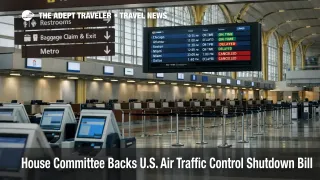
The House Transportation and Infrastructure Committee advanced the U.S. air traffic control shutdown pay bill on December 18, 2025, approving H.R. 6086, the Aviation Funding Solvency Act, in Washington, DC. The measure is designed to keep Federal Aviation Administration (FAA) aviation safety staff, including air traffic control (ATC) personnel, on payroll during a federal funding lapse. For travelers, the near term takeaway is simple, this is a step toward reducing shutdown driven schedule chaos, but it is not law yet, so itineraries still need buffers when Congress approaches funding deadlines.
The change matters because shutdowns do not just pause paperwork, they create a pay shock inside a system that runs on precise staffing and timing. Even when controllers are required to work, uncertainty around pay and household cash flow can translate into higher absences, reduced arrival and departure rates, and airline schedule trimming that spreads well beyond the airports closest to the staffing pinch.
Who Is Affected
Travelers flying within the United States are the primary audience, especially anyone routing through major connection hubs where small capacity drops quickly become missed banks and depleted rebooking inventory. The same risk extends to inbound international travelers, because U.S. arrival metering and congestion can push flights late enough to break onward connections, hotel check in timing, cruise embarkation transfers, and rail or car pickup windows.
Airlines, business aviation operators, and air cargo are also directly exposed, because ATC staffing instability forces longer routings, more ground delay programs, and more conservative schedules. Those operational changes feed back into the traveler experience through packed gate areas, repeated rebooking attempts, and higher odds that the last flight of the day cancels rather than recovers.
What Travelers Should Do
Travelers planning flights around any federal funding deadline should treat the period like an irregular operations risk window. Build longer connection buffers, avoid separate ticket self connections through tight hubs, and consider an overnight on the front end when a missed connection would strand the trip. If possible, choose fares that allow changes without punitive fees, and keep hotels cancellable until the funding picture is clear.
Use a decision threshold for rebooking versus waiting. If your first leg shows long holds, and your connection time drops below about 90 minutes for domestic connections, or about 2 hours for international departures with checked bags, assume the itinerary is fragile and look for earlier departures or alternate routings while inventory still exists. The point is not that every hold becomes a cancellation, it is that seats disappear fast once a hub starts slipping.
Over the next 24 to 72 hours around any deadline, monitor whether airlines publish waivers, whether schedules are being proactively trimmed, and whether FAA traffic management programs are being used more aggressively. For day of travel monitoring, compare your airport's delay profile to broader system conditions, and use a daily disruptions view like Flight Delays and Airport Impacts: December 18, 2025 as a model for what early warning signals look like when capacity tightens.
Background
The Aviation Funding Solvency Act creates a backstop for the FAA when appropriations are not enacted and no continuing resolution is in effect. In practical terms, it authorizes continuing appropriations drawn from the Aviation Insurance Revolving Fund, at the prior year's operating rate, with a requirement to keep $1 billion in the fund as a floor. If the available amount cannot cover everything, the FAA must prioritize compensation for employees of the Air Traffic Organization, which is the part of the agency that includes air traffic controllers and related operational staff.
This approach targets the mechanism that turns a political standoff into airport chaos. When staffing becomes unstable, the FAA can reduce arrival rates, issue traffic management initiatives, and require airlines to cut operations at constrained airports. That first order effect shows up as longer ground holds and cancellations at the source airports. The second order ripple is broader, delayed arrivals miss their next departures, aircraft and crews end up out of position, and the schedule degrades across multiple regions even where local weather is fine. Travelers then feel it in layers beyond the flight, hotel nights shift, ride share and transfer windows break, cruise embarkation buffers disappear, and customer service channels clog as thousands of passengers try to rebook at the same time.
Recent reporting around the committee action tied the push for this bill to disruption from a 43 day shutdown and to subsequent FAA driven capacity cuts at major airports earlier in November 2025, underscoring how quickly staffing and safety actions can cascade into millions of disrupted passenger journeys. The bill does not prevent a shutdown, but it aims to reduce one of the biggest accelerants of system wide delay, workers being required to operate critical infrastructure while not being paid. For longer horizon context on structural debates around FAA operations and governance, see U.S. Air Traffic Control Privatization: Reality Check, because funding stability proposals like this one often sit alongside broader arguments about how the system should be organized and financed.
Sources
- Committee Approves Bill to Protect Air Traffic Control System from Government Shutdowns
- What They Are Saying About the Aviation Funding Solvency Act
- H.R. 6086, Aviation Funding Solvency Act (CRS summary)
- US House panel votes to pay air traffic controllers during future government shutdowns
- Bipartisan bill aims to pay air traffic controllers during future shutdowns