

Volaris Viva Aerobus Merger, Mexico Flights What Changes
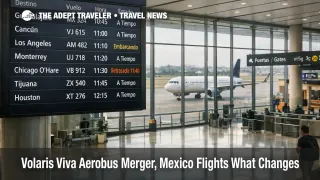
Volaris and Viva Aerobus say they plan to combine under a new Mexican airline group using a holding company structure. The announcement matters most for travelers who rely on ultra low fares on domestic Mexico routes and on cross border flights to the United States, because consolidation can eventually change how capacity is scheduled, priced, and distributed. For now, passengers should treat existing bookings as normal travel, keep confirmation emails and receipts handy, and watch for any future notices tied to regulatory review rather than day of travel operations.
The companies describe the transaction as a merger of equals where each shareholder group would own 50 percent of the combined group on a fully diluted basis. They also say both airlines would continue operating as separate entities with their current leadership structures in place, while governance shifts to a combined board chaired by Viva's controlling shareholder, Roberto Alcántara Rojas. The companies expect the deal to close in 2026, subject to approvals and customary closing conditions.
Who Is Affected
The most exposed travelers are those flying price sensitive, point to point routes inside Mexico where Volaris and Viva compete head to head, and those using either carrier for visiting friends and relatives travel across the U.S. Mexico border. If the holding company is approved, the long term risk is not that a ticket stops working, it is that overlapping routes could eventually be rationalized, retimed, or repriced once strategic planning happens at the group level.
Travelers who route through Mexico City International Airport (MEX) or Felipe Ángeles International Airport (NLU) should pay extra attention because the companies explicitly point to growth in the Mexico City metropolitan area. That matters in a system sense, slots and operating limits in the metro area can force schedule tradeoffs that ripple into missed connections, last flight of the day risk, and hotel night changes when banks move.
Finally, anyone planning 2026 cross border trips should factor in the wider regulatory environment. Recent U.S. Mexico disputes over growth, slots, and Mexico City area operations have already affected route approvals and expansion pacing, and this transaction adds another layer of review that can shape what gets prioritized first after any closing. For related context, see U.S. Flight Cuts Hit Smaller Mexico Routes.
What Travelers Should Do
If you are booked for travel in the next few months, do not change plans just because of the announcement. Keep your original ticket, verify your email and SMS contacts in your airline profile, and take screenshots of your itinerary, seat assignments, bags, and bundles so you can quickly prove what you purchased if a schedule change email arrives later.
For trips in mid to late 2026, set a decision threshold now: if your itinerary depends on a tight connection, a last flight of the day, or separate tickets that must line up, you should pay for flexibility, or rebook to a more resilient routing as soon as the airline makes a material schedule change. If your flights are nonstop, and you can tolerate a time shift, it is usually rational to wait, because early speculative rebooking can lock you into higher fares before any actual network adjustments are announced.
Over the next 24 to 72 hours, monitor three things: official transaction updates from the companies, any statements about required approvals, and any change in route filing behavior on the U.S. Mexico side. If you want a comparable traveler playbook for how merger headlines can translate into fare and schedule uncertainty, see Spirit Frontier Merger Talks Could Change 2026 Fares.
How It Works
This is structured as a holding company combination, not an immediate operational integration. The companies say they intend to keep both carriers operating under their independent air operating certificates and distinct brands, which is why they also state that scheduled flights will be honored, and that nothing changes in the passenger travel experience during the review period. They also say loyalty programs continue as usual, including earning and redeeming points in each program.
The approvals list signals where the friction could show up. The companies cite Mexican review by the Comisión Nacional Antimonopolio and Mexico's foreign investment commission, plus U.S. review under the Hart Scott Rodino Act, and review by Colombia's antitrust agency, with an expected close in 2026 if conditions are met. That matters for travelers because regulators can require remedies that change future network decisions, for example limits on certain overlaps, conditions tied to airport access, or commitments around service levels in specific regions, all of which can affect seat supply and pricing even if branding stays separate.
In practical travel system terms, first order effects show up at the airline planning layer, schedule banks, aircraft and crew utilization, and distribution priorities for leisure versus business heavy routes. Second order ripples appear at airports and in onward travel, retimed arrivals can shift hotel night patterns in Mexico City and resort gateways, change the viability of same day road transfers, and increase missed connection risk for travelers stitching together separate tickets. If a post close strategy leans into Mexico City area growth, constraints at Mexico City International can push more traffic to Felipe Ángeles, which changes ground transfer times, rideshare expectations, and buffer needs for early departures.