

Heathrow SAS Cabin Crew Strike Hits Flights Dec 22 to 26
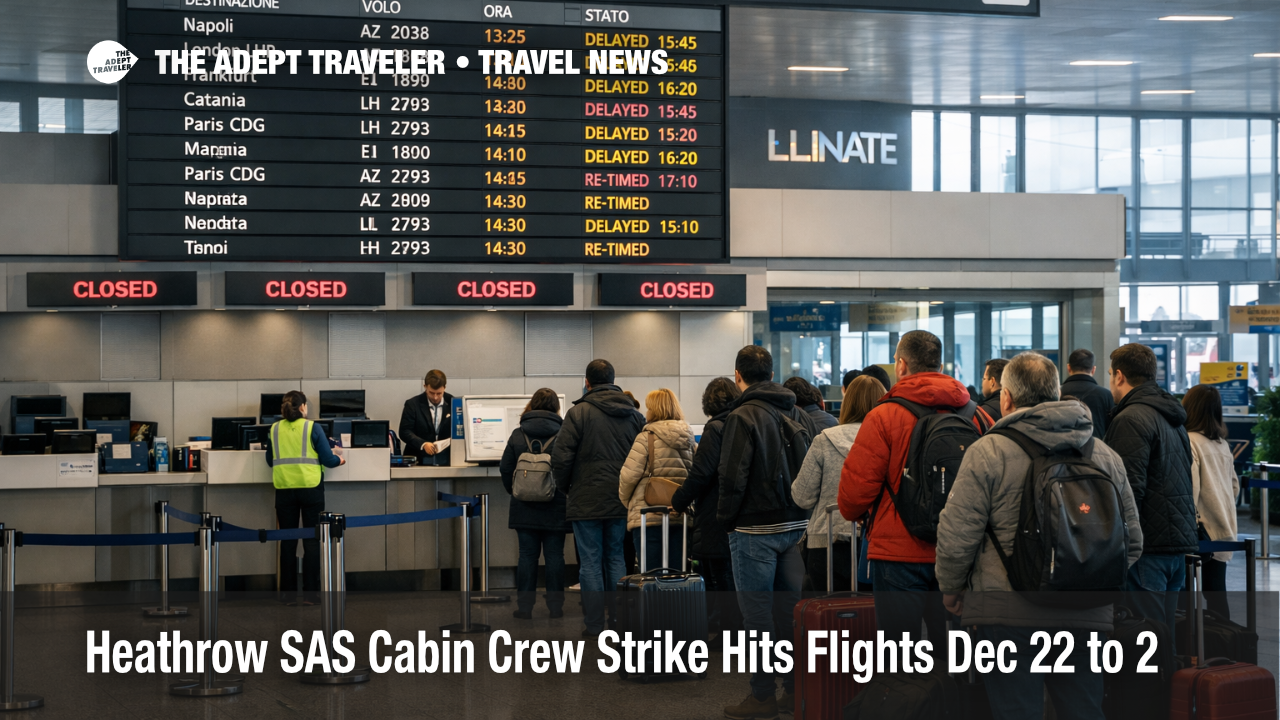
Strike action by Heathrow based Scandinavian Airlines Services cabin crew is set to disrupt Scandinavian Airlines flights at London Heathrow Airport (LHR) during the peak Christmas week travel rush. Passengers on SAS departures and arrivals between Heathrow and key hubs such as Copenhagen Airport (CPH), Oslo Airport (OSL), and Stockholm Arlanda Airport (ARN), plus anyone connecting onward on separate tickets, are most exposed. If your trip touches those windows, confirm whether your booking has change flexibility, price alternate routings now, and plan for longer buffers and an overnight backstop in London or Scandinavia.
The Heathrow SAS cabin crew strike is scheduled for December 22 to 24, 2025, and December 26, 2025, and it can turn a routine Nordic connection into a cancellation plus a cascade of missed onward flights if you wait until day of travel.
Unite has framed the dispute as a pay issue for more than 130 Heathrow based cabin crew, and multiple UK travel outlets are warning that SAS services to and from Scandinavia are the most likely to take the first hit. In practical traveler terms, this is a legality constraint, not just a slower airport process, because cabin crew availability determines whether a flight can operate at all. When even a small set of rotations are removed from a tight holiday schedule, the knock on effects spread quickly into rebooking queues, seat scarcity, and hotel nights you did not plan to buy.
This is also a different disruption profile than baggage or ground handling walkouts, because it can cancel a flight outright rather than simply degrade queues. If you are also watching London area strike risk more broadly, Luton Airport Ground Handling Strike Dates and Bag Delays is the closest parallel story this week, but the mitigation logic is different.
Who Is Affected
Travelers booked on SAS flights that depart from, or arrive into, London Heathrow are the front line group, especially on routes that connect directly into SAS hub banks at Copenhagen, Oslo, and Stockholm. Those hub banks matter because they are how SAS and its partners distribute passengers to smaller Nordic airports, including winter leisure gateways that often have limited daily frequencies. If your itinerary is built around one specific arrival time, for example a timed transfer, a one night stay, or a tour that cannot slide, treat the strike dates as a real trip failure risk, not an inconvenience risk.
Families and winter travelers are typically more exposed than solo business travelers, not because they face different rules, but because they tend to be less flexible. Checked baggage, winter clothing volume, and pre booked activities reduce your ability to accept a late reroute or an overnight with no luggage. If you are traveling to meet a cruise, a rail departure, or a package check in time, you are effectively running a series of dependent systems, and the least resilient link, a canceled first flight, can break the whole plan.
Passengers using separate tickets, including self made connections via Scandinavian hubs, are the other high risk group. If your Heathrow to hub flight cancels, your onward flight on a different booking may not be protected, and holiday inventory can make same day replacement seats expensive or unavailable. Even travelers on a single ticket should assume that reaccommodation may involve longer itineraries, alternate airports, or next day travel, simply because peak weeks reduce spare capacity.
What Travelers Should Do
Start with immediate actions that preserve optionality. Pull up your exact flight numbers for December 22 to 24, 2025, and December 26, 2025, and watch for schedule changes, aircraft swaps, or pre cancellations, then compare the cost of moving to a non strike day versus the expected cost of an unplanned overnight. If your fare rules allow, the most resilient move is usually to depart earlier than the first strike day, or to shift to a date after the strike window, because it reduces your dependence on last seat reaccommodation during a demand peak.
Use a clear threshold for rebooking versus waiting. If missing your first night would break the trip, or if you have an onward connection that is not airline protected, proactive rerouting now is usually the rational choice even if it costs more, because the cost of failure is higher than the cost of moving early. If your plans can slide by 24 hours without losing core value, you can consider waiting for airline guidance, but only if you have a realistic backup plan and enough liquidity to cover meals, lodging, and local transport while you wait on rebooking.
Over the next 24 to 72 hours, monitor three signals and act fast when they flip. First, watch for any airline issued flexibility options in your manage booking flow, because self service changes are often faster than call centers during disruption. Second, track whether your specific route is being consolidated into fewer departures, which can appear as a time change before it becomes a cancellation. Third, keep an eye on wider border and connection friction across Europe, because delays after landing can erase your buffer, and Schengen EES Border Delays At Airports Into 2026 is a reminder that immigration time, not just flight time, can decide whether you make a same terminal connection.
Background
A cabin crew strike at one station propagates through the system differently than a weather event or a security line problem. The first order effect is at the source, flights cannot depart without the required crew complement, so cancellations and consolidations are the fast lever airlines pull to keep the rest of the network legal and recoverable. The second order ripple hits aircraft and crew positioning, because a canceled morning rotation can remove the aircraft position needed for the afternoon return, which can create a wave pattern where both directions are affected even if the strike is localized to one base.
The next layer of ripple shows up in connecting hubs and partner itineraries. When a Heathrow departure into Copenhagen, Oslo, or Stockholm is removed, passengers miss banked connections, and then compete for a smaller pool of same day seats that are already full from holiday demand. That competition is what drives long hold times, limited reroute choices, and higher prices on alternate carriers. It also pushes travelers into unplanned overnights, which tightens airport hotel inventory around Heathrow and increases short notice lodging pressure in hub cities.
Passenger rights are a critical part of the decision tree for disruptions departing the UK. UK passenger rights guidance from the Civil Aviation Authority explains that when a flight is canceled, travelers should be offered a choice of a refund or rerouting, and that airlines must provide appropriate care, including meals and accommodation if an overnight delay is required. The UK government also summarizes the same core framework, including rerouting under comparable conditions or a refund, depending on what the traveler chooses. Compensation rules can be more fact specific, so focus first on getting to your destination with protected arrangements, then document everything for any claim you may file later.
Sources
- Scandinavian Airlines workers at Heathrow in Christmas strikes
- SAS faces Heathrow Christmas strike by cabin crew
- All the strike action you need to know about for travelling in Europe in December 2025
- Christmas travel chaos: all the European airport strikes to expect in December
- Delays, UK Civil Aviation Authority
- Cancellations, UK Civil Aviation Authority
- Air passenger travel guide: summary of passenger rights