

Hurricane Melissa Jamaica Resort Reopenings Through 2026
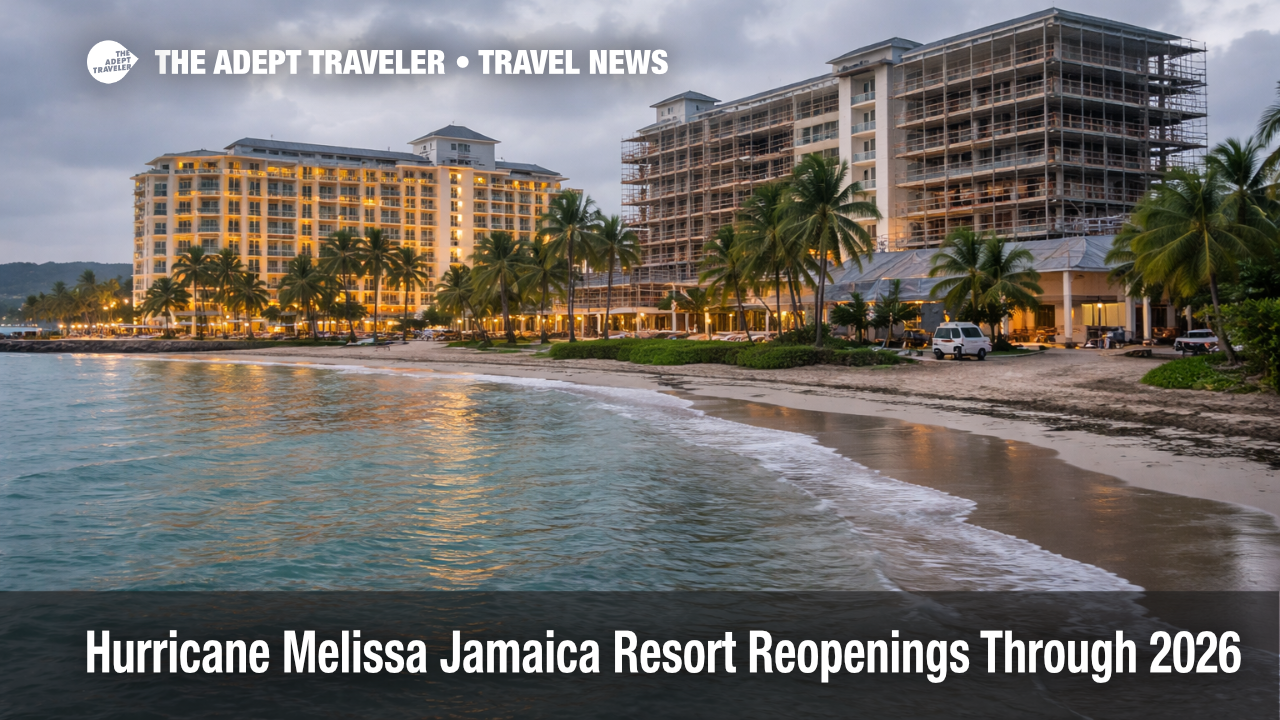
Jamaica's tourism leadership is now describing a two track comeback after Hurricane Melissa, with day to day travel largely restarting for peak season, but a longer rebuild stretching into 2026. The Category 5 storm made landfall on October 28, 2025, and hit the western half of the island hard enough that officials immediately shifted into a formal recovery posture for hotels, attractions, ports, and the utilities that keep resort corridors functioning.
Travelers felt the near term shift in two places first, air access and room supply. Jamaica's Ministry of Tourism publicly set a target to have the industry back in operation by December 15, 2025, and framed the work as a coordinated restart across airports, ports, and the main visitor corridors rather than a single reopening moment. For most travelers, that translated into flights resuming and many hotels reopening, while a meaningful slice of inventory stayed offline for repairs and deeper reconstruction.
The longer range change is what Jamaica is projecting for 2026. At a media event in New York on December 18, 2025, tourism minister Edmund Bartlett and Jamaica Tourist Board director Donovan White said they expect a staged recovery that pushes room inventory back toward full availability by the end of 2026, and they projected that visitor arrivals would rebound to about 80 percent of pre storm levels by that same point. That timeline matters because it signals a destination that is open for travel now, but still operating with uneven capacity and periodic service gaps for much of the next year.
For travelers who want the latest status snapshot, Adept Traveler's earlier operational update, Hurricane Melissa Jamaica Tourism Reopening: What's Open, remains the best quick reference for what was functioning in mid December, and where variability was most likely to show up by corridor and property.
Who Is Affected
The most exposed group is anyone traveling on fixed winter dates, especially families, weddings, and groups who picked Jamaica for a specific all inclusive brand, beach, or short transfer. Even when flights are running smoothly into Sangster International Airport (MBJ), Norman Manley International Airport (KIN), and Ian Fleming International Airport (OCJ), a tight room market can force last minute substitutions that change the entire trip experience, from beach access to dining hours to kids programming.
Travelers staying in the Montego Bay and Negril corridors are also dealing with a more complicated reality than a simple "open" headline. Jamaica's Ministry of Tourism has emphasized that Negril was on track to reopen for December 15, 2025, but it also highlighted how the pace of recovery varies by property type, with boutique hotels, attractions, and small operators moving at different speeds than large chains. That difference is what drives traveler confusion, one resort can be fully back, while a neighboring property is still operating with partial services or construction activity.
Cruise passengers are affected in a different way. An island can accept calls while independent tour operators, beach clubs, and transport providers are still rebuilding, which raises the odds of excursion substitutions or timing changes. The regional ripple is already visible, the Dominican Republic authorized additional flights to absorb tourists rerouted from storm hit islands, which is a clear indicator that displaced demand is moving around the Caribbean when lodging supply tightens in one place.
Finally, anyone shopping 2026 travel should treat reconstruction as both a risk and an opportunity. Some resorts are using downtime to upgrade and relaunch, and Jamaica is simultaneously continuing its longer term development pipeline, including major expansions such as the Grand Palladium growth project, and broader investment activity that officials point to as a confidence signal.
What Travelers Should Do
Start with verification, not headlines. Confirm your exact hotel's operating status directly, ask which restaurants, pools, elevators, beach access points, and kids facilities are open, and get that answer in writing before you lock in nonrefundable flights or transfers. Build time buffers for arrival days, because post storm variability often shows up as slower baggage delivery, longer waits for taxis, and delayed transfer departures when late flight banks hit the curb at once.
Use clear thresholds for whether you wait, or you rebook. If your resort cannot confirm core utilities and the amenities you are paying for, or it is still scheduling major construction during your stay, treat that as a reason to switch properties or shift dates rather than hoping conditions improve mid trip. If your preferred brand category is constrained, widen your search to different corridors on the island, or to a different island altogether, because the Caribbean market is already absorbing displaced Jamaica demand in ways that can make comparable rooms disappear quickly.
Over the next 24 to 72 hours, monitor three feeds: your airline for schedule changes, your hotel for guest communications, and Jamaica's official updates for corridor level changes that affect roads, power, and services. If you are booking into 2026, also track brand specific timelines that materially remove room stock for long periods, including the Montego Bay area closures that extend well into 2026 for some large portfolios, because those decisions reshape both availability and pricing across the island. Jamaica Hyatt Resort Closures Extended To Nov 2026
Background
A hurricane recovery story is a travel system story, not just a hotel story. The first order restart is the basics, airports reopening, main roads cleared, utilities stabilized, and enough staffing and supplies to run core hotel services. Jamaica's Ministry of Tourism made that systems framing explicit when it activated a Hurricane Melissa Recovery Task Force and set a December 15, 2025 target for full tourism operations, which implies coordinated work across resorts, attractions, airports, and ports rather than isolated fixes.
The second order effects propagate outward and can last longer than the physical repairs. When room inventory is uneven, airlines may keep flights operating, but travelers face higher rebooking friction, higher rates at the properties that are open, and increased temptation to book separate tickets or last minute substitutions that raise misconnect risk. When cruise calls resume, excursion operators and drivers may still be rebuilding vehicles, staffing, and routes, which creates the on the ground variability that shows up as swapped tours or changed meeting points even when the port itself is functioning.
Jamaica is also trying to use recovery as a reset moment. Officials are pointing to continued investor activity and major projects as part of the repositioning narrative, from resort expansions to large scale developments such as Harmony Cove, which has been promoted publicly by the Government of Jamaica as a major resort and residential project. For travelers, the practical takeaway is straightforward, the destination can be open and enjoyable in 2025 and 2026, but the best trip outcomes will come from property level verification, corridor aware logistics planning, and a willingness to pivot if your preferred resort category is still in a phased return.
Sources
- When does Jamaica expect tourism to fully recover? Not ...
- Minister Bartlett Targets Full Tourism Restart by December 15, 2025 | MOT
- Negril on Track to Fully Reopen on December 15 | MOT
- Jamaica rushes to prepare for peak tourism season after Hurricane Melissa | AP News
- Dominican Republic authorizes more flights for tourist influx | AP News
- JAPEX 2025: Jamaica powers tourism growth with airlift, luxury & record arrivals
- Palladium Hotel Group Expands in Jamaica With Groundbreaking of Grand Palladium Property | Hotel Online
- Ribbon Cutting Ceremony for Harmony Cove Development - Office of the Prime Minister