

Waldorf Astoria Shanghai Qiantan Dining Opens
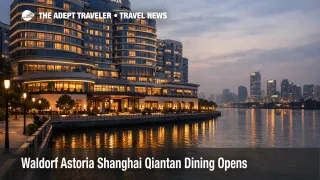
A new set of dining venues at Waldorf Astoria Shanghai Qiantan is now taking reservations in Qiantan, Pudong, giving travelers a fresh luxury option beyond the Bund core. The openings matter most for visitors staying in the New Bund waterfront district, business travelers with meetings in Pudong, and locals planning destination dinners with Huangpu River views. Travelers should book peak dinner and weekend brunch slots early, plan extra transfer time into Qiantan during evening traffic, and confirm hours before arrival. Hilton spotlighted the lineup on December 18, 2025, after the hotel opened on October 23, 2025.
For anyone planning Waldorf Astoria Shanghai Qiantan dining, the practical update is that ARAME, Fu Cheng, Peacock Alley, and The Starlight Room are being positioned as a book ahead set of venues that can turn a stay in Pudong into a dining led itinerary.
On the ground floor, ARAME is framed as contemporary European cuisine with a strong seafood through line and a wood fired grill. Hilton's release describes an extended brunch window that runs until 200 p.m. on weekdays and 300 p.m. on weekends, which is unusually flexible for travelers arriving late from long haul flights or morning meetings. The hotel highlights regional sourcing, including seafood tied to Fujian and Liaoning, and it also leans into showpiece signatures designed to travel well on social, but still read as serious cooking.
Up top, Fu Cheng is pitched as a modern Min cuisine address anchored in Fujian traditions, with chef Justin Yang named as the lead. The details matter for travelers because Min cuisine can be hard to "sample" without committing to a specialized restaurant, and this one sits inside a luxury hotel that many visitors will already be using for meetings, weddings, or a riverfront stay. A tea pairing program led by tea sommeliers is also part of the concept, which can turn the meal into a longer, structured experience that may influence how tightly you schedule evening plans.
Peacock Alley extends a familiar Waldorf Astoria pattern, an all day lounge that can function as a meeting point, an afternoon tea stop, or a late drink plan when you do not want to relocate again after dinner. The hotel frames it as river facing, with a day to night shift that matters for travelers who want a lower commitment option than a full tasting menu, especially on jet lagged days when appetite and timing are unpredictable.
The Starlight Room is described as the most exclusive component, a chef's table experience built around an open kitchen, and paired with terrace views over the Huangpu River and the West Bund skyline. For travelers, this is the venue most likely to require the earliest reservation planning, and it is also the one most sensitive to seasonal programming, guest chef events, and holiday blackout patterns.
The hotel lists its address as No. 18 Linyao Road, Pudong District, Shanghai, 200126, China, and it publishes a direct phone line at +86 21 5837 8888 for reservations and confirmation.
Who Is Affected
Travelers staying in Pudong, Shanghai, China, or scheduling meetings near the Qiantan International Business District are the clearest audience because the property is designed as a riverfront alternative to the traditional Bund hotel cluster. For visitors who have historically treated the Bund as the default for luxury dining, the point is not that Qiantan replaces it, but that it changes the tradeoff between view, travel time, and reservation availability, especially on weekends and during citywide events.
Inbound international travelers arriving via Shanghai Pudong International Airport (PVG) should factor in that Qiantan can be a convenient first stop for a late meal or a long brunch if their hotel is already in Pudong. Travelers using Shanghai Hongqiao International Airport (SHA) may find the transfer less direct, so reservation times should reflect realistic cross city traffic rather than optimistic maps estimates.
The district itself is still building its identity, and that is part of why these openings are notable. Qiantan is widely described as the New Bund, with an expanding mix of retail, parks, and waterfront public space that shifts where travelers spend evenings when they are not doing the classic Bund skyline loop. Public transport access is relevant to dinner planning, because Oriental Sports Center Station is a key hub for Lines 6, 8, and 11, and that can make post dinner returns more predictable than long rides during peak congestion, if you time it well.
Travel advisors and event planners also have a direct stake. A hotel with multiple differentiated venues can absorb small groups, client dinners, and informal meetings without forcing a change of neighborhood, and that matters when Shanghai schedules compress around exhibitions, incentive travel, and holiday demand.
What Travelers Should Do
Book in advance for the seating you actually care about, then build your transfers around that time rather than treating dinner as flexible. For weekend brunch at ARAME and skyline facing evening slots, assume availability tightens first, and keep a buffer for traffic if you are coming from the Bund, the former French Concession, or a late arriving train or flight.
If you cannot secure your preferred time, decide quickly whether the meal is the purpose of the night or just a convenience. When dining is the anchor, move other plans to match an earlier seating or a weekday slot. When dining is secondary, pivot to Peacock Alley for a lower commitment option, and save the destination restaurant reservation for a different night.
Over the next 24 to 72 hours before you go, monitor the hotel's dining page for updated hours, seasonal menus, and any chef's table programming that changes lead times for The Starlight Room. During late December and Lunar New Year build up periods, also check for special set menus that can extend meal duration, which should influence how late you schedule transport, shows, or early next day departures.
Background
Luxury hotel dining openings rarely stay confined to the hotel itself, because they change where travelers concentrate, how reservations flow across neighborhoods, and how late night transport demand spikes on peak evenings. The first order effect is straightforward, Waldorf Astoria Shanghai Qiantan adds multiple venues with distinct use cases, from long brunch through formal regional Chinese dining to a lounge and a chef's table. That can keep more guest spending on property, and it can also pull non guests into Qiantan for a destination meal.
The second order ripples show up in how people route through the city. When a district becomes a credible dining destination, travelers shift timing and transport choices, which can create pinch points around evening ride demand, parking, and metro last mile decisions, especially on weekends. It also affects competing venues nearby, which may respond with promotions, tasting menus, or partnerships that further increase foot traffic along the riverside corridor.
Qiantan's broader development arc matters here. Official city channels have highlighted new retail and community focused commercial space in Pudong, including projects tied to the New Bund area, reinforcing that this part of the riverfront is being built as an all day lifestyle zone rather than a pure office district. University and local community guides also frame Qiantan as a newer neighborhood with parks, waterfront walks, and major retail nodes near the Oriental Sports Center transit hub, which is the infrastructure backbone that makes an evening out in Qiantan realistic for visitors staying elsewhere in Shanghai.
For travelers, the takeaway is that this is not just another hotel restaurant announcement. It is a signal that Qiantan is becoming a practical place to book a meal with a view, then build an evening around the riverfront, without defaulting to the Bund's most crowded blocks.
Related Adept Traveler coverage that can help with broader China trip planning includes China National Day Golden Week: What Travelers Should Know and Hyatt Studios Heads to China in Homeinns Partnership.
Sources
- Waldorf Astoria Shanghai Qiantan Crafts a New Chapter of Flavors with Contemporary Culinary Artistry
- Waldorf Astoria Shanghai Qiantan Redefines Modern Luxury on the New Bund
- Waldorf Astoria Shanghai Qiantan Dining
- Waldorf Astoria Shanghai Qiantan
- Two shopping centers add fresh energy to Pudong life
- New Campus Preview: A Visit to the Qiantan Neighborhood