

Schiphol Baggage Disruption Tips For Checked Bags
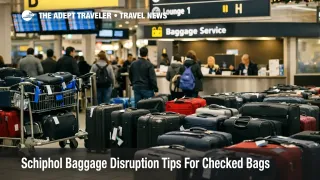
A baggage system disruption at Amsterdam Airport Schiphol (AMS) left some checked bags behind on December 19, 2025, after a malfunction affected baggage processing in Departure Hall 2. Travelers flying that day, including passengers on both European and long haul routes, were most likely to land without their hold baggage. The practical response is to treat the next leg of your journey as baggage fragile, pack essentials in cabin, file a delayed bag report fast, and add transfer buffer until delivery timelines normalize.
Schiphol said the disruption was resolved on December 19, 2025, but confirmed that some hold baggage checked in that day did not arrive on scheduled flights, and advised travelers to consult airline channels for next steps. Dutch media reporting, citing Schiphol, estimated roughly 20,000 suitcases were left behind during the incident, and noted that hold baggage in Departure Hall 2 had to be checked in manually, which slowed throughput.
Who Is Affected
The highest risk group is anyone who checked a bag at Schiphol on December 19, 2025, and then arrived without it, because recovery is a logistics problem across multiple flights, not a simple carousel delay. Schiphol has said forwarding could take several days, and later reporting noted it was uncertain whether all bags would be returned before Christmas.
KLM passengers are especially exposed because Departure Hall 2 is used by KLM, and KLM has issued a dedicated alert describing a disrupted baggage situation tied to the December 19 system failure. In its most recent update posted late on December 23, 2025, KLM said almost all affected baggage had been sent onward, but warned delivery could still take longer than expected due to backlog and holiday volume, with most baggage onload only possible during nighttime hours. KLM also warned it may be unable to provide individual status updates, and that some bags may not display tracking status because they travel under original labels without additional scans.
The secondary risk group is anyone connecting through Schiphol on separate tickets or with same day surface transfers, including rail connections, cruise embarkations, and tours that require timed check in. When travelers refuse to continue onward without bags, or when they must stop to resolve baggage paperwork, misconnect risk rises quickly, and the knock on effects show up as rebooking friction, extra hotel nights, and missed activities even when flights are operating.
What Travelers Should Do
Start with immediate damage control, and assume you may be without your checked bag for at least 24 to 72 hours. Before you fly, move medication, chargers, valuables, critical documents, winter layers, and anything required for the first night into your cabin bag. If you have already landed without your bag, file a delayed baggage report before leaving the airport, record your case reference number, photograph your bag tag, and keep receipts for reasonable essentials because reimbursement typically depends on documentation. KLM explicitly directs customers needing clothing and toiletries due to delay to submit reimbursement claims, and it points travelers to its delayed baggage information channels.
Use clear decision thresholds for rebooking versus waiting. If your itinerary breaks without the bag, for example a cruise sailing, a ski transfer that requires boots, or a short city break where you cannot replace essentials, treat a same day onward move as optional and price alternatives immediately, including reroutes that reduce connections and hotels near your next departure point. If you are traveling on one protected ticket and your bag is delayed, continuing onward is usually still the right move because airlines can forward bags to the final destination, but separate ticket travelers should be more conservative, because you may absorb the cost of missed onward segments.
Over the next 24 to 72 hours, monitor three signals, airline updates about delivery timelines, whether tracking resumes for your bag, and whether the carrier is asking customers to stop contacting support for individual updates. If you are flying again soon, reduce checked baggage dependence until recovery stabilizes, and add extra connection time at hubs. For tracking strategies that can reduce disputes when luggage goes missing, see Smart Baggage Tracking On Turkish Airlines Flights. For related disruption patterns where baggage systems become the choke point during peak travel, see London Luton Strike Dates, easyJet Baggage Delays and KLM strike cancels 100 flights at Schiphol on Sept. 10.
How It Works
A baggage system failure at a hub airport propagates in layers. The first order effect is mechanical and procedural, bags cannot be inducted, sorted, and routed fast enough, so airlines face a choice between holding flights, manually processing bags, or sending aircraft without all hold baggage. Reporting on the Schiphol disruption described hours of technical issues and manual check in in Departure Hall 2, which increases handling time per bag and creates a physical backlog in the baggage hall.
The second order effect is network recovery. Once bags are separated from passengers, airlines must find belly cargo space on later flights to forward luggage to destination airports, which competes with normal holiday loads and is constrained by operational windows. KLM's alert makes this constraint explicit, stating that most baggage onload can only occur during nighttime hours, and that tracking visibility may be limited as bags are moved under original labels. That is why even after the original malfunction is resolved, delivery can still stretch, service desks stay crowded, and connections become fragile for travelers who cannot proceed without their gear.
Sources
- Schiphol, Baggage disruption in Departure Hall 2 resolved
- KLM, Travel alerts and disruptions, Disrupted baggage situation at Amsterdam Airport Schiphol
- NOS, Duizenden reizigers door storing zonder koffer vertrokken van Schiphol
- NOS, Schiphol heeft nog paar dagen nodig om achtergebleven koffers af te leveren