

EU EES Passport Control Queues, January 9 Ramp
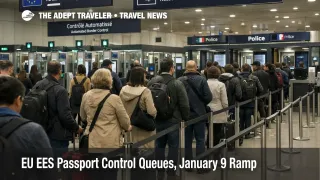
A phased rollout of the EU Entry Exit System is already stretching passport control throughput at some Schengen airports, with airport group ACI EUROPE warning that first time biometric enrollment is increasing processing time per traveler and lengthening peak queues. The travelers most exposed are non EU visitors who must enroll fingerprints and a facial image on first use, plus anyone with an onward connection that only starts after clearing immigration. The practical move is to add buffer, avoid tight post immigration connections, and treat early January as a higher risk window when you can still adjust itineraries.
The step change travelers should care about is the scheduled increase on January 9, 2026, when a larger share of eligible border crossings must be processed through the EES biometric flow. ACI EUROPE says airports are already seeing passenger experience and operational impacts with the current threshold, and it is warning that the January 9 ramp could turn inconvenient waits into system wide congestion if outages, kiosk gaps, or staffing shortages are not resolved.
Who Is Affected
EES applies to third country nationals entering the Schengen Area for short stays, including many U.S. and UK passport holders, and other visa exempt visitors, as well as travelers who need a visa, depending on their status and trip. If it is your first entry at a crossing point after EES has been switched on there, you should expect extra steps, because biometric capture and verification are layered on top of the normal document check.
Arriving passengers at large hubs are exposed in a specific way: the queue happens after the aircraft door opens, not before departure. That means an on time flight can still produce a late landside exit, which can break tight onward plans such as a separate ticket connection, a timed rail departure, a cruise or tour meetup, or a pre booked transfer with limited flexibility.
Rail travelers face a similar timing trap at controlled departures. On routes that use juxtaposed controls, including the United Kingdom to France corridor used by Eurostar, the border process can become the constraint that determines whether you make a specific train, because you must clear checks before boarding rather than after arrival.
What Travelers Should Do
Start treating passport control as a variable duration step, not a fixed one. For arrivals, plan a larger buffer between scheduled landing and anything you cannot easily rebook, including separate ticket flights, timed rail, long distance car pickups, and same day events. If you are connecting onward within Europe, favor itineraries where immigration is cleared at your final destination, or where you have a longer connection after immigration, because that is where the EES queue risk concentrates.
Use decision thresholds that protect the whole trip, not just the first segment. If your onward connection requires clearing immigration, and the miss would strand you overnight, consider rebooking to an earlier inbound flight, a later onward departure, or a same day plan with redundancy. If you see repeated reports of multi hour queues at your arrival airport, or if your itinerary depends on a fixed departure like Eurostar, it is rational to pay for flexibility before January 9, 2026 rather than gambling on day of conditions.
Over the next 24 to 72 hours before you depart, monitor signals that reflect whether the system is stable at your crossing point. Watch for airport or border authority updates about kiosk availability, queue management, or temporary suspensions, and look for airline operations messaging that hints at misconnect loads building in specific hubs. When border delays start bunching arrivals, you can also see second order crowding in curbside pickup, airport rail stations, and hotel inventory near terminals, so keep your ground plan and your first night lodging flexible when possible.
For deeper context on how this has been showing up in live operations, see Schengen EES Border Delays At Airports Into 2026 and the earlier rollout timeline coverage in EU EES Ramps Sunday, Dover Delays Car Checks to 2026.
How It Works
The Entry Exit System replaces manual passport stamping with a digital entry and exit record for non EU travelers at Schengen external borders, and it adds biometric enrollment for first time users, typically fingerprints and a facial image, with subsequent trips intended to be faster once a traveler is in the system. The EU's travel portal describes a progressive implementation that runs through April 9, 2026, with full operation from April 10, 2026, which is why the next several months can feel uneven by airport, country, and even terminal.
That unevenness is what turns a policy change into an operational disruption. First order effects show up at the source, immigration lanes slow down when kiosks are partially deployed, automated gates are not available for EES processing, the system has outages, or border guard staffing is tight. Second order effects ripple outward, because late clearing passengers miss connections and then compete for scarce rebooking inventory, which can increase airline workload and strain already limited seat maps during peak periods. The same late clearing waves also spill into other layers, including airport hotels when last departures are missed, ground transport when arrivals bunch into short surges, and rail departures in cities where airport rail links have timed connections.
There is also an institutional tension worth knowing about. ACI EUROPE has publicly warned about longer processing times and peak queues, and it specifically flagged the January 9, 2026 ramp as a potential inflection point. The European Commission has pushed back on the scale of the disruption in some reporting, saying the system has largely operated without issues, that queues are not broadly attributable to EES outside limited cases, and that member states can partially or fully suspend EES in exceptional circumstances to manage severe congestion. Travelers should plan as if queues can happen, but also recognize that local operations can change quickly when authorities adjust staffing, flows, or system usage.
Sources
- Review of Schengen Entry Exit System urgently needed to avoid systemic disruptions impacting passengers
- EU entry exit system causing three hour waits at airports as border checks take 70 per cent longer
- EU begins gradual rollout of digital border system
- FAQs about EES, Travel to Europe
- Entry Exit System, EES, Travel to Europe