

PNG Reef Probe Leaves Coral Adventurer Restart Uncertain
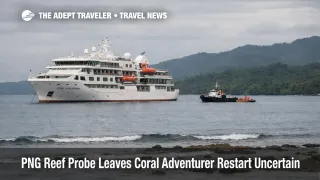
Investigators are now treating the Coral Adventurer grounding off the coast near Lae, Papua New Guinea, as a formal safety investigation, shifting the story from immediate refloating and repatriation into an evidence gathering phase that can extend restart uncertainty. Expedition cruise travelers are the most exposed, especially those booked on tightly sequenced Papua New Guinea itineraries that depend on limited airlift through Cairns Airport (CNS) and onward connections. The practical next step is to protect flights and hotel plans, secure written cancellation documentation, and delay irreversible rebook decisions until regulators lift the detention and the operator publishes a clear restart plan.
The Coral Adventurer PNG investigation matters because it changes the planning horizon from days to weeks. A preliminary report has been signaled on an approximate two month timeline, and the vessel's detention adds an additional gate that must clear before passengers can reboard and the published schedule can be trusted.
The ship was refloated and moved off the reef, but the vessel's operational status is still constrained by regulatory action and ongoing assessments. Australian maritime authorities have said the detention is based on seaworthiness concerns tied to potential damage from the grounding, plus concerns tied to the vessel's Safety Management System under the International Safety Management Code. That combination typically means the restart path is not just hull condition, it is also documentation, procedures, and corrective actions that satisfy inspectors and the ship's classification framework.
Public reporting from returning passengers has added a reputational and customer confidence layer. Accounts describe uneven communication during the incident, while other passengers have characterized the event as manageable. Coral Expeditions has said passengers and non essential crew were repatriated, and that affected guests were offered refunds for the disrupted leg or credits for future travel.
For context on the initial grounding and the immediate decision window, see Lae PNG Grounding Hits Coral Adventurer Expedition Cruise. For the detention escalation and why it can delay the next departures even after the ship is off the reef, see Coral Adventurer Detained After PNG Grounding.
Who Is Affected
Passengers from the disrupted voyage are still dealing with after effects that often show up after the flight home, including expense reconciliation, missed prepaid elements, and the administrative work of documenting what was canceled versus what was delivered. Travelers who routed home through Cairns face the most friction because repatriation waves can absorb remaining seats quickly, and last minute changes tend to push people into higher fare buckets and less convenient routings.
Travelers booked on the next Coral Adventurer departures are the second group at risk, even if they are not currently in Papua New Guinea. Expedition cruise schedules are tightly sequenced, and a ship detained for inspections can miss its turnaround window, delay provisioning, and force crew rotations to slip. That can cascade into a late embarkation, substituted ports, shortened voyage days, or full voyage cancellations, and it can also tighten availability on nearby small ship alternatives as displaced passengers try to switch operators.
Travel advisors and travelers using separate tickets are especially exposed. Expedition cruises in remote regions often require self funded positioning flights, plus hotel nights that are nonrefundable inside common cancellation windows. When the ship's restart date is uncertain, travelers risk arriving in the gateway city on schedule while the ship remains unable to embark passengers.
Insurers and claims handlers are indirectly affected because the investigation phase typically increases the demand for precise documentation. Carriers and insurers often want proof of cancellation, revised itinerary notices, and itemized receipts, and those documents can take time to assemble when an operator is simultaneously managing a safety investigation, regulator communication, and customer remediation.
What Travelers Should Do
In the next 24 hours, travelers should focus on documentation and optionality. Ask the operator, or the booking channel, for a written statement showing what portion of the voyage was canceled, what refunds or credits were offered, and how the operator wants expenses handled. If flights were changed during repatriation, keep boarding passes, emails, and receipts, and store them in a single folder so claims do not stall.
Use decision thresholds so money is not burned on guesswork. If embarkation is scheduled within the next seven days, or if positioning flights involve a same day connection through Cairns, assume the sailing is at risk until a regulator confirms the detention has been lifted and the operator issues embarkation instructions that include check in timing and pier details. If embarkation is more than seven days out, it is usually better to wait for a definitive restart announcement before locking in new nonrefundable hotels or replacement tours.
Over the next 24 to 72 hours, monitor three signals that tend to separate optimism from readiness. First is regulator language, specifically whether detention remains in place, and what conditions are being required for release. Second is technical posture, including any confirmed survey results and whether the ship is cleared to proceed to its next port for deeper inspection or repair. Third is commercial posture, meaning whether the operator reissues the sailing plan, confirms guest remedies in writing, and provides a stable contact path for rebooking and claim support. Travelers reviewing coverage should also revisit policy wording and card protections at Travel Insurance so they know whether the situation is treated as trip interruption, travel delay, or supplier default under their specific terms.
How It Works
A grounding moves through the travel system in layers, and those layers do not resolve at the same speed. The first order layer is immediate safety, stabilizing the vessel, confirming injuries, and coordinating refloating and towing resources. Once the ship is off the reef, the next layer becomes technical and regulatory, which is where schedules often stay uncertain even after passengers are home. Authorities can require hull surveys, equipment checks, environmental assessments, and a review of operational management, and those requirements can keep a ship from carrying passengers even if the vessel can technically move under its own power.
The second order ripple typically lands in air positioning and hotel inventory. Expedition cruise programs depend on narrow flight banks through limited gateways, and when a ship's end point or timing changes, passengers converge on the same small set of flights and hotels. That tightens seat availability, raises prices, and increases the odds of forced overnights and misconnects. It also propagates into crew rotations and provisioning, because expedition itineraries are timed around fuel, stores, local operators, and daylight windows for landings and tender operations.
The investigation layer adds a longer horizon and a reputational component. Investigators can collect recorded data, interview crew, and examine operator and maintenance records, which means the public timeline for preliminary findings may extend into the following weeks. For travelers, the key is that an investigation does not automatically prevent sailing, but a detention, survey findings, or required corrective actions can. That is why the most reliable go or no go signals are regulator action, written embarkation instructions, and a revised sailing plan that stays stable across multiple update cycles.
Sources
- AMSA detains Coral Adventurer following grounding in PNG
- Coral Adventurer grounding
- Christmas cruise ends in chaos as Coral Adventurer passengers return home
- An Australian cruise ship ran aground in PNG. Here's what we know
- Coral Adventurer passengers return with diverging accounts of cruise ship drama
- Sailing Schedule