

Snow Delays at Aalborg Airport, AAL Connections at Risk
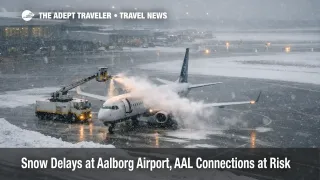
Aalborg Airport snow delays are disrupting flights in northern Denmark as heavy snowfall slows turnarounds and forces cancellations on thin regional schedules, with the most acute impacts reported since Friday, January 2, 2026. Travelers relying on Aalborg Airport (AAL) for domestic hops and short haul Europe links are the most exposed, especially when their itinerary depends on a tight hub connection. The practical next step is to treat same day plans as fragile, confirm your flight status through your airline, and move early to an alternate routing or a different travel day if you are on a last flight or a short connection.
The Aalborg Airport snow delays problem is not only the snowfall at the field, it is the capacity squeeze that follows when deicing, runway clearing, and late inbound aircraft compress the timetable and remove remaining same day options.
Who Is Affected
Travelers flying out of Aalborg on routes that feed larger hubs are the first group to feel the disruption, because one cancelled rotation can wipe out most of the day's inventory on a small airport schedule. Danish coverage of the snowfall impacts described multiple affected departures, including cancellations on services involving Copenhagen and Amsterdam, and warned that the operational effects could persist beyond the initial snow burst as airlines work through positioning and recovery.
Passengers connecting through Copenhagen Airport (CPH) are at elevated risk when Aalborg departures slip, because the connection buffer is often the only slack available before a long haul departure, a cruise embarkation, or a hotel check in window in another country. Travelers using Amsterdam Airport Schiphol (AMS) as their gateway face a similar problem, and it can be compounded if winter operations in Amsterdam are already constrained, which reduces the number of clean same day rebooking paths.
This disruption also affects travelers who planned to substitute ground transport at the ends of the trip. When flights cancel late in the day, the result is often a forced overnight in Aalborg, or a same night drive toward Copenhagen or Billund, which tightens local hotel availability and pushes up last minute ground transport demand. Even when the weather improves at the airport, the schedule can remain unstable if aircraft that should operate later flights are not in position, or if crews time out and carriers cancel selectively to protect the next morning.
For broader winter travel context across the same week, related disruption patterns have also shown up in other snow affected networks, including Scotland Amber Snow Warning Hits Flights, Ferries and Winter Storm Delays Toronto Pearson, Montréal Trudeau, where reduced departure rates and deicing queues created multi bank delay tails.
What Travelers Should Do
Start with immediate actions and buffers. If you are traveling on January 4, 2026, or within the next day as carriers recover, check your airline app frequently, because small improvements can be reversed quickly if snowfall intensity changes, and because aircraft swaps can change seat maps and boarding flows. Plan to arrive at the airport in line with normal recommendations rather than waiting for a delay to settle, since departure times can move forward during recovery, and check in cutoffs often stay anchored to the original schedule.
Use clear decision thresholds for rebooking versus waiting. If you are booked on the last flight of the day, if your itinerary depends on a short hub connection, or if you are traveling on separate tickets, it is usually better to rebook proactively than to hope the rotation recovers at the gate. If you have multiple protected later options on the same ticket, and you can tolerate arriving several hours late without triggering hotel penalties or missed events, waiting can make sense, but only if you can also absorb a possible overnight.
Over the next 24 to 72 hours, monitor three signals that matter more than general weather headlines. Watch whether your airline issues a winter travel advisory or waiver for the affected city pairs, because that is what unlocks no fee moves and same day reroutes. Track whether Amsterdam or Copenhagen are running constrained winter flows, because those hubs determine how many rescue seats exist for Aalborg passengers. Keep an eye on ground transport feasibility as well, since a drive or rail shift to Copenhagen Airport or Billund Airport can be the fastest way to restore options, but only when roads are passable and you have a confirmed seat on the onward flight.
Background
Snow disruption at a regional airport is a capacity and timing problem that becomes visible as missed departures, long holds, and cancellations on the thinnest routes. At the source layer, snowfall forces aircraft deicing and anti icing, slows ramp work, and increases the time required to clear and inspect movement areas. That stretches turnaround times, reduces the number of departures the airport can handle per hour, and makes every late inbound more damaging because there are fewer spare aircraft and crews available to recover the schedule.
The second order ripple is where trips break. When an inbound flight arrives late or cannot position into Aalborg, the outbound sector later in the day may cancel, removing the final same day option and pushing passengers into the next morning. Those passengers then concentrate into fewer departure banks through Copenhagen or Amsterdam, which tightens seats across the hub network and can trigger additional missed connections. As that happens, hotels near Aalborg, Copenhagen, and other gateways can tighten, and rail and bus demand rises as travelers look for a non aviation path to reach a larger airport.
Passenger rights also matter in this scenario. Under EU rules, airlines still have obligations to provide care and information during significant delays and cancellations, even when the root cause is weather, although cash compensation eligibility depends on the circumstances. The operational takeaway is that travelers should keep receipts, document the disruption in writing from the carrier where possible, and prioritize a protected reroute over improvising separate tickets that may not be honored if the disruption continues.