

KLM Cancellations Amsterdam Schiphol Flights January 5
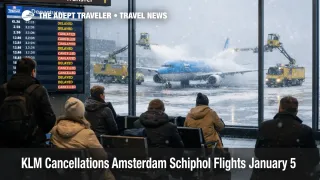
KLM Royal Dutch Airlines cancelled 124 flights scheduled for Monday, January 5, 2026, to and from Amsterdam Airport Schiphol (AMS), citing persistent winter weather that is continuing to constrain operations and de icing throughput. Travelers connecting through AMS, plus anyone starting or ending a trip in Amsterdam, are the most exposed because cancellations at a hub remove seats across multiple onward routes and compress rebooking inventory quickly. Check your flight status before you leave, shift to self service rebooking if your itinerary is touched, and be ready to reroute via nearby hubs if you cannot accept an overnight delay.
In practical terms, KLM cancellations Amsterdam Schiphol means fewer workable connection options on Monday's bank structure, and a longer tail of delays as aircraft and crews are repositioned after disrupted turns. KLM says it is cancelling flights in advance to reduce last minute cuts, and to create earlier clarity for passengers who need to rebook.
Schiphol is also warning that flights on Sunday, January 4, and Monday, January 5, may see delays or cancellations due to winter weather and aircraft de icing, and the airport is explicitly telling passengers to check flight information before heading to the terminals.
Who Is Affected
Passengers transiting AMS are hit first because the hub's tight connection architecture depends on short, predictable turn times. When de icing becomes the pacing item, taxi and hold times stretch, gates remain occupied longer, and inbound delays arrive in waves that can wipe out connection buffers across multiple destinations in the same bank. That is especially painful for long haul itineraries where there may be only one or two daily departures to a given city, and missing the protected onward flight can force an overnight stay even if the weather improves later in the day.
Origin and destination travelers are also exposed because the cancellations remove seats that would otherwise be used to rebook disrupted passengers from earlier days. KLM has already been cutting flights since Friday, January 2, 2026, which means Monday demand is competing with an existing backlog. Even if your specific flight is operating, you can still see long delay tails if the aircraft operating your flight arrives late from an earlier rotation, or if a crew times out and must be replaced under duty time rules.
Ground access risk matters more than usual in this event. The Royal Netherlands Meteorological Institute, KNMI, has issued code yellow warnings for slippery conditions due to snow and freezing, a combination that can slow road transfers and introduce rail knock ons. If you rebook onto an earlier flight to protect a long haul departure, you also need enough ground time to actually reach the airport and clear check in, security, and passport control.
What Travelers Should Do
Take immediate actions that protect your itinerary from cascading scarcity. If you are booked on KLM, use the My Trip tools first, because KLM is explicitly steering passengers away from phone support during the disruption, and self service is the fastest path to rebooking, vouchers, and refunds. If you are connecting at AMS, treat short connections as fragile on Monday, and proactively look for earlier feeder flights, or for routing that avoids the tightest bank to bank transfer.
Use clear decision thresholds for rebooking versus waiting. If your disrupted itinerary includes a once daily long haul flight, a cruise embarkation, a last train, or a hotel check in you cannot miss, waiting for "same day recovery" is usually a bad bet once your first segment is cancelled. Rebooking is usually the better move when you still see seats on alternatives, even if that means routing through a different hub, because the next wave of cancellations tends to remove the remaining inventory quickly. Conversely, if you have multiple later protected options on the same ticket, and you can absorb a late arrival without paying for an extra hotel night, waiting can be rational, but only if your flight is still showing as operating and the inbound aircraft is not already significantly delayed.
Monitor the right signals over the next 24 to 72 hours. First, watch Schiphol's operational messages and your specific flight status rather than relying on general weather forecasts, because the binding constraint here is de icing capacity and runway acceptance rates, not just snowfall totals. Second, track whether KLM expands or extends its rebooking window, since it already allows free rebooking for the Schiphol snow and wind disruption when the same travel class is available, with new departures permitted up to Saturday, February 7, 2026. Third, keep an eye on ground conditions from KNMI and local transport operators, because a slow transfer can undo a good rebook if you cut arrival time too close.
If you need a same day salvage path, the most reliable strategy is often to move the hub, not just the departure time. For many European and transatlantic itineraries, Brussels Airport (BRU), Paris Charles de Gaulle Airport (CDG), and Frankfurt Airport (FRA) can provide viable same day onward options when AMS banks are thinned, especially if you can reach those hubs by rail or short hop flights that are less dependent on a single concentrated bank. The tradeoff is that alternate hub routing can add complexity for checked bags and minimum connection times, so prioritize protected itineraries on a single ticket where possible.
For overnight scenarios, keep receipts and focus on reasonableness. KLM says passengers may arrange their own accommodation if needed and claim reasonable expenses afterwards, which is helpful when nearby hotel inventory tightens and you need to book quickly.
Background
Winter operations at a hub fail in layers, and this event has several of the classic propagation pathways. The first order constraint is on the ground, where de icing takes time, requires specialized equipment, and creates queues at precisely the moment when departure and arrival rates are already reduced by runway conditions and weather driven spacing. KLM is cancelling flights in advance to reduce last minute surprises and to free up resources for passengers who can still be carried, while Schiphol is warning that reduced capacity can continue to generate delays even for flights that are not cancelled.
The second order ripple is network positioning. When departures are cut at AMS, aircraft and crews end up in the wrong place for the next scheduled rotations, which can produce cancellations far outside the Netherlands as downstream flights lose their assigned equipment or crew pairing. Those mispositioned assets then create a recovery hump, where airlines must prioritize certain long haul flights, protect crew legality, and rebuild a usable aircraft sequence, often resulting in uneven on time performance even after the worst weather moves on.
A third layer hits travelers off airport. Missed connections, late arrivals, and cancellations push demand into airport hotels and nearby cities, and that can raise the cost of forced overnights, especially for passengers who need to stay close to AMS for early morning rebooked departures. Adept Traveler's recent Netherlands cost coverage, including Netherlands Hotel VAT 21% Raises 2026 Stay Costs, is a reminder that hotel pricing pressure can compound disruption costs, while broader winter conditions across Northern Europe remain relevant for reroutes, as covered in Scotland Amber Snow Warning Hits Flights, Ferries.