

Schiphol Flight Cancellations Hit AMS January 5, 2026
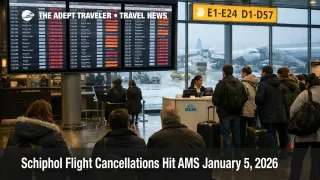
-Amsterdam Schiphol flight cancellations surged on January 5, 2026, after Amsterdam Airport Schiphol (AMS) cancelled about 450 flights as snow and icy conditions reduced airport capacity. Transfer passengers and anyone starting or ending a trip at Schiphol are most exposed because cancellations at a hub remove seats across many routes at once, which quickly raises misconnect risk and lengthens rebooking queues. The practical move is to check your flight status before leaving, assume short connections will not hold, and be ready to reroute via a different hub or accept an overnight if inventory is already thin.
Schiphol also warned that winter operations constraints are not limited to the airfield. The airport's updates tied disruption to winter weather and aircraft de icing, and it flagged ground access problems, including a period when no trains were running in the Amsterdam region, plus later warnings that train services were limited. That combination matters because many travelers try to "save" an itinerary by moving onto an earlier flight, then lose it anyway when surface transport slows the trip to the terminal.
Who Is Affected
Connecting passengers are hit first because Schiphol's bank structure depends on predictable taxi times, gate availability, and fast aircraft turns. When de icing becomes the pacing item, departures queue up, gates stay occupied longer, and inbound delays arrive in waves, which can erase connection buffers across multiple onward routes in the same bank. This is where the pain spikes for Schengen feeders into long haul flights, because missing a protected onward segment can mean waiting until the next day if there is only one departure.
Origin and destination travelers are also exposed because the cancellation wave compresses remaining seats, and that makes even simple point to point itineraries harder to rebook. If you are flying on KLM Royal Dutch Airlines, the carrier said it cancelled 300 flights to and from Schiphol on January 5, and it warned the number could still increase, which is a signal that the network is still trying to stabilize rather than returning to normal. That matters even if your flight is technically "operating," because your aircraft and crew may be arriving from a disrupted earlier rotation.
Travelers on separate tickets face a sharper edge. If your inbound is late, and your onward is on a different booking, your onward carrier may treat you as a no show, even if the disruption is clearly weather driven. In practice, that means you should act earlier than you normally would, because once the airport wide inventory squeeze starts, standby lists and same day reaccommodation often look available on screens but fail in real time when another wave of cancellations hits.
What Travelers Should Do
Take immediate actions that reduce the chance you get trapped behind shrinking inventory. Confirm whether your itinerary is protected on a single ticket, then use your airline's self service rebooking tools first, because phone lines and desk queues typically degrade fast during hub wide disruption. If Schiphol shows your flight is cancelled, follow the airport's guidance and do not go to the terminal, shifting your effort to rebooking from a quiet location with power, Wi Fi, and time.
Use decision thresholds that match your downstream stakes. If your disrupted trip includes a once daily long haul flight, a cruise embarkation, a last train, or a hotel check in you cannot miss, do not "wait for recovery" once your first segment is cancelled, or once your inbound delay makes the connection mathematically tight. In those cases, rerouting via another hub is usually the better move, even if it adds distance, because the next cancellation wave tends to remove the remaining seats you were counting on at Schiphol.
Monitor the right signals over the next 24 to 72 hours, and treat ground access as part of the same problem. Schiphol explicitly warned of continued disruption, including spillover into Tuesday, January 6, and KNMI warnings indicated ongoing risk of slippery conditions from snow and freezing, which can slow road transfers and complicate rail recovery. Watch Schiphol operational messages, your specific flight status, and the credibility of your airport access plan at the same time, because a good rebook is worthless if you cannot reliably reach the terminal and clear the process in time.
For readers who want the most direct comparison point from the prior 48 hours, see KLM Cancellations Amsterdam Schiphol Flights January 5, which covered the earlier carrier led trims that preceded the airport wide cancellation wave.
How It Works
A hub fails in layers during winter operations, and Schiphol's January 5 disruption follows the standard propagation path. The first order constraint is on the ground, where de icing takes time, requires specialized equipment, and creates queues just as runway acceptance rates and taxi speeds are already reduced by conditions. When those queues grow, airlines cut flights to protect the rest of the network, but the cuts arrive unevenly across banks, which is why misconnect risk spikes, even for travelers whose flights still show as operating.
The second order ripple is aircraft and crew positioning. When departures are removed from a hub schedule, crews and aircraft end up in the wrong place for their next rotations, which can trigger follow on cancellations across Europe long after the worst snowfall passes. KLM's running cancellation totals across multiple days reflect that recovery problem, not just the conditions of a single morning.
A third layer hits lodging and ground transport. When passengers miss last flights, or accept next day rebooks, demand spikes for airport hotels and nearby cities, while winter road conditions and rail service cuts make it harder to reposition to alternate hubs. That is why the cheapest and most reliable "fix" is often to change the route early, before queues build and before the inventory compression forces you into a high cost overnight.