

Grenada Level 2 Travel Advisory Adds Crime Warning
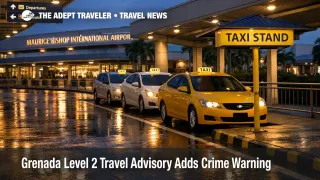
The U.S. Department of State raised its travel advisory for Grenada to Level 2, Exercise Increased Caution, and added a crime risk indicator on January 5, 2026. U.S. leisure travelers, cruise visitors, and anyone transiting St. George's, Grenada, including arrivals through Maurice Bishop International Airport (GND), should expect more pointed safety guidance than the prior Level 1 framing. Trips can usually continue, but travelers should tighten personal security routines, pre plan transportation, and build buffer for slower help after an incident.
The Grenada Level 2 travel advisory is a signal change in how the U.S. government summarizes baseline safety risk on the island, and it is meant to shape traveler behavior, especially around crime prevention and recovery planning.
In its updated advisory summary, the State Department says violent crime can occur anywhere in Grenada, and it notes that U.S. citizens have been victims of armed robbery, assault, burglary, and rape, with some cases involving deaths. The update also flags that police response times may be slower than what many U.S. travelers expect at home. The practical implication is not that every neighborhood is unsafe, but that travelers should assume opportunity crime and more serious incidents are possible across the island, and plan as if help might not arrive quickly.
The update also matters because it adds the "Crime" risk indicator to Grenada's advisory profile. That indicator is used across the advisory system to highlight destinations where U.S. citizens face elevated risk of violent or organized crime, and where local law enforcement may have limited ability to help after a crime. For travelers, that framing changes the risk math for late night movement, isolated beaches, and unsecured valuables, and it can influence insurance decisions and duty of care policies for business travel.
Who Is Affected
Most travelers will feel the change as "how you move," not "whether you go." Visitors who plan to walk between restaurants, bars, beaches, and lodging after dark are more exposed because the advisory explicitly emphasizes night precautions and the reality that response may be slower. Solo travelers, especially those who rely on spontaneous plans and unfamiliar routes, should treat the new advisory language as a reason to add structure, for example, planned pickup points, clear return times, and fewer improvised late night detours.
Travelers staying in villas, guesthouses, and vacation rentals have a different exposure profile than those in larger resorts. Hotels often have layered security, staffed front desks, and established taxi relationships, while private rentals can create gaps around locks, lighting, and secure storage. That does not make rentals a poor choice, but it does mean travelers should treat physical security as part of trip planning, including how valuables are stored, who has access, and how to contact local support quickly if something happens.
Cruise passengers and day visitors should also pay attention, even if their time ashore is limited. Short calls can encourage rushed planning, cash carrying for taxis and shopping, and a tendency to split up in unfamiliar areas. The advisory language is a reminder that the island's safety picture is not limited to a single district, so cruise travelers should think in terms of controlled movements, reputable operators, and predictable return timing.
What Travelers Should Do
In the next 24 hours, travelers with near term trips should adjust the basics: confirm how you will get from the airport to lodging, decide how you will move at night, and set a valuables plan that works for beaches, tours, and day trips. If your itinerary includes late dinners, nightlife, or isolated beach time, treat transport as a booked requirement, not an optional decision, and use lodging staff or established operators as your default routing layer.
If you have not booked yet, the decision threshold is about itinerary fit and risk tolerance, not headlines. Travelers who expect to walk everywhere at night, stay in remote rentals without staff, or carry high value items for work should consider shifting to lodging with stronger on site security, or changing plans to earlier, more structured days. Travelers who can stick to well traveled routes, reduce nightlife exposure, and keep valuables low profile can usually keep Grenada on the calendar while changing behavior rather than canceling the trip.
Over the next 24 to 72 hours, monitor the State Department advisory page for any further changes, and read the linked Country Security Report and U.S. embassy updates so you understand how incidents typically present and how assistance works on the ground. If you are traveling through the Southern Caribbean in early January, it is also worth tracking broader regional disruption updates, because shifting security postures and flight network shocks can change connection options and traveler flows, which can indirectly affect ground transport demand and lodging availability.
How It Works
A Level 2 advisory is not a "do not travel" notice. It is designed to tell travelers to be aware of increased risks and to apply destination specific precautions, with risk indicators such as Crime used to explain the main drivers of that risk. The State Department says it reviews Level 1 and Level 2 advisories every 12 months, and it can update them sooner when conditions change substantially, which is why an advisory can move even when many travelers still experience a destination as relaxed and welcoming.
This kind of change propagates through the travel system in subtle ways. First order effects show up in traveler choices, fewer late night walks, more reliance on taxis and drivers, and a higher demand for properties with staffed security and strong lighting. Second order ripples often show up in tour operations and transfers, where reputable operators may see higher demand, while informal transport becomes a larger risk. A third ripple can show up in insurance behavior and duty of care, with some travelers upgrading coverage, and some organizations tightening rules for solo movement, nightlife, and where staff can stay.
Some travelers will also connect this advisory timing to the region's evolving security picture after the early January Venezuela operation and its knock on effects on Caribbean travel flows. Even if Grenada's advisory text centers on crime rather than geopolitics, regional instability can still shape traveler behavior through flight routings, traveler density, and the strain that disruptions can place on local services. For related context on how fast regional shocks can overwhelm travel plans, see Venezuela Flight Cuts Hit Caribbean Cruise Embarkations, and treat the Grenada Level 2 travel advisory as a reason to build more structure into your island logistics, especially at night and during transfers.
Sources
- Grenada Travel Advisory, January 5, 2026 (U.S. Department of State)
- Travel Advisories, Levels 1 to 4 explained and review cadence (U.S. Department of State)
- Smart Traveler Enrollment Program, STEP (U.S. Department of State)
- US changes travel advice for Caribbean destination (Newsweek)
- With Venezuela raid, US tells China to keep away from the Americas (Reuters)