

Brisbane Airport Terminal Evacuation Delays Flights
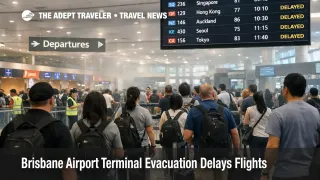
A precautionary evacuation disrupted departures at Brisbane Airport (BNE) when smoke triggered a fire alarm in the International Terminal. Brisbane Airport said the issue occurred shortly after 8:00 a.m. during testing of an air conditioning unit's heating element, which created a small amount of smoke and led to Level 4 being cleared. Level 4 is a key choke point for departing international passengers because it includes check in and lounge areas, and it is part of the flow into screening. The airport reported traffic congestion around the precinct, and delays for some departing international flights while passengers were brought back inside and processed in order of flight schedules.
Queensland Fire Department crews responded and cleared the scene within roughly half an hour, after which passengers were allowed back into the terminal. Even when an all clear comes quickly, the operational problem for travelers is the restart, check in lines re form, security queues rebuild, and gate timelines compress at the exact moment airlines are trying to protect long haul departures and their connection banks.
Who Is Affected
The disruption primarily hits travelers departing Brisbane on international services that rely on morning processing, especially those who were not yet checked in or had not cleared security when the alarm activated. If you were traveling onward to Auckland, Wellington, Seoul, Singapore, Tokyo, or other Asia Pacific hubs in the same departure bank, your misconnect risk rises fast because even a short terminal interruption can remove the buffer airlines normally rely on to board widebodies on time.
Connecting passengers are the second group at risk, even if their first flight is running. When the international departure wave slips, inbound connections from domestic Australia can arrive on time and still misconnect to international flights if check in cutoffs, bag drop deadlines, or gate close times are enforced. Travelers on separate tickets are most exposed because airlines are less likely to protect onward segments automatically, and reaccommodation options can be limited once the next departure bank starts filling.
The third ripple is for travelers not even in Brisbane today. When a long haul aircraft departs late, it can arrive late into the next hub, which then disrupts onward connections, and it can also break the aircraft's next day rotation back into Australia. On the crew side, delays that push past duty limits can force last minute swaps or cancellations that look sudden to passengers, but are driven by legal rest rules and scarce standby coverage.
What Travelers Should Do
If you are traveling today, treat the airline app as your source of truth, and make decisions before you commit to a long line. If your flight is delayed but still operating, prioritize protecting your seat, confirm bag status, and screenshot any updated boarding time. If you are still landside, build extra curbside time, because the airport has reported precinct congestion alongside the terminal restart.
Use a clear threshold for whether to wait or rebook. If your delay threatens an international connection that you cannot miss, for example a cruise embarkation, a long haul departure, or a same day event, shift to a later bank or the next day as soon as your delay pushes beyond about 60 to 90 minutes, because the rebooking queue typically grows faster than the recovery speed. If you are on separate tickets, move earlier, because protection is not guaranteed.
For the next 24 to 72 hours, monitor three things, whether your flight's aircraft is inbound and on time, whether your airline publishes a waiver or flexible rebooking options, and whether Brisbane's International Terminal is experiencing secondary congestion from routine peak loads. If you are planning a tight domestic to international connection via Brisbane, add buffer or consider routing via another hub until schedules look stable again.
Background
Airport evacuations that last minutes can still produce hours of uneven disruption because terminals are built around steady flow. When an alarm clears a level that contains check in, lounges, and access to screening, the system restarts in waves, passengers re enter in clusters, counters reopen with backlogs, and screening lanes suddenly face surges rather than steady volume. Airlines then triage, they prioritize flights with hard slots, long haul departures with constrained alternates, and services that would strand the most passengers if canceled.
Brisbane's International Terminal has also been operating with construction impacts around the Level 4 area as part of an ongoing security upgrade and retail project, and the airport has warned that reduced space can lengthen check in and security queues during morning peak times even on normal days. That matters today because any restart after an evacuation pushes more people into less space, which increases the chance that short disruptions propagate into missed boarding windows, misconnected bags, and longer rebooking lines.
This is why Brisbane Airport evacuation delays can be felt beyond Brisbane itself. A delayed widebody departure can arrive late into a connection hub, which then misses onward banks, while a late return can reduce tomorrow's capacity if the aircraft or crew cannot be repositioned on schedule. Those second order effects often show up as re timed departures, aircraft swaps, or last minute cancellations later in the day, even after the original incident has cleared.
Sources
- International Terminal update
- Airport Updates
- False alarm sparks evacuation at Brisbane Airport - Australian Aviation
- Up to 1000 passengers evacuated and flights delayed after smoke at Brisbane Airport
- Australia And New Zealand Flight Delays Hit Brisbane And Sydney
- Storms Threaten Sydney and Brisbane, Expect Delays