

Cunard 2026 World Cruises Depart Southampton
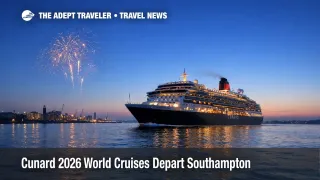
Cunard's two 2026 world cruises are now underway after Queen Anne and Queen Mary 2 departed Southampton in a coordinated send off that included a fireworks display. Travelers booked on either voyage, or on shorter sectors that join and leave the ships in key ports, are the most directly affected because sailing day is the point of no return for flights, hotels, and transfers. If you are sailing a sector, or planning a later world voyage, your next step is to confirm your join port logistics, your document requirements, and your buffer strategy before the next payment, airfare, or hotel deadline.
The operational change is not a disruption, it is that the world voyage "machine" is in motion. Once the ships leave Southampton, cabin inventory for late joiners tightens, and the downstream travel system starts to feel it: higher demand for pre cruise hotel nights, heavier rail loads to the cruise terminals, and more complex recovery options if a flight misconnect strands you in London or elsewhere in the UK. On the ship side, a packed schedule of sea days, port days, and enrichment programming means you want a plan early, not after you are already onboard.
Who Is Affected
Full voyage guests on Queen Anne and Queen Mary 2 have the highest exposure because a missed embarkation can turn into an expensive chase itinerary across borders. Queen Anne's eastbound world voyage includes 30 ports, and Cunard highlights join options in places such as Cape Town, Singapore, Hong Kong, Sydney, Los Angeles, and Miami, which is great flexibility but also multiplies the number of places where a tight connection can break.
Sector travelers are the second group to watch. A sector sounds simpler than a 100 plus night voyage, but it often has less slack because the join and leave window is narrow and sometimes anchored to an overnight stay or a short turnaround. If you are flying to join in a hub like Singapore or Los Angeles, the cost of being a day late can be a last minute hotel bill plus a new flight, plus the stress of catching up to a moving ship.
A third group is travelers shopping the next cycle, especially the 2027 and 2028 world cruise programs that Cunard continues to market. When a major sailing departs, it tends to drive fresh interest in future departures, which can shift cabin category availability and promotional pricing. If you are comparing years, it helps to read how Cunard structured its longer programs and what that implies for overnights, late departures, and where you might realistically join for a partial voyage. Cunard Unveils 2027-28 Voyages, Two World Cruises
What Travelers Should Do
If you are sailing soon, lock your ground truth today: your ship, your join port, your boarding window, and your arrival plan that assumes at least one meaningful delay. Book the night before in your embarkation city unless you have an unusually resilient same day plan, and keep receipts and confirmations accessible offline in case you need to reroute mid trip. For UK embarkations and transits, use a single authoritative checklist for entry rules and carrier boarding requirements, and do not rely on old assumptions about visa free travel. UK Entry Requirements For Tourists In 2026
If you are deciding whether to rebook, wait, or buy a sector instead of the full voyage, use a threshold approach. Rebook when the join port requires a long haul flight and your itinerary has no buffer, or when you would face strict hotel cancellation penalties that are larger than the airfare change fee. Wait when you have a flexible fare, a one stop routing with multiple later options the same day, and you can arrive at least 24 hours before boarding without blowing up your budget.
Over the next 24 to 72 hours, monitor three things: your cabin category availability if you are still shopping, your flight schedule changes if you have already ticketed, and any itinerary timing notes tied to high complexity legs. For Queen Mary 2's westbound loop, the Panama Canal segment is the kind of operational hinge that can compress or expand port times downstream, which matters if you are planning fixed tours or nonrefundable flights right after a port call. Panama Canal Transit Rebound Eases 2026 Cruise Risk
How It Works
World cruises function like a moving supply chain with two calendars running at once. The first calendar is the ship's itinerary, which defines when the vessel can accept new guests, clear immigration, and turn cabins. The second calendar is your inbound travel system, flights, trains, hotels, and transfers, which is less predictable and often less forgiving when weather, crew legality, or air traffic constraints hit.
Cunard leans into flexibility by selling "sectors" on the world voyage route. That is helpful because you can join for a shorter chapter, but it also means your personal risk shifts from onboard reliability to connection reliability. Missing embarkation in Southampton is one problem, missing embarkation in a faraway join port can be a more expensive, more complex problem because you may cross multiple borders to catch up.
Itinerary complexity also changes how disruptions propagate. A high profile engineering waypoint like the Panama Canal can influence schedule padding and speed changes, and those adjustments can ripple to later arrivals, shore excursion timing, and even the availability of same day onward flights after a port day. Onboard enrichment, including Cunard Insights speakers, adds another layer because it can concentrate demand for certain sea day activities, and it can make some guests prioritize the ship schedule over longer independent touring in port.